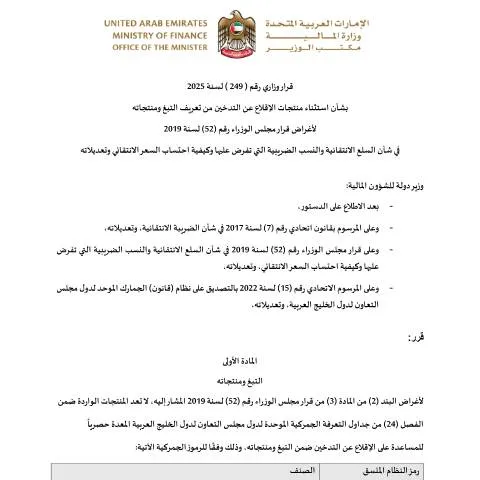
Navigating the Ministerial Decision No. 249 of 2025: The Exemption of Smoking Cessation Products
In the evolving landscape of regulatory frameworks in the United Arab Emirates, the Ministerial Decision No. 249 of 2025 stands out as a significant legislative measure. This document officially exempts smoking cessation products from the definition of tobacco and its products, creating a notable distinction in the regulatory treatment of these items. Understanding its implications, the process for submission, and the potential impacts on various stakeholders is essential for compliance and effective engagement with the authorities.
Understanding the Legislative Context: The Framework of Decision No. 249
The foundation of this decision is rooted in the UAE's commitment to public health and regulatory clarity. The initial legislative framework governing tobacco products was outlined in Federal Law No. 15 of 2009, which aimed to regulate the production and sale of tobacco and related products. However, with the increasing recognition of the necessity to support smoking cessation efforts, the Ministerial Decision No. 249 was introduced to specifically exempt certain products designed to aid in quitting smoking.
This legislative change is not merely a bureaucratic adjustment; it signifies an important public health initiative aimed at reducing tobacco dependency across the Emirates. By distinguishing cessation products from traditional tobacco, the authorities seek to promote healthier lifestyle choices among the population.
Who is Required to Submit the Exemption Form?
The submission of the documentation related to this ministerial decision isn't limited to manufacturers; it also extends to suppliers and distributors of smoking cessation products. This broad base of stakeholders encapsulates:
- Manufacturers: Companies producing smoking cessation aids, such as patches, gums, or electronic alternatives.
- Importers: Businesses involved in bringing these products into the UAE from international markets.
- Distributors: Entities responsible for the wholesale distribution of these products across various retail channels.
Moreover, any entity looking to ensure compliance or to benefit from the exemption must engage with this decision actively, reinforcing the notion that awareness and proactivity are vital in this regulatory landscape.
Completing the Official Form: Step-by-Step Guidance
Filling out the official form to register for the exemption is a critical part of the process. Here’s a detailed breakdown of the steps involved:
- Access the Official Platform: Navigate to the government portal designated for tax services, specifically the ongoing updates under the التشريعات الضريبية (Tax Legislation) section.
- Fill in Required Details: The form will ask for crucial information, including:
- Company name and license number
- Details of the products intended for exemption, including product names and classifications
- Intended market and distribution channels
- Attach Necessary Documentation: Ensure to include:
- Proof of product registration if applicable
- Compliance certificates from relevant health authorities
- A declaration of intent to comply with local regulations
- Review and Submit: Before final submission, double-check all entries for accuracy to prevent delays.
- Follow-Up: After submission, maintain communication with the relevant authorities through the provided channels for any updates or additional requirements.
Consequences of Non-Compliance: The Risks of Inaction
Failure to comply with this decision or negligence in submitting the exemption form can lead to significant repercussions. These include:
- Fines and Penalties: Non-compliance can incur heavy fines as stipulated by the FTA (Federal Tax Authority).
- Loss of Market Access: Companies that do not register for the exemption risk being barred from selling their products in the UAE market.
- Legal Liabilities: Engaging in business without proper documentation can lead to legal challenges and damage to corporate reputation.
Thus, the importance of timely and accurate submission cannot be overstated, as it directly influences a company's operational viability within the Emirates.
Particular Cases: Unique Situations and Exceptions
The Ministry's decision accounts for specific circumstances that may affect stakeholders differently. Here are some unique scenarios to consider:
Foreign Companies and Partnerships
For foreign manufacturers looking to enter the UAE market with smoking cessation products, it is imperative to establish a local partnership or representative in order to fulfill local regulations. Furthermore, they must ensure that their products comply with both international and UAE standards, which may require additional documentation.
Minors and Age Restrictions
When it comes to selling smoking cessation products, special attention must be given to age restrictions. It is pivotal that these products are not marketed or sold to minors. Companies must implement strict verification processes to ensure compliance with the UAE's laws regarding age restrictions on tobacco-related products.
Urgent Situations: Fast-Tracking Approval
In some instances, companies may face urgent needs for approval due to market dynamics or public health emergencies. While there is no formal expedited process delineated in the current regulations, proactive engagement with the FTA and presenting a compelling case may facilitate quicker responses.
Addressing Errors or Missing Information: What to Do Next
During the submission process, errors or missing information can occur. Here’s how to address these issues effectively:
- Immediate Correction: If notified of an error, promptly correct the information via the official platform, ensuring to follow the established procedures for amendments.
- Supplementary Documentation: If additional documents are requested, provide them as quickly as possible to avoid delays in the approval process.
- Consultation: Engage with a compliance expert or legal advisor to navigate through complex situations, especially if serious discrepancies arise.
Future Implications: The Evolving Regulatory Landscape
The implications of Ministerial Decision No. 249 extend beyond immediate regulatory compliance. As the UAE continues to evolve its health policies, companies must remain vigilant and adaptable to anticipate future changes in legislation that could affect their operations.
Emerging trends in public health legislation suggest a continued push towards facilitating public health initiatives, clearly indicating that smoking cessation products will remain a focus area for regulatory authorities. Keeping abreast of such changes will be essential for manufacturers and distributors to maintain compliance and align their strategies with the UAE's health objectives.
Ultimately, engaging proactively with the regulatory framework surrounding smoking cessation products can establish a solid foundation for future innovations, market expansions, and a positive corporate image that resonates with local health initiatives.
Understanding the Ministerial Decision No. (249) of 2025: Implications for Smoking Cessation Products
The recent Ministerial Decision No. (249) of 2025 has garnered significant attention in the UAE, particularly concerning its exclusion of smoking cessation products from the broader definition of tobacco and its products. This decision aligns with the UAE's ongoing efforts to promote public health and reduce smoking rates. The implications of this decision are multifaceted, influencing regulatory frameworks, market dynamics, and health initiatives.
One of the key aspects of this decision is its potential to facilitate the development and marketing of smoking cessation products without being encumbered by the stringent regulations typically associated with tobacco products. By distinguishing these products, the UAE government aims to encourage individuals seeking to quit smoking by providing access to a variety of alternatives. This move may lead to an increase in product availability and diversity, ultimately benefiting those who wish to transition away from traditional tobacco use.
Moreover, the decision could prompt a reassessment of existing regulations surrounding the advertising and promotion of these products. With the distinction in place, manufacturers and retailers might find themselves with more freedom in how they market smoking cessation tools, which could lead to innovative campaigns aimed at raising awareness about the benefits of quitting smoking. This could significantly enhance public health messaging and outreach efforts, encouraging a larger segment of the population to consider cessation options.
The Impact on Regulatory Compliance and Industry Standards
In light of Ministerial Decision No. (249), businesses involved in the production and sale of smoking cessation products must navigate a newly defined regulatory landscape. While this decision alleviates certain restrictions related to tobacco product compliance, it necessitates a thorough understanding of the emerging standards and guidelines specifically tailored for cessation products.
Firstly, manufacturers will need to ensure that their products meet the health and safety regulations established by the Emirates Authority for Standardization and Metrology (ESMA). This includes conducting rigorous testing and obtaining necessary certifications to demonstrate that their products are safe for consumer use. Compliance with these standards not only fosters consumer trust but also enhances the credibility of the industry as a whole.
Furthermore, businesses should be prepared for potential shifts in compliance requirements as the government may implement new regulations specific to smoking cessation products. Engaging proactively with regulatory bodies such as the Federal Tax Authority (FTA) and the Ministry of Health and Prevention (MoHAP) will be essential. Companies might consider establishing dedicated compliance teams to monitor changes in legislation and ensure adherence to the evolving regulatory framework.
Additionally, the decision may prompt the need for industry-wide best practices to guide ethical marketing and sales strategies. Stakeholders in the smoking cessation market must prioritize transparency in their communications, emphasizing the health benefits and effectiveness of their products while avoiding misleading claims. This will be crucial in maintaining consumer confidence and fostering a responsible approach to product promotion.
Future Directions in Smoking Cessation Initiatives in the UAE
As the UAE government continues to prioritize public health, the implications of Ministerial Decision No. (249) extend beyond regulatory adjustments. The decision signals a commitment to enhancing smoking cessation initiatives across the country. The UAE has already made strides in creating supportive environments for individuals looking to quit smoking through various programs and campaigns.
Looking ahead, the government may explore collaborations with healthcare providers, non-governmental organizations (NGOs), and community groups to amplify the impact of smoking cessation efforts. These partnerships could facilitate the development of comprehensive support systems, including counseling services, educational resources, and accessible cessation programs. By leveraging collective expertise, stakeholders can create a more robust framework that empowers individuals to embark on their journey to quitting smoking.
Moreover, the focus on smoking cessation products may inspire an expansion of research and development within the industry. Companies may invest in innovative solutions, such as digital applications that provide personalized cessation plans, tracking mechanisms, and motivational tools to support users. As technology plays an increasingly integral role in healthcare, the integration of digital health solutions into smoking cessation strategies could revolutionize the way individuals approach quitting.
Ultimately, Ministerial Decision No. (249) of 2025 is a pivotal step towards reshaping the smoking cessation landscape in the UAE. The decision not only has significant implications for regulatory compliance and industry standards but also paves the way for collaborative initiatives that prioritize public health. By fostering a supportive environment for individuals seeking to quit smoking, the UAE can work towards a healthier future for its citizens.