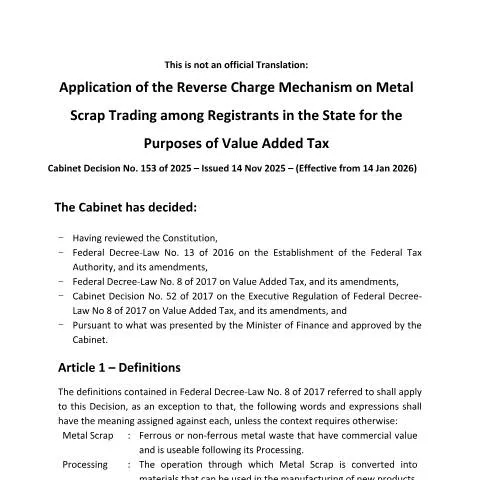
Overview of Cabinet Decision No. 153 of 2025 on the Reverse Charge Mechanism for Metal Scrap Trading in the UAE
The United Arab Emirates (UAE) has introduced a significant update to its value-added tax (VAT) framework through Cabinet Decision No. 153 of 2025. This decision specifically addresses the application of the reverse charge mechanism on the trading of metal scrap among VAT-registered entities within the country. It aims to streamline tax collection processes, enhance compliance, and align with international best practices in VAT administration.
Purpose and Scope of the Decision
The primary objective of this legislation is to clarify the VAT obligations for companies involved in the trading of metal scrap. Historically, transactions in this sector could involve complexities related to tax collection, especially when multiple entities are engaged across different stages of the supply chain. By implementing the reverse charge mechanism, the UAE government shifts the responsibility for accounting for VAT from the seller to the buyer, thereby reducing potential tax evasion and simplifying compliance procedures.
This decision applies exclusively to registered persons involved in the trade of metal scrap within the UAE. It encompasses all relevant transactions where metal scrap is bought and sold among VAT-registered traders, regardless of the size of the transaction or the specific type of metal scrap involved. The regulation does not extend to unregistered entities or transactions outside the formal VAT framework.
Key Provisions of the Legislation
Implementation of the Reverse Charge Mechanism
The legislation mandates that in transactions involving metal scrap between VAT-registered entities, the recipient of the goods must account for the VAT as if they were the supplier. This means that the buyer will calculate, report, and pay the VAT directly to the Federal Tax Authority (FTA), rather than the seller collecting it at the point of sale.
Tax Documentation and Record-Keeping
Parties involved in such transactions are required to maintain detailed records, including invoices that clearly specify the application of the reverse charge. These records must be retained for the prescribed period as per the UAE VAT regulations and should be readily available for audit purposes.
Reporting Obligations
Buyers must include the reverse charge transactions in their VAT returns, ensuring proper reporting of both the output VAT (as payable) and the input VAT (as recoverable, subject to relevant conditions). Accurate reporting is essential to ensure compliance and avoid penalties.
Implications for Businesses and Traders
This legislation significantly impacts how VAT is managed in the metal scrap sector. Businesses involved in this trade must adapt their accounting systems to incorporate the reverse charge mechanism and ensure their staff are trained accordingly. The shift also emphasizes the importance of precise documentation, as improper invoicing or record-keeping can lead to compliance issues or penalties.
For traders, understanding this regulation is crucial to avoid double taxation or non-compliance. It is advisable for companies to consult with tax professionals or the Federal Tax Authority to ensure their procedures align with the new legal requirements.
Further Guidance and Support
The UAE government, through the Federal Tax Authority, provides comprehensive guidance on implementing the reverse charge mechanism. This includes detailed instructions on invoicing, record-keeping, and reporting procedures. Businesses are encouraged to regularly consult official communications and updates to stay compliant with evolving tax laws.
In summary, Cabinet Decision No. 153 of 2025 introduces a targeted approach to VAT collection in the metal scrap trading sector, fostering a more efficient and transparent tax environment. Entities engaged in this sector should review their operational processes to align with these new requirements and ensure full compliance with UAE tax legislation.