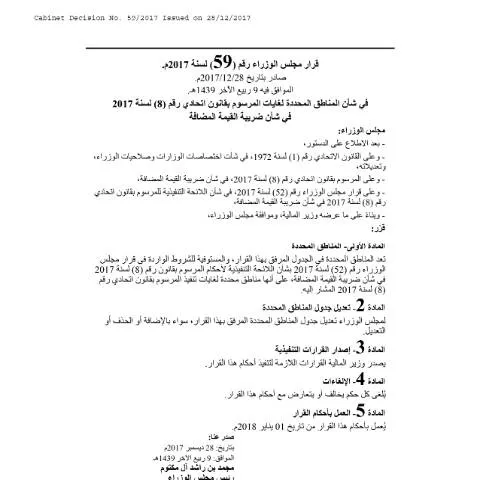
Understanding Cabinet Decision No (59) of 2017 on Designated Zones for VAT Purposes in the UAE
In the framework of the United Arab Emirates' (UAE) ongoing efforts to implement and regulate Value Added Tax (VAT), Cabinet Decision No (59) of 2017 plays a crucial role. This decision delineates specific zones within the country that are designated for VAT-related considerations, aligning with the provisions of Federal Decree-Law No (8) of 2017. As a key piece of tax legislation, it aims to clarify the scope and application of VAT in designated areas, ensuring compliance and facilitating the administration of tax obligations across different regions.
Scope and Objectives of the Decision
The primary objective of Cabinet Decision No (59) of 2017 is to specify the geographical zones within the UAE that are subject to particular VAT regulations. These designated zones are identified to streamline tax procedures, enhance administrative efficiency, and ensure that the VAT framework aligns with the federal legal structure. The decision also seeks to define the boundaries of taxable activities within these zones, thereby providing clarity for businesses, government authorities, and taxpayers regarding their VAT obligations.
Designated Zones and Their Significance
The zones identified under this decision are critical for determining the application of VAT on goods and services, especially in areas with special economic or logistical significance. This includes zones such as free zones, industrial zones, and other areas designated by the relevant authorities. The classification of these zones impacts the VAT registration requirements, tax calculation, and compliance procedures for entities operating within them.
It is important to note that the designation of zones is based on criteria set by the relevant federal and emirate-level authorities, ensuring consistency with the overall tax policy and economic objectives of the UAE. These zones are subject to periodic review to adapt to economic developments and policy changes.
Implications for Businesses and Taxpayers
For businesses operating within the designated zones, this decision provides a clear legal framework for VAT registration and compliance. Entities must identify whether their operations fall within these zones to determine their VAT obligations accurately. This includes understanding whether they are required to register for VAT, charge VAT on their supplies, and submit VAT returns in accordance with federal regulations.
The decision also influences the procedures for tax exemption or zero-rating, which may apply to transactions within certain zones. Businesses should consult the relevant emirate or federal authorities to ensure they are compliant with the latest regulations and to understand the specific requirements applicable to their zone of operation.
Administrative and Legal References
Cabinet Decision No (59) of 2017 is part of the broader legal framework governing VAT in the UAE, which includes the Federal Decree-Law No (8) of 2017 and subsequent regulations issued by the Federal Tax Authority (FTA). It is essential for taxpayers and authorities to stay informed about updates or amendments to this decision to maintain compliance and optimize tax planning.
For detailed guidance and official updates, stakeholders are encouraged to consult the Federal Tax Authority’s official channels and the relevant emirate-level tax departments. These entities provide comprehensive resources and assistance to ensure proper adherence to the designated zones and VAT regulations.
Conclusion
Cabinet Decision No (59) of 2017 underscores the UAE’s commitment to a structured and transparent VAT system. By clearly defining designated zones, it facilitates effective tax administration and compliance, supporting the country’s broader economic and fiscal objectives. Businesses and taxpayers operating within the UAE should familiarize themselves with this decision to ensure adherence to legal requirements and to benefit from the clarity it provides regarding VAT obligations in various zones.