Navigating the Reverse Charge Mechanism: Essential Insights for Precious Metals and Stones in the UAE
The implementation of the Reverse Charge Mechanism (RCM) as detailed in the decision of the Council of Ministers No. CD-127-of-2024 raises important implications for businesses dealing in precious metals and stones in the United Arab Emirates (UAE). This regulatory framework is crucial, not just for compliance with the Value Added Tax (VAT), but also for ensuring that the trade practices are in line with the broader legislative intentions of the UAE’s fiscal policies.
Understanding the Essence of CD-127-of-2024
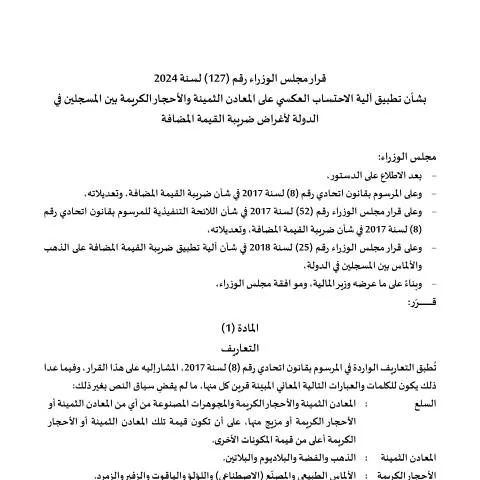
At its core, the document titled قرار مجلس الوزراء رقم (127) لسنة 2024 بشأن تطبيق آلية الاحتساب العكسي على المعادن الثمينة والأحجار الكريمة بين المسجلين في الدولة لأغراض ضريبة القيمة المضافة represents a strategic shift in the tax treatment of precious metals and stones. The decision allows certain registrants to apply a reverse charge mechanism, which fundamentally alters how VAT is accounted for on these goods.
Who is Required to Comply?
- Registrants: Only businesses registered under the UAE VAT system are required to comply with this mechanism. If you are not a VAT registrant, this decision does not apply to your transactions.
- Importers and Exporters: Businesses engaging in the sale and purchase of precious metals and stones, including diamonds and gold, are primarily impacted by this regulation.
Understanding who falls under the category of registrants is paramount. Failure to recognize this can lead to financial penalties imposed by the Federal Tax Authority (FTA).
The Steps for Effective Compliance with the RCM
To navigate the complexities of the Reverse Charge Mechanism as laid out in the document, businesses must adhere to specific steps to ensure compliance:
- Determine Eligibility: Assess whether your business qualifies as a registrant and if your transactions fall under the category of precious metals and stones as defined by the legislation.
- Understand the Tax Implications: Familiarize yourself with how the reverse charge mechanism alters the standard VAT treatment, where the liability to pay tax shifts from the seller to the buyer.
- Document Transactions Accurately: Proper record-keeping is essential. Ensure that all invoices reflect the correct tax treatment under the RCM.
- File Tax Returns Appropriately: When filing VAT returns, reflect the appropriate amounts for input and output VAT as prescribed in the regulations.
Preparing Your Documentation
The documentation process under the RCM involves meticulous planning. Here are key documents required:
- Invoices: Must clearly indicate whether the RCM is being applied.
- Contracts: Written agreements detailing the nature of the transaction and the parties involved.
- Proof of Payment: Bank statements or receipts showing the transaction.
Addressing Common Compliance Pitfalls
While the guidelines are clear, businesses often encounter common pitfalls when engaging with the Reverse Charge Mechanism:
Errors in Tax Calculation
One of the most common issues is the miscalculation of VAT due. Since the responsibility shifts to the buyer under the RCM, it is crucial to ensure that the correct VAT rate is applied. This can be particularly complex when dealing with international transactions.
Failure to Issue Correct Invoices
Invoices must explicitly mention the application of the Reverse Charge Mechanism. Invoices lacking this information may lead to complications during audits or when filing tax reports with the FTA.
Incorrect Reporting on VAT Returns
When filing VAT returns, businesses must ensure that they reflect the transactions accurately as outlined in the RCM regulations. Misreporting can lead to penalties or fines.
The Implications of Non-compliance
The consequences of failing to comply with the RCM requirements can be severe, including:
- Fines and Penalties: Non-compliance can lead to financial penalties imposed by the FTA, which can be substantial.
- Legal Repercussions: Continued non-compliance may lead to further legal scrutiny or sanctions.
- Reputational Damage: Failing to adhere to tax regulations can tarnish a company’s reputation within the industry.
Specific Situations: Handling Exceptions and Special Cases
In certain scenarios, special considerations may apply. Understanding these can be critical for compliance:
Transactions Involving Foreign Entities
For businesses engaging in transactions with foreign entities, the RCM may have different implications. Consult with a tax consultant to navigate the complexities of international tax treaties and VAT implications.
Sales to Minors or Empowered Individuals
When dealing with sales that involve minors or those with limited capacity, additional scrutiny may be required. This often necessitates additional documentation to demonstrate due diligence and compliance with age-related regulations.
The Role of this Document in the Broader Regulatory Framework
The decision underlines the UAE's commitment to enhancing the efficiency of its VAT system. It is part of a broader strategy to align with international best practices while ensuring that local businesses are competitive in the global market. Understanding this context is essential for businesses to leverage the benefits of the new tax structure effectively.
Key Takeaways for Businesses Engaging with the Precious Metals Sector
Businesses should adopt a proactive approach to aligning their operations with the new Reverse Charge Mechanism. This includes:
- Engaging with Tax Advisors: Regular consultations with tax advisors will help navigate the complexities of the new regulations.
- Training Staff: Educating staff about the new requirements will ensure compliance at all levels of the organization.
- Establishing Robust Internal Controls: Setting up internal mechanisms for monitoring compliance can mitigate risks associated with VAT obligations.
A Practical Checklist for Compliance
| Step | Description | Deadline |
|---|---|---|
| Eligibility Assessment | Ensure your business qualifies as a registrant. | Immediately |
| Understand Tax Implications | Familiarize yourself with the RCM's impact on VAT. | Ongoing |
| Documentation Preparation | Prepare necessary documents for all transactions. | Before each transaction |
| File VAT Returns | Ensure accurate reporting of VAT in your returns. | Monthly/Quarterly |
By adhering to these guidelines and maintaining an informed approach, businesses can effectively navigate the complexities imposed by the Reverse Charge Mechanism, ensuring compliance while minimizing risks.
Understanding Reverse Charge Mechanism for Precious Metals and Gems
The UAE's decision to implement a reverse charge mechanism (RCM) on precious metals and gems, as outlined in Cabinet Resolution No. (127) of 2024, marks a significant shift in the VAT landscape within the country. This provision is designed to enhance compliance and tax administration among VAT-registered businesses dealing in high-value items. Under the RCM, the responsibility for accounting for VAT shifts from the supplier to the recipient of the goods or services, a critical change that necessitates robust understanding and adherence from all parties involved.
In practical terms, when a VAT-registered business purchases precious metals or gems from another registered entity, it must calculate and remit the VAT itself, rather than relying on the seller to include this in the transaction. This shift mitigates the risk of tax evasion, ensuring that the VAT is collected more effectively. However, businesses must be vigilant in determining when the RCM applies, as failure to comply can result in significant penalties, as governed by the Federal Tax Authority (FTA).
Businesses engaged in these transactions should also ensure they maintain thorough documentation to support their RCM calculations and VAT filings. This includes invoices that clearly indicate the application of the reverse charge mechanism, alongside any supporting agreements that delineate the nature of goods involved. Compliance will not only safeguard against potential penalties but also position businesses better within the highly competitive precious metals and gems market.
Impact of Reverse Charge Mechanism on Business Operations
The introduction of the reverse charge mechanism for precious metals and gems requires businesses to adapt their operational and financial processes significantly. Companies will need to invest in training for their accounting teams and possibly upgrade their ERP systems to accommodate new reporting requirements inherent in RCM compliance.
One of the most immediate effects of the RCM will be cash flow implications. As businesses shift their VAT accounting responsibilities, they could face delays in VAT refunds since they will be liable for self-assessing VAT rather than receiving it upfront from suppliers. This situation necessitates careful cash flow management to ensure that businesses can meet their VAT obligations without jeopardizing their operational liquidity.
Moreover, businesses must reassess their pricing strategies. The pressure of self-assessing VAT could lead to increased prices for end consumers, as suppliers might adjust their pricing models to maintain profit margins in a VAT-inclusive environment. Companies must communicate effectively with their clients about these price changes, emphasizing compliance and transparency in their operations.
Compliance and Reporting Requirements under Cabinet Resolution No. (127)
Under the guidelines set forth in Cabinet Resolution No. (127), VAT-registered businesses dealing with precious metals and gems must adhere to stringent compliance and reporting standards. It is essential for businesses to familiarize themselves with the specific criteria under which RCM applies to ensure they do not inadvertently fall foul of the regulations.
For those transactions subject to the reverse charge mechanism, businesses must ensure that they correctly document the nature of the transaction, specifying that the reverse charge procedure has been applied. The FTA stipulates that businesses must clearly reflect this in their VAT returns, providing detailed breakdowns of transactions involving precious metals and gems.
Additionally, businesses need to stay abreast of ongoing updates and regulatory changes from the FTA regarding the RCM. Ongoing training and professional development in VAT laws, especially concerning high-value transactions, will be critical in maintaining compliance. Firms may also consider consulting with tax advisors or specialists who can provide tailored advice to navigate this complex landscape effectively.
In essence, the successful implementation of RCM as outlined in Cabinet Resolution No. (127) is contingent upon businesses proactively adapting their practices to align with the new VAT framework established in the UAE. This will not only ensure compliance but also foster a culture of accountability and transparency within the marketplace.