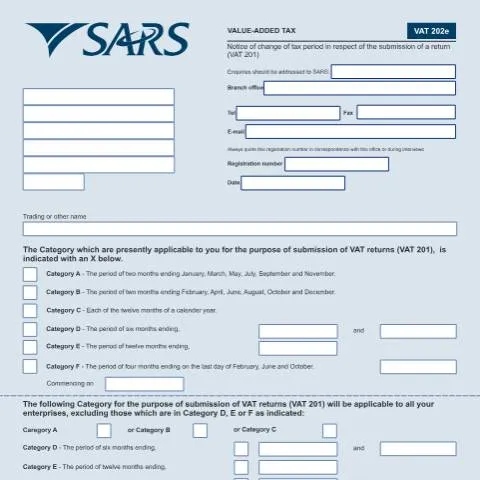
Understanding the VAT202e: A Detailed Overview of Tax Period Changes
When navigating the complexities of taxation in South Africa, understanding the VAT202e – Notice of Change of Tax Period becomes essential for businesses operating within the value-added tax (VAT) system. This document elucidates the implications of altering your tax periods and offers practical steps for utilizing it effectively.
Deciphering the Purpose of the VAT202e
The VAT202e serves as a formal notification to the South African Revenue Service (SARS) regarding changes to the frequency with which a business submits VAT returns. This modification can stem from various operational shifts, including scaling up in taxable supplies or adjusting compliance strategies.
In South Africa, businesses fall under specific categories based on their turnover which dictates how frequently they must submit VAT returns. The categories are classified as:
- Category A: Two-monthly returns.
- Category B: Two-monthly returns with different months.
- Category C: Annual return.
- Category D: Six-monthly returns.
- Category E: Twelve-monthly returns.
- Category F: Four-monthly returns.
Each category has distinct timelines and requirements, making it crucial for businesses to remain compliant.
Key Concepts to Grasp Before Making Changes
Before diving into the submission of the VAT202e, understanding the underlying terms and conditions is pivotal. Here are some critical concepts:
- Taxable Supplies: The total value of goods and services sold that are subject to VAT. A significant increase may mandate a change in your submission category.
- Compliance Obligations: Understanding your responsibilities under the VAT Act is essential. Failing to adhere can lead to penalties.
- Effective Date: The date from which the new tax period will apply must be clearly indicated on the VAT202e.
Each of these elements plays a vital role in ensuring a seamless transition when altering your VAT return category.
The Process of Submitting the VAT202e
To utilize the VAT202e effectively, follow this structured approach:
- Download the Document: Access the VAT202e from the SARS website or relevant departmental portal.
- Provide Your Business Information: Fill in your registration number, contact details, and the reason for the change. This is vital for SARS to process your submission efficiently.
- Select the Appropriate Category: Clearly indicate which category you currently fall under and which one you are applying for.
- Submit the Document: After completing the VAT202e, submit it to your local SARS office. Ensure you keep copies for your records.
Staying organized during this process will help expedite the approval and avoid potential misunderstandings with SARS.
Common Pitfalls and Misinterpretations
Many taxpayers encounter hurdles when submitting their VAT202e. Recognizing these common pitfalls can be beneficial:
- Misselection of Categories: Businesses often misjudge their taxable supply levels, leading to incorrect category selections. Always review your financials before making a change.
- Lack of Supporting Documents: While the VAT202e may not require extensive documentation, having supporting evidence of your taxable supplies can facilitate smoother processing.
- Failure to Notify SARS: Not submitting the VAT202e in a timely manner can result in penalties. Always adhere to the deadlines set forth in the VAT Act.
Being proactive in avoiding these pitfalls can save businesses from unnecessary complications.
Analyzing the Impact of the Change on Business Operations
Changing your VAT submission period can have significant implications on cash flow and compliance management. Here's how:
| Category | Frequency | Financial Implications | Recommended for |
|---|---|---|---|
| Category A | Two-monthly | More frequent cash flow management required | Higher turnover businesses |
| Category B | Two-monthly | Same as above but with different months | Similar to Category A |
| Category C | Annual | Less frequent, may help in cash flow management | Smaller businesses |
| Category D | Six-monthly | Midway balance | Medium-sized businesses |
| Category E | Twelve-monthly | Minimal cash flow disruption | Small businesses with low turnover |
| Category F | Four-monthly | A balance between compliance and cash flow | Medium businesses |
Understanding these impacts is crucial for effective financial planning and operational management.
When is the VAT202e Indispensable?
The VAT202e becomes critical in various scenarios:
- Growth of Business: If your business experiences significant growth in taxable supplies, adjusting your submission category is vital to remain compliant.
- Change in Business Structure: Mergers or acquisitions that affect your VAT obligations require a reassessment of your tax period.
- Compliance with New Regulations: Changes in the VAT Act or SARS regulations may necessitate a shift in your submission practices.
Recognizing these situations will help businesses act promptly and maintain compliance.
Frequently Overlooked Aspects of the VAT202e
Even seasoned business owners sometimes overlook intricate details when dealing with the VAT202e:
- Effective Date of Change: Not specifying the effective date can result in your submission being processed incorrectly.
- Notification of Changes: Once the VAT202e is submitted, it’s prudent to monitor the status and follow up with SARS to confirm changes.
- Anticipated Taxable Supplies: Accurately forecasting your taxable supplies can affect your eligibility for different categories.
These subtleties matter significantly in the context of VAT compliance.
The Road Ahead: Maintaining Compliance Post VAT202e Submission
After submitting the VAT202e, businesses must remain vigilant in their compliance efforts:
- Monitor VAT returns: Keep track of upcoming submission dates based on your new category to avoid penalties.
- Stay Informed: Regularly check for updates in VAT regulations that may impact your business.
- Engage Tax Professionals: Consulting with tax experts can provide clarity on complex situations and ensure adherence to the law.
Maintaining a proactive approach will significantly enhance your compliance and operational efficacy in the long term.
Understanding the VAT202e Form: Key Components and Sections
The VAT202e form, officially referred to as the Notice of Change of Tax Period for the Submission of a Return VAT 201, is a critical document for taxpayers in South Africa seeking to adjust their Value Added Tax (VAT) reporting periods. Understanding the key components of this form can greatly facilitate a smoother submission process and compliance with the South African Revenue Service (SARS) requirements.
One essential section of the VAT202e form is the taxpayer identification information, which includes the 13-digit ID number or VAT registration number. This must be accurately filled to ensure that your submission is associated with your tax profile. Additionally, you are required to specify the reason for the change in your tax period, which can fall within various categories such as business expansion, changes in turnover, or operational adjustments based on the fiscal calendar.
Furthermore, pay close attention to the deadlines indicated on the form. As per the current VAT regulations, any changes to the tax period typically need to be submitted to SARS three months prior to the start of the new tax period. Staying aware of these timelines will help prevent any lapses in compliance or unexpected penalties.
Lastly, ensure that the form contains your contact details and any additional information SARS may require. This may include supporting documents or previous returns that substantiate your request for a change in the VAT submission period. Proper completion of these sections can expedite the processing of your form and minimize the potential for follow-up queries from SARS.
Common Mistakes to Avoid When Submitting VAT202e
Filing the VAT202e can be straightforward, but taxpayers often encounter common pitfalls that can lead to complications or delays. Identifying and avoiding these mistakes can enhance the efficiency of your submission process.
First and foremost, one prevalent error arises from incomplete or inaccurate entries. It is paramount to double-check the VAT registration number and the contact information provided. Omissions or inaccuracies can lead to your form being rejected or delayed, which could disrupt your tax reporting schedule.
Another mistake often seen is the failure to provide adequate reasoning for the change in tax periods. SARS requires a clear explanation for why the adjustment is necessary, and vague descriptions may lead to additional queries. It is advisable to be as explicit as possible about your business circumstances that necessitate the change, along with any relevant documentation.
Additionally, some taxpayers fail to adhere to submission deadlines. As previously mentioned, submitting the VAT202e form three months before the commencement of the new period is crucial. Late submissions can incur penalties or result in your application being rejected, which ultimately delays the change.
Lastly, many taxpayers overlook the importance of confirming that the VAT202e form has been processed successfully by SARS. After submission, it is wise to follow up through the SARS Contact Centre or via their online portal to ensure that your request has been received and is being processed. Keeping a record of your submission and any correspondence can also help in addressing any potential issues in the future.
The Impact of Changing Your Tax Period on VAT Compliance
Changing your VAT submission period can have significant implications for your compliance obligations. Understanding these impacts helps businesses navigate their tax responsibilities effectively. The VAT submission frequency typically ranges from monthly to bi-monthly or quarterly, and the choice of period can influence cash flow management and reporting requirements.
When you change your tax period, the impact on cash flow can be substantial. For instance, if you transition from a monthly to a quarterly tax period, this may result in a more substantial amount of VAT being due at the end of each quarter compared to smaller monthly submissions. Businesses must prepare for this by adjusting their accounting practices and ensuring sufficient cash reserves to meet VAT liabilities.
Moreover, altering your tax period may require changes in your record-keeping practices. Businesses must ensure that they maintain accurate records of all taxable supplies, input tax claims, and any adjustments made during the new tax period. These records must be readily available in case SARS conducts an audit or requires further clarification regarding your VAT submissions.
Finally, a pivotal consideration when changing your tax period is ensuring that all stakeholders within your business are informed. This includes your finance and accounting teams who must align their processes accordingly. Clear communication about the implications of the change will foster a seamless transition and maintain compliance with SARS guidelines. It is also beneficial to engage with a tax professional who can provide tailored advice based on your specific business circumstances and ensure that you remain compliant during the transition.