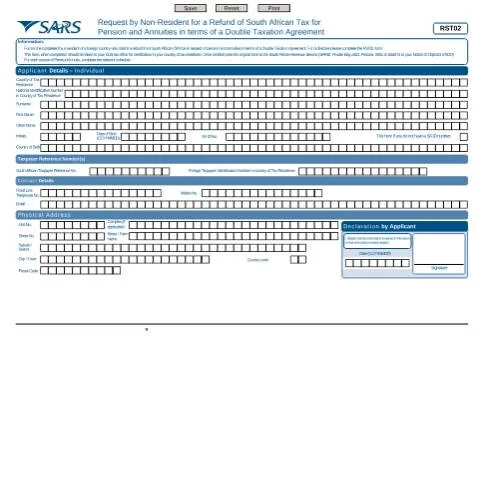
Understanding the RST02 Form: A Pathway to Tax Refunds for Non-Residents
Navigating tax regulations can be a daunting task, especially for non-residents seeking a refund of taxes paid on pensions and annuities in South Africa. The RST02 form, officially known as the "Request for Refund by Non-Resident for SA Tax Paid on Pension and Annuities," is a critical instrument in this process. This article provides a comprehensive guide on how to effectively utilize the RST02 form to reclaim your rightful tax dues.Who Needs to Complete the RST02 Form?
This document is specifically designed for individuals residing outside South Africa who have paid taxes on their pensions or annuities. Whether you're a retiree enjoying your golden years abroad or an expatriate receiving regular pension payments, understanding the requirements and process is essential.Eligibility Criteria
Before diving into the specifics of completing the form, it’s vital to ascertain your eligibility. Here are some key points to consider:- Residency Status: You must be a resident of a foreign country.
- Double Taxation Agreement: The tax refund request must be based on a Double Taxation Agreement (DTA) between your country of residence and South Africa.
- Tax Document Submission: You will need to provide relevant tax documents such as your IRP5 or IT3(a) certificate.
The Integral Role of the RST02 Form in Tax Refund Processes
Understanding the significance of the RST02 form within the broader framework of tax refund procedures can empower applicants. This form acts as a formal request to the South African Revenue Service (SARS) for reimbursement of taxes withheld on your pension or annuity.Process Overview
The sequence of actions leading to a successful refund can be outlined as follows:- Gather Necessary Documentation: Ensure you have the necessary identification numbers and tax documents.
- Complete the RST02 Form: Fill out all required fields accurately, including personal and financial information.
- Certification by Local Tax Office: Take the completed form to your local tax office in your country for certification.
- Submission to SARS: Submit the certified form to SARS either by mail or as part of a Notice of Objection.
Completing the RST02 Form: A Step-by-Step Approach
Successfully filling the RST02 form hinges on careful adherence to the required details. Below is a structured guide to assist you in this task.Section Breakdown
The RST02 form is divided into several sections, each requiring specific information: Applicant Details This section requests personal information, including your name, national identification number, date of birth, and contact details. Refund Information Indicate the period for which the refund is sought, the amounts involved, and whether the income was also taxed in your country of residence. Schedules for Pension and Annuities Separate schedules are provided for pensions and annuities. You must specify the type of income and attach the respective IRP5/IT3(a) certificate. Bank Account Details Complete your bank account details accurately, as refunds will be deposited directly into your account. Declaration Finally, sign the declaration confirming the accuracy of the information provided. This signifies compliance with tax regulations.Filing Options: Navigating the Submission Channels
Once your RST02 form is complete, the next step involves determining how to submit your application. Various channels are available, each with its pros and cons.Online Submission vs. Paper Submission
While SARS is increasingly encouraging online submissions, you may prefer to submit your application physically. Here’s a comparison of both methods:| Method | Pros | Cons |
|---|---|---|
| Online Submission |
|
|
| Paper Submission |
|
|
Where to Submit
For paper submissions, you need to send your completed RST02 form to: SARS Private Bag x923 Pretoria, 0001 South Africa If you opt for online submission, you will be guided through the process on SARS's eFiling platform, where you can track your application status.Tracking Your Application: Staying Informed
Once you've submitted your RST02 form, it’s crucial to monitor the status of your application. Understanding how SARS processes these requests can influence your follow-up strategies.Processing Timeframes
Generally, it may take several weeks for SARS to process your refund request. However, the actual timeframe can vary based on factors such as:- Volume of requests received
- Completeness of your application
- Any additional documentation or information required
How to Follow Up
If you have not received any communication from SARS within the expected timeframe, follow these steps:- Contact SARS: Use their official contact channels to inquire about the status of your application.
- Provide Relevant Details: When contacting SARS, have your submission details, including the date of submission and personal identifiers ready.
- Document Communication: Keep records of any correspondence for future reference.
Handling Potential Issues: What to Do When Things Go Wrong
Challenges may arise during the refund process, whether it's a missing document, a rejection of your application, or a delay in processing. Understanding your options in such cases is crucial for a smooth resolution.Common Issues and Solutions
Here are some potential pitfalls and how to effectively address them:- Missing Documents: If SARS notifies you of missing documents, promptly gather the required items and resend your application, ensuring you keep copies of everything.
- Application Rejection: If your application is denied, you may submit an objection using a Notice of Objection (NOO). Include a detailed explanation of why you believe your claim is valid.
- Processing Delays: If the expected processing time has elapsed, it’s advisable to follow up directly with SARS and provide any requested information swiftly to avoid further delays.
The Importance of Timely Action
Taking prompt action when faced with issues not only helps in swift resolution but also showcases your commitment to compliance, potentially facilitating a smoother interaction with tax authorities.The Long-Term Impact of Tax Refunds on Non-Residents
Reclaiming taxes paid on pensions and annuities can have a significant impact on your financial wellbeing as a non-resident.Financial Implications
Successfully obtaining a refund can provide you with additional financial resources. This is particularly beneficial if you are:- Living on a Fixed Income: Improved cash flow can enhance your quality of life.
- Planning for Future Expenses: A refund may assist in funding personal projects or investments.
Building a Relationship with SARS
Navigating the tax refund process can also help build a positive relationship with SARS. By ensuring compliance and demonstrating proactive engagement, you may find future interactions with the tax authority easier, particularly if further tax matters arise.Conclusion: Your Roadmap to Success with the RST02 Form
Using the RST02 form effectively requires diligence, attention to detail, and a clear understanding of the process involved. By following the outlined steps and ensuring all documentation is complete, you empower yourself to reclaim what is rightfully yours. This proactive approach not only enhances your financial situation but also fosters a collaborative relationship with South African tax authorities, paving the way for future interactions.Understanding the RST02 Form: Who Is Eligible?
The RST02 form is specifically designed for non-residents who have paid South African tax on their pensions and annuities. To qualify for a refund, applicants must meet certain eligibility criteria, which are crucial for a successful submission. Typically, you must be a non-resident individual who has received income from a South African source and subsequently had tax withheld from this income. It's important to note that not all forms of pension or annuity income will qualify; for instance, pension income from government jobs may not be eligible. Additionally, you should ensure that you have been paying taxes at the prescribed rates, as refunds are generally processed based on overpaid taxes. When completing the RST02 form, applicants need to provide their 13-digit South African ID number (if applicable) or a valid passport number, along with the corresponding tax numbers. It’s advisable to gather and review all documentation that supports your claims, including tax statements from your pension fund, proof of residency outside South Africa, and any other relevant tax documents. Non-compliance with these criteria can lead to delays or denial of the refund application, underscoring the importance of thoroughness in this process.
Step-by-Step Guide to Completing the RST02 Form
The process of completing the RST02 form may seem straightforward, but attention to detail is essential to avoid complications. Here’s a practical step-by-step guide to navigate through this crucial form:
- Download the RST02 Form: You can obtain the RST02 form as a downloadable PDF from the South African Revenue Service (SARS) website. Ensure that you are using the most current version of the form to avoid any processing issues.
- Personal Information: Fill in your personal details accurately, including your name, contact information, and whether you hold a South African ID or passport. Be mindful that the 13-digit ID number needs to follow the YYMMDDSSSSCAZ format.
- Details of Income: Clearly specify the source of your pension or annuity income. You will have to detail the amounts received and the taxes that were withheld. Having official documents handy will assist in this part.
- Proof of Non-Residency: Attach copies of documentation proving your non-resident status. This could include utility bills, rental agreements, or any official correspondence that indicates your residence outside South Africa.
- Submission of the Form: After completing the form, review it for accuracy before submission. This can be submitted either via mail or electronically, depending on the instructions provided by SARS. Keep copies of everything for your records.
Every detail counts when filling out the RST02 form. It may be beneficial to consult with a tax professional who specializes in South African tax law for non-residents, as they can provide additional insights and assistance in ensuring that you’ve met all criteria for a refund.
Common Challenges and Solutions When Filing the RST02
While the RST02 form is essential for obtaining refunds, applicants often encounter various challenges during the filing process. Understanding these challenges in advance can help streamline your experience and facilitate a quicker resolution. Here are some issues you might face and potential solutions:
- Incomplete Documentation: One of the most common challenges is the submission of incomplete documentation. It's crucial to ensure that you provide all required documents listed in the RST02 guidelines. Create a checklist of all necessary paperwork before sending your application to prevent delays.
- Extended Processing Times: Refund requests can take longer than anticipated, sometimes stretching several months. If you haven't heard back within the typical processing timeframe, consider reaching out to SARS for an update. Keeping a record of your submission date and any correspondence can help expedite inquiries.
- Tax Withholding Rate Discrepancies: Occasionally, applicants may notice discrepancies between the amount of tax withheld by the pension fund and what they believe should have been withheld. This issue often arises from misunderstandings about applicable tax treaties. It’s crucial to review any tax treaties between South Africa and your country of residence and consult a tax advisor if needed.
- Changes in Tax Residency Status: If your residency status has changed since the time you received your pension or annuity, it may affect your refund eligibility. Make sure to clearly indicate any changes in your residency status on your application to avoid complications.
By preparing for these potential challenges and taking proactive steps, you can significantly enhance the likelihood of a smooth and successful refund process using the RST02 form.