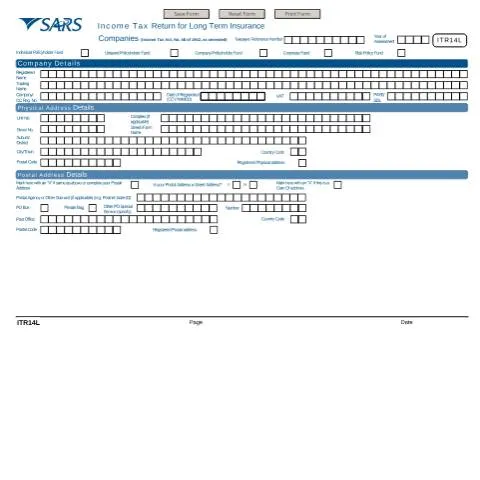
Understanding the ITR14L Form: Key Aspects for Long Term Insurance Companies
Navigating the complexities of tax submissions can be quite daunting for long-term insurance companies in South Africa. The ITR14L form, specifically designated for income tax returns, plays a pivotal role in this process. Recognizing its importance, stakeholders must grasp the nuances of this form to ensure compliance with the Income Tax Act, No. 58 of 1962, as amended.The Role of the ITR14L in Tax Compliance
The ITR14L serves as the primary document for long-term insurance companies to declare their income and financial conditions to the South African Revenue Service (SARS). It is imperative for these entities to submit the ITR14L annually, detailing their revenue streams, liabilities, and other pertinent financial information. Non-compliance may result in penalties or additional scrutiny from SARS.Who Needs to File the ITR14L?
The responsibility for filing the ITR14L primarily lies with the public officer or appointed representative of the long-term insurance company. This includes:- Companies operating under the Long-Term Insurance Act.
- Entities classified as insurance companies by SARS for tax purposes.
- Companies that generate income from policies issued to policyholders.
Preparing Your Submission: Documentation and Steps
Completing the ITR14L requires a comprehensive approach to ensure all necessary information is accurately reported. The preparation process involves gathering various supporting documents and understanding the specific requirements pertaining to the form.Essential Documentation
Before starting the ITR14L, companies must compile essential documents, including:- Financial Statements: These should include balance sheets and income statements, reflecting the company's financial performance over the past year.
- Investment and Income Records: Detailed records of investment income, any realised or unrealised gains, and other income sources must be documented.
- Policyholder Information: Comprehensive details about policy liabilities, including untaxed policyholder funds and corporate funds, need to be submitted.
- Shareholder Records: Information about major shareholders, especially those holding more than 5% of shares, should be prepared for disclosure.
Deciphering the ITR14L: A Section-by-Section Breakdown
Understanding how to navigate each section of the ITR14L is critical for accurate completion. Each section requires specific information tailored to the company's operations.| Section | Details Required | Common Pitfalls |
|---|---|---|
| Company Information | Registered name, trading name, registration number, and contact details. | Omitting the VAT registration number or incorrect contact details. |
| Bank Account Details | Account holder information, bank name, and account type. | Providing outdated bank account details or mislabeling the account type. |
| Income Statement Information | Revenue from all sources, including investment income and premiums. | Inaccurate reporting of investment gains or losses. |
| Audit Information | Details about audit qualifications and company status. | Misreporting dormant status or failing to disclose foreign income sources. |
Timeline for Filing the ITR14L: Key Dates and Deadlines
Timeliness is a crucial element in the filing of the ITR14L. Companies must be aware of key deadlines to avoid penalties.Filing Period
The filing period typically aligns with the fiscal year-end of the insurance company. Companies have a strict deadline for submission, usually set for:- End of February: For companies ending their fiscal year in February.
- End of March: For fiscal year-ends in March.
Post-Submission Procedures
Once the ITR14L is submitted, companies should be prepared for the following:- Assessment by SARS: Companies may receive notifications regarding the status of their return, including any requests for further information.
- Potential Audit: SARS may select certain submissions for audit based on various risk factors. In this case, companies must have their records readily available.
Different Submission Channels: Online, Paper, or In-Person
Companies have multiple options for submitting their ITR14L forms. Each method has its pros and cons, depending on the preferences and resources of the insurance company.Online Submission
The online submission process through the SARS eFiling platform is increasingly encouraged due to its convenience and efficiency. Benefits include:- Speed: Immediate submission confirmation.
- Record Keeping: Digital copies of submissions are easily accessible.
Paper Submission
For those who prefer traditional methods, submitting a paper form is also an option. This involves:- Printing the ITR14L: After completion, the form should be printed and signed.
- Mailing to SARS: It is advisable to use registered mail for tracking purposes.
In-Person Submission
Submitting the form in person at a SARS branch can be another viable option. This method allows for:- Direct Interaction: Immediate assistance from SARS officials for any inquiries.
- Validation: Confirmation of submission upon handing in the form.
Special Considerations: Unique Situations and Exceptions
Insurance companies may encounter various unique circumstances affecting their ITR14L submission. Understanding these nuances is crucial for ensuring compliance.Foreign Entities and Tax Obligations
Companies operating with a branch in another country or receiving foreign income must be aware of specific tax implications. This includes:- Inclusion of Foreign Income: Accurate reporting of foreign income sources, which may require additional documentation.
- Dormant Companies: Special considerations may apply regarding the reporting of dormant status and associated income.
Complex Corporate Structures
Insurance companies with intricate shareholder structures or those involved in mergers and acquisitions may face challenges. This necessitates:- Detailed Reporting: Thoroughly documenting each shareholder’s interest and relevant transactions.
- Coordinated Efforts: Collaboration with financial advisors and legal counsel to ensure compliance with all regulatory requirements.
Conclusion: A Call to Action for Compliance and Accuracy
Completing the ITR14L is not merely a bureaucratic formality; it is an essential legal obligation that requires careful attention to detail. Insurance companies must prioritize accurate and timely submissions to avoid penalties and ensure compliance with South African tax law. By understanding the intricacies of the ITR14L and preparing adequately, companies can navigate the tax landscape more effectively. Staying informed about potential changes to tax law and regulations is equally important for long-term strategic planning. Regular consultation with tax professionals can provide ongoing support and insights, ultimately helping businesses thrive in South Africa’s dynamic economic environment.Understanding the ITR14L Form: Purpose and Scope
The ITR14L form is specifically designed for long-term insurance companies in South Africa to facilitate the income tax return process. As part of the South African Revenue Service (SARS) requirements, this form must be completed and submitted by entities that provide long-term insurance products, such as life insurance and retirement annuities. Understanding its purpose is crucial for maintaining compliance with South African tax law.
Long-term insurance companies must adhere to specific accounting and tax provisions as outlined in the Income Tax Act, and the ITR14L form serves as the mechanism to report earnings, assess liabilities, and claim deductions relevant to their operations. The form includes various sections that require detailed disclosures about the company’s financial activities, including premiums received, claims paid, and provisions for future policyholder benefits. Compliance ensures that these companies contribute their fair share towards the nation’s revenue while benefiting from tax incentives where applicable.
Completing the ITR14L: Step-by-Step Guidelines
Completing the ITR14L form can be a daunting task, especially given the intricate nature of financial data associated with long-term insurance. Each section of the form must be filled out accurately to avoid penalties or additional scrutiny from SARS. Here is a step-by-step guideline to assist you in the completion of the ITR14L:
- Gather Necessary Documentation: Before starting the form, gather all relevant financial documents including balance sheets, income statements, and supporting documentation for tax deductions. This includes records of premiums collected, claims paid, and other relevant transactions.
- Identify Tax Year: Ensure you are completing the form for the correct tax year, which typically runs from March 1 to February 28 of the following year. Ensure that all figures reflect the financial activity for this period.
- Fill Out Basic Company Information: At the beginning of the form, you will need to provide the company’s registration details, including the 13-digit ID number assigned to the entity. This ID plays a critical role in the identification of tax obligations.
- Complete Financial Information Sections: Carefully input figures in the various sections dedicated to income and expenses. This includes total income from premiums, investment income, and other earnings, as well as total allowable deductions.
- Review Provisions for Policyholder Benefits: Accurately report provisions made for future policyholder benefits. This is essential as it impacts the taxable income reported, as well as the company’s financial stability.
- Consult with a Tax Professional: Given the complexities of the insurance industry, it is often advisable to consult with a tax professional or tax advisor to review the completed form before submission. This can help in identifying any areas needing correction or further clarification.
- Submit the Form Online: Once the form is completed and reviewed, it can be submitted electronically via the SARS eFiling platform. Ensure that all submissions are made before the stipulated deadline to avoid penalties.
Following these steps can not only ensure compliance but also enhance the accuracy of the information submitted, which is crucial for maintaining the company’s reputation and financial standing with regulatory authorities.
Common Challenges and Solutions in Filing ITR14L
Filing the ITR14L can come with its own set of challenges, especially for companies that may not have a systematic approach to tracking their finances. Here are some common issues faced and potential solutions:
- Inaccurate Financial Data: One of the most prevalent issues is the incorrect reporting of financial data due to miscommunication between departments or lack of updated records. To remedy this, companies should implement robust accounting software that consolidates data in real-time, ensuring accuracy in both reporting and compliance.
- Understanding Tax Deductions: Many insurance companies struggle with understanding which expenses are tax-deductible and how to document them properly. Engaging with a tax consultant can provide clarity on allowable deductions and effective strategies for maximizing tax efficiency.
- Deadlines and Compliance Pressure: The pressure to meet deadlines can lead to rushed submissions, increasing the likelihood of errors. Companies can alleviate this challenge by establishing internal deadlines ahead of the official due date, allowing ample time for review and corrections.
- Changes in Tax Legislation: Tax laws are subject to change, and keeping abreast of new regulations can be daunting. Regular training sessions and updates from tax professionals can ensure that company staff are informed and compliant with the latest tax legislation.
By addressing these challenges proactively, long-term insurance companies can streamline their tax return processes and improve compliance with SARS requirements.