Navigating the ICS01 Schedule for Insurance Companies: A Comprehensive Guide
In the intricate landscape of South Africa's insurance sector, the ICS01 Schedule for Insurance Companies plays a pivotal role in ensuring compliance and transparency in reporting financial data. This external form, governed by the Financial Sector Conduct Authority (FSCA), is a critical document that insurance companies must complete and submit as part of their annual financial reporting obligations. Understanding its nuances can save companies from potential pitfalls and enhance their operational integrity.
Understanding the ICS01 Form’s Importance in Financial Reporting
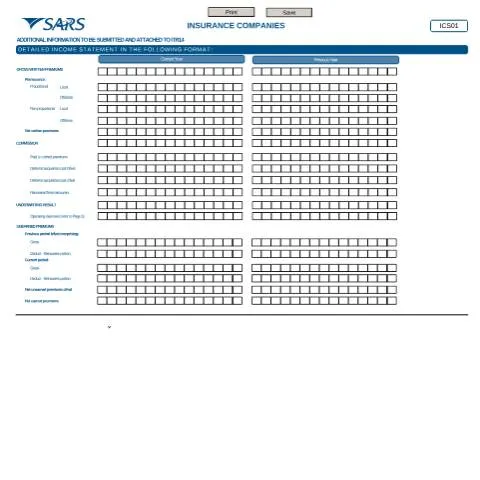
The ICS01 form is not merely a regulatory obligation; it encapsulates vital financial information that reflects an insurance company's fiscal health. This form collects data on gross written premiums, claims incurred, and operating results, which forms the backbone of the insurer’s annual financial statements. By accurately reflecting these metrics, companies not only comply with regulatory requirements but also build trust with stakeholders, investors, and customers.
Role of ICS01 in the Broader Regulatory Framework
The ICS01 form is a cog within the greater machinery of South Africa’s financial regulatory framework. It aligns with the objectives of the Financial Advisory and Intermediary Services Act and other related legislative measures that aim to safeguard the interests of policyholders and promote market stability. Non-compliance can lead to severe penalties, including fines or revocation of operating licenses.
Who Needs to Complete the ICS01 Form?
Primarily, the ICS01 form must be filed by all registered insurance companies operating within South Africa. However, several nuances exist regarding who precisely is obligated to submit this form:
- Insurance Companies: All entities classified under the insurance business, including life, short-term, and reinsurance companies.
- Cell Captives: Companies within a cell-captive structure must disclose their unique underwriting performance and technical reserves.
- Exceptions: Certain small insurance firms may be exempt based on their gross premiums written or specific regulatory qualifications; it is vital to check with the FSCA.
Understanding Different Company Profiles
Different types of insurance companies may face varied requirements when filling out the ICS01 form:
- Life Insurance Companies: These firms must report on long-term liabilities and reserves, impacting their capital requirements.
- Short-term Insurance Companies: They focus on claims incurred and premiums written over shorter intervals, affecting liquidity and operational strategy.
- Reinsurance Companies: These entities must detail their interactions with cedants and how they manage risk transfer.
Step-by-Step Guide to Completing the ICS01 Form
Filling out the ICS01 form requires careful attention to detail. Here's a structured approach to ensure accuracy:
Gather Necessary Financial Data
Before starting with the ICS01, compile all relevant financial statements and supporting documents:
- Detailed income statements for both the current and previous year.
- Reports on claims incurred, including gross paid and outstanding claims.
- Information on gross written premiums and commissions.
Completing the Form Sections
Each section of the ICS01 requires specific data entries:
| Section | Data Required |
|---|---|
| Gross Written Premiums | Current Year and Previous Year figures, detailing proportional and non-proportional reinsurance. |
| Claims Incurred | Details of gross paid claims and outstanding claims, alongside adjustments. |
| Technical Reserves | Outline of unearned premiums and outstanding claims, including basis of determination. |
| Operating Expenses | Current and previous year comparisons, with commentary on significant changes. |
Submission Channels: Online vs. Traditional
With increasing digitalisation in the public sector, the ICS01 form can be submitted through various channels, offering flexibility to users:
Online Submission via the FSCA Portal
Online submission is highly encouraged, as it streamlines the process:
- Register for access to the FSCA's online portal.
- Fill out the interactive form, ensuring validation checks are in place.
- Upload supporting documents directly to the platform.
Traditional Submission Methods
For those preferring paper submissions:
- Print the completed ICS01 form.
- Sign and date the declaration section.
- Mail or deliver the form to the FSCA’s designated offices.
The Consequences of Non-compliance
Failing to submit the ICS01 form can have dire consequences for an insurance company:
- Financial Penalties: The FSCA imposes fines for late submissions or inaccuracies.
- Operational Challenges: Non-compliance could result in restrictions on business operations, including the suspension of licenses.
- Stakeholder Trust: Missing deadlines can tarnish a company’s reputation among investors and policyholders.
Rights and Obligations of Insurers
Insurance companies have specific rights and obligations when dealing with the ICS01 form:
- Right to Clarification: Insurers may seek clarification from the FSCA regarding any aspect of the submission process.
- Obligation to Retain Records: Companies are required to keep all records related to their submissions for audit purposes.
- Right to Appeal: If penalties are imposed due to non-compliance, companies have the right to appeal against decisions made by the FSCA.
Tracking Your ICS01 Submission: Follow-Up Procedures
Once submitted, it is crucial for companies to ensure their form is processed correctly:
Monitoring Submission Status
After submission, companies can track the status of their ICS01 form through the FSCA’s online platform:
- Log in to the FSCA portal to view submission details.
- Check for notifications regarding any required updates or corrections.
- Maintain regular communication with the FSCA for any outstanding issues.
Addressing Queries from the FSCA
If the FSCA requires further information:
- Ensure that all correspondence is logged with dates and details.
- Respond promptly to requests to avoid delays in processing.
- Prepare to provide additional documentation if requested to substantiate entries made in the ICS01 form.
Final Thoughts on the ICS01 Form
Completing the ICS01 form is not simply a regulatory checkbox; it’s an opportunity for insurance companies to showcase their financial integrity and operational transparency. By understanding the intricacies of the form and adhering to best practices in its completion and submission, insurers can navigate the complex regulatory landscape more effectively. Taking these steps not only mitigates risks associated with non-compliance but also enhances the company's reputation and fosters trust within the broader financial ecosystem.
Understanding the ICS01 Form: Purpose and Importance
The ICS01 Form, also known as the Schedule for Insurance Companies, is a critical document utilized within the South African insurance sector. It aims to provide a comprehensive overview of the financial position and operational performance of insurance entities. Its significance is underscored by the necessity for insurance companies to adhere to the regulatory standards set forth by the Financial Sector Conduct Authority (FSCA) and the Prudential Authority.
This form serves multiple purposes, including the submission of crucial financial data that inform regulatory assessments and consumer protection initiatives. The ICS01 Form not only helps maintain transparency within the market but also establishes a framework for evaluating the solvency and stability of insurance providers. By collecting standardized data, the FSCA can better monitor the sector's health and identify potential risks that may affect policyholders and the financial system as a whole.
Insurance companies are mandated to submit this form regularly, ensuring compliance with the insurance regulations that govern their operations. This regularity helps maintain a level playing field within the industry and reassures consumers about the reliability of the companies from which they purchase insurance products.
Navigating the Submission Process: Step-by-Step Guide
The submission process for the ICS01 Form may seem daunting to new practitioners in the insurance industry; however, understanding the steps involved can simplify the experience significantly. Below is a detailed guide to facilitate your navigation through the submission process.
- Gather Necessary Documentation: Before starting the ICS01 Form, collect all relevant financial documents, including balance sheets, income statements, and actuarial reports. These will be essential for ensuring the data you provide is accurate and comprehensive.
- Accessing the Form: The ICS01 Form is available on the FSCA's official website. It can be downloaded in PDF format or accessed as an interactive eForm. Ensuring that you have the latest version is crucial, as regulations and requirements can change frequently.
- Completing the Form: Carefully fill out the form with the gathered financial data. Pay close attention to each section, as inaccuracies can lead to compliance issues. The form is divided into various sections that require specific types of information, such as gross premium income, claims incurred, and reserves.
- Review and Verify: After completing the form, it is advisable to conduct a thorough review to verify that all information is accurate and complete. This step is vital to avoid any discrepancies that could trigger further scrutiny or penalties from the regulatory body.
- Submission: Once the form is verified, submit it through the FSCA's online portal or via the prescribed method stated in the guidelines. Ensure that you adhere to the submission deadlines to avoid late filing penalties.
- Retain Confirmation: After submission, keep a copy of the confirmation message or receipt for your records. This documentation is essential in case of any future queries or audits by the FSCA.
By following these steps, insurance companies can streamline the submission process for the ICS01 Form, ensuring they remain compliant with statutory obligations and contribute positively to the regulatory framework governing their industry.
Potential Challenges and Solutions in Completing the ICS01 Form
- Data Accuracy: One of the most common issues faced is ensuring the accuracy of the data being submitted. Discrepancies can arise from manual entries or misinterpretations of financial data. To mitigate this, companies should invest in training staff responsible for completing the form and utilize financial software that can automate data collection and validation.
- Understanding Regulatory Language: The terminology and requirements outlined by the FSCA can often be technical and complex. To address this, participating in workshops or training sessions offered by industry bodies can enhance understanding. Additionally, consulting with regulatory compliance experts can provide clarity on specific terms and expectations.
- Time Constraints: With tight deadlines for submission, some companies may struggle to compile the necessary information promptly. Establishing a timeline well in advance of the submission date can help. Regularly updating financial records and maintaining organized documentation throughout the year will streamline the completion process.
By proactively addressing these challenges, insurance companies can ensure that they successfully navigate the ICS01 submission process while maintaining compliance with the regulatory standards set by the FSCA. Fostering a culture of diligence and preparedness can also enhance overall operational resilience and improve relationships with regulatory authorities.
Impact of Non-Compliance: Penalties and Consequences
Failing to comply with the submission requirements of the ICS01 Form can have several significant repercussions for insurance companies. Understanding these potential penalties can underscore the importance of timely and accurate submissions.
The FSCA takes non-compliance seriously and may impose a range of penalties depending on the severity of the violation. Common consequences include:
- Financial Penalties: Insurance companies that fail to submit the ICS01 Form on time may incur fines as stipulated by the FSCA. These penalties can vary based on the duration of the delay and the company's size, highlighting the need for timely submissions.
- Increased Scrutiny: Non-compliance can lead to increased scrutiny from regulatory bodies. This may involve more frequent audits, additional reporting requirements, and a heightened level of oversight. Such scrutiny can divert resources away from core business operations.
- Reputational Damage: Failure to comply with regulatory requirements can adversely affect an insurance company's reputation within the market. Stakeholders, including investors and consumers, may lose confidence in a company that does not adhere to proper regulatory standards, potentially leading to a loss of business.
- Operational Restrictions: In severe cases of non-compliance, the FSCA may impose operational restrictions. This could include limitations on the types of insurance products a company can offer, thereby affecting its market presence and ability to compete.
To avoid these penalties, companies should establish robust compliance mechanisms and regularly review their internal processes. By fostering a culture of accountability and adherence to deadlines, insurance companies can position themselves favorably within the regulatory landscape, ensuring their continued success and sustainability.