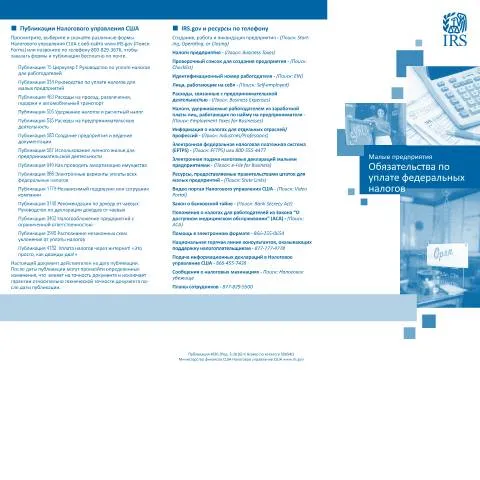
Understanding IRS Publication 4591RU: A Comprehensive Guide
The IRS Publication 4591RU, often referred to as PUB-4591RU, serves as a vital resource for taxpayers navigating complex federal tax obligations. This publication addresses the intricacies of federal tax liabilities for small businesses and self-employed individuals, providing a roadmap for compliance and guidance on various aspects of tax obligations.
Triggering the Need for Publication 4591RU
Knowing when to consult IRS Publication 4591RU is crucial. As a business owner or self-employed individual, you may find yourself overwhelmed by the myriad of tax rules and obligations. Events that typically trigger the need for this publication include:
- Starting a New Business: New business owners must familiarize themselves with federal tax responsibilities.
- Annual Tax Filing: Tax season necessitates a clear understanding of applicable tax liabilities.
- Changes in Business Structure: Transitioning from a sole proprietorship to a corporation requires a reassessment of tax obligations.
Navigating Tax Liabilities
Publication 4591RU outlines various federal tax obligations. Understanding these can prevent costly mistakes and ensure compliant operations. Some key liabilities include:
- Income Taxes: All businesses must report their income to the IRS.
- Employment Taxes: Employers have specific responsibilities regarding payroll taxes.
- Excise Taxes: Certain industries may be subject to additional taxes based on goods or services provided.
Decoding the Content of Publication 4591RU
The publication is structured to address common questions and scenarios faced by taxpayers. Each section contains important guidelines about obligations, completion of forms, and deadlines. Key sections include:
Overview of Federal Tax Obligations
This section breaks down the various types of taxes that small businesses must understand, including:
- Corporate taxes
- Partnership income taxes
- Self-employment taxes
Form Completion Guidelines
Publication 4591RU provides step-by-step instructions on completing essential tax forms such as:
- Form 1040: The individual income tax return.
- Form 941: The Employer’s Quarterly Federal Tax Return.
- Form 1065: Return of Partnership Income.
Each of these forms has specific fields that must be completed accurately to avoid delays or penalties.
The Submission Process: Where and How to File
Once tax forms are completed, understanding the submission process is essential.
Filing Options
Taxpayers have several options for submitting their forms, including:
- Online Submission: Many forms can be submitted electronically through the IRS e-File system.
- Mailing Paper Forms: Taxpayers can choose to mail their completed forms to designated IRS addresses based on their location.
- In-Person Submission: For some, visiting a local IRS office may be the preferred method.
What to Do in Case of an Error or Missing Information
Errors in filing can lead to significant consequences, including fines and audits. The publication offers guidance on how to address these issues:
Correcting Mistakes
If you discover an error in your submitted forms, follow these steps:
- Identify the nature of the error.
- Submit a corrected form if necessary.
- Monitor your IRS account for any communications regarding your correction.
Handling Missing Documentation
In instances where supporting documents are incomplete or missing, taxpayers should:
- Gather necessary documentation as quickly as possible.
- Submit the forms with a note explaining the missing pieces.
- Respond promptly to any IRS requests for additional information.
The Regulatory Framework Behind Publication 4591RU
Understanding the regulations governing Publication 4591RU can shed light on its importance. The IRS operates under the Administrative Procedure Act, which ensures transparency and provides a structure for federal agencies to follow when creating publications and regulations. This publication is updated regularly to reflect current laws and practices, illustrating the IRS's commitment to keeping taxpayers informed.
Historical Context of Tax Regulations
The evolution of federal tax obligations has been shaped by various legislative changes over the years. Understanding this history can provide insights into current practices:
- The introduction of new tax credits and deductions.
- Changes in tax rates for individuals and businesses.
- Revisions to compliance requirements based on administrative needs.
Consequences of Non-Compliance and Benefits of Adherence
It is essential to comprehend the implications of ignoring your tax responsibilities. Failure to comply with the guidelines published in IRS Publication 4591RU can lead to serious repercussions:
Potential Consequences
- Penalties: Financial penalties can accrue for late payments or inaccurate filings.
- Audits: Non-compliance can trigger audits, leading to further scrutiny of your financial records.
- Legal Action: In severe cases, failure to pay taxes can result in legal action from the IRS.
Realizing Benefits Through Compliance
On the other hand, adhering to the guidelines set forth in Publication 4591RU offers significant advantages:
- Access to Tax Credits: Compliant businesses are eligible for various tax credits that can reduce overall tax burdens.
- Improved Financial Management: Staying on top of tax obligations fosters better business practices and financial forecasting.
- Enhanced Reputation: Tax compliance can improve credibility with clients and stakeholders.
Practical Tips for Effective Tax Management
To ensure you’re leveraging the information in Publication 4591RU effectively, consider these practical strategies:
- Consult a Tax Professional: Engaging a CPA or tax advisor can provide personalized guidance based on your specific business needs.
- Utilize IRS Resources: Stay updated by regularly visiting the IRS website for the latest publications and tax news.
- Maintain Organized Records: Implement a systematic approach to record-keeping to ease the tax filing process.
Staying Informed: Utilizing IRS Resources
The IRS provides a wealth of resources for business owners. Accessing these materials can strengthen your understanding and compliance:
- IRS Video Portal for visual learning.
- Monthly IRS newsletters update on tax changes.
- Webinars and seminars focused on tax education for small businesses.
The Path Forward: Embracing Tax Responsibility
Ultimately, engaging with IRS Publication 4591RU is not just about compliance—it's about fostering a responsible business environment. By understanding your federal tax obligations and the mechanisms in place to address them, you position yourself for long-term success. Taking proactive steps will not only fulfill legal requirements but also enhance your business's overall financial health. Remember, a well-informed taxpayer is a powerful asset in navigating the complexities of federal taxation.
Understanding IRS Publication 4591: Key Definitions and Concepts
IRS Publication 4591 is a vital resource for taxpayers navigating the complexities of tax regulations, specifically focusing on the requirements for certain tax benefits associated with energy-efficient home improvements. Within this publication, numerous key terms are defined to ensure clarity in understanding eligibility criteria. Key definitions include:
- Qualified Energy Efficiency Improvements: These are improvements made to a home that meet specific energy efficiency criteria as established by the IRS and the Department of Energy.
- Residential Energy Property Costs: These refer to the costs associated with installing equipment that generates energy from renewable sources or enhances energy efficiency.
- Eligible Home: This term defines the type of home that qualifies for the tax credits offered under the publication, detailing specific requirements about the ownership and usage of the residence.
Understanding these definitions is crucial for taxpayers who wish to take advantage of available tax credits and deductions. Notably, these terms often have specific implications that affect how credits are calculated and claimed on returns. As such, taxpayers are encouraged to carefully review this section of the publication to ensure compliance and maximize potential benefits.
Navigating the Application Process for Tax Credits
Claiming tax credits as outlined in IRS Publication 4591 involves a structured process that taxpayers must carefully follow. Here’s a detailed breakdown of the steps involved:
- Document Your Improvements: It is essential to maintain thorough records of all expenses related to energy-efficient improvements. This includes receipts, invoices, and any contractor agreements. Having this documentation readily available is crucial for substantiating claims.
- Complete the Necessary Forms: Taxpayers must fill out Form 5695 (Residential Energy Credits) to claim any credits. This form requires detailed information about the improvements made, as well as the total costs incurred.
- Calculate Your Credit: Based on the details provided on Form 5695, taxpayers will calculate the exact amount of the credit they are eligible to receive. It is important to follow the IRS's guidelines closely to avoid errors in calculation.
- Incorporate the Credit into Your Tax Return: After determining the eligible credit, individuals should include this information on their main tax return, typically Form 1040. Make sure to carry over the calculated credit to the right line item of the tax return.
- File Your Return Timely: Ensure that you file your federal tax return by the deadline, which is typically April 15 of each year. If you are unable to file by this date, consider filing for an extension, but be aware that any taxes owed must still be paid on time to avoid penalties.
In addition, it is advisable to consult a tax professional or utilize IRS resources to verify that all steps have been completed accurately. This not only ensures compliance but can also clarify any uncertainties regarding the specifics of the credit application process.
Common Mistakes and Pitfalls to Avoid
When engaging with IRS Publication 4591 and claiming energy tax credits, taxpayers often encounter common mistakes that can lead to issues with their filings. Below are some pitfalls to be aware of:
- Insufficient Documentation: Failing to keep detailed records of expenses is one of the most significant errors. The IRS requires specific documentation to substantiate claims. Without it, taxpayers risk disqualification or more severe penalties.
- Incorrectly Identifying Qualified Improvements: Not all energy-efficient upgrades qualify for credits. Taxpayers should ensure that the improvements made are explicitly listed as qualified in Publication 4591. Misinterpretation of what qualifies can lead to denied claims.
- Missing the Deadline: Filing late can result in lost credits. It’s critical to be aware of tax deadlines and plan accordingly. Consider setting reminders or alarms as the filing date approaches to ensure timely submission.
- Overlooking State-Level Credits: While IRS Publication 4591 focuses on federal tax benefits, taxpayers should also investigate any additional state-level incentives available for energy-efficient improvements. Many states offer their own credits or rebates that can significantly enhance savings.
Avoiding these mistakes ensures a smoother filing process and maximizes potential tax benefits. Engaging with IRS resources or seeking professional advice can be invaluable in navigating these common challenges effectively.