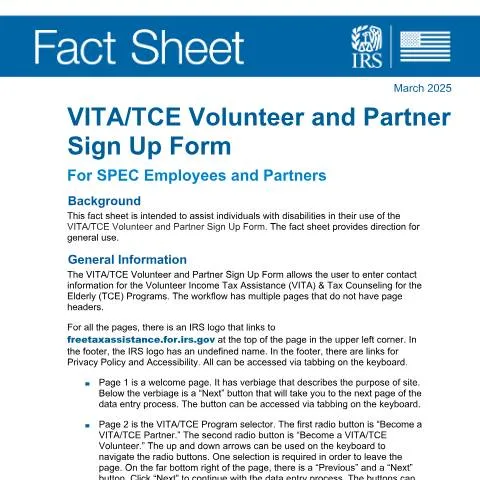
Navigating the VITA/TCE Volunteer and Partner Sign Up Form: Essential Insights
The VITA/TCE Volunteer and Partner Sign Up Form, officially categorized under IRS Publication P6081, plays a pivotal role in facilitating access to vital tax assistance programs. These programs, namely Volunteer Income Tax Assistance (VITA) and Tax Counseling for the Elderly (TCE), are designed to provide tax help to individuals in need, particularly those with disabilities, the elderly, and low-income taxpayers. Understanding the nuances of this form is crucial for potential volunteers and partners who wish to engage with these community services effectively.
Who Should Consider Submitting This Form?
This sign-up form is tailored for two distinct groups: potential partners and volunteers. Identifying your category is the first step in this process. Let’s break this down:
Potential Partners
- Community organizations looking to collaborate with VITA/TCE programs.
- Entities that can provide space, resources, or volunteers to enhance these tax assistance offerings.
- Organizations wanting to extend their tax aid reach in local communities.
Potential Volunteers
- Individuals keen to assist low-income taxpayers with their tax returns.
- Retirees or professionals with tax knowledge eager to support community service.
- People interested in receiving training and possibly earning continuing education credits.
Both groups play critical roles in ensuring that essential tax assistance is available to those who need it most.
The Significance of the VITA/TCE Form in Tax Assistance
The VITA/TCE Volunteer and Partner Sign Up Form is not merely a bureaucratic requirement; it's a gateway to community engagement and support for vulnerable populations. By completing this form, individuals and organizations are actively contributing to a critical social service that can help alleviate financial strain for many.
Step-by-Step Guide: Completing the Form
Filling out the VITA/TCE form may seem daunting at first, but each page is designed with user experience in mind. Let’s walk through the pages sequentially:
Page 1: Welcome Page
This initial page sets the tone for the process. It's a straightforward introduction with a "Next" button to move forward. Ensure you have your relevant information ready before proceeding.
Page 2: Program Selection
Here, you must choose between becoming a VITA/TCE Partner or a Volunteer. This selection is crucial, as it determines the subsequent information you will need to provide.
Page 3: Contact Information
Regardless of your selection, you will enter your contact details, including:
- First Name
- Last Name
- Phone Number
- Best Time to Contact
Make sure all fields are completed accurately to avoid errors when progressing to the next page.
Page 4: Specific Information Based on Selection
This page varies depending on whether you are signing up as a partner or a volunteer:
If Partnering
- Provide your organization’s name and details.
- Input required fields including zip code and organization phone number.
If Volunteering
- Complete your volunteer information, including language skills and prior involvement with VITA/TCE.
- Answer questions about your availability and interests in continuing education.
Key Deadlines and Timing: When to Sign Up and What Follows
Understanding the timeline for submitting your VITA/TCE form is essential:
Timing for Submission
There are no strict deadlines for sign-ups, but early registration is encouraged to ensure you receive adequate training and resources for the upcoming tax season, which typically runs from January to April.
Post-Submission Process
After submitting the form, you will receive a confirmation message indicating successful submission. This typically occurs immediately. Following that:
- Partners will be contacted for further collaboration details.
- Volunteers will be provided with training materials and schedules.
Distinguishing Features: VITA/TCE vs. Similar Forms
It’s crucial to differentiate the VITA/TCE Volunteer and Partner Sign Up Form from other IRS forms that may seem similar, such as Form 1040 for individual income tax returns or Form SS-5 for Social Security Number applications. Here’s how:
| Form Type | Purpose | Target Audience |
|---|---|---|
| P6081 (VITA/TCE Sign Up) | Sign up for volunteer or partnership in tax assistance | Community members and organizations |
| Form 1040 | File individual income tax returns | Taxpayers filing their taxes |
| Form SS-5 | Apply for a Social Security Number | Individuals requesting SSN |
Managing Issues: What to Do in Case of Errors or Missing Information
Errors or missing information can create delays in processing your sign-up. Here’s how to handle them:
Identifying Errors
- Upon clicking "Next," if a field is incomplete, an error message will prompt you to correct the issue.
- Be particularly cautious with email and phone formats to avoid issues.
Addressing Missing Information
If you realize you’ve submitted incomplete information, promptly contact the IRS or the local VITA/TCE coordinator to rectify the situation. They can guide you through updating your submission.
From Start to Finish: A Complete Overview of the Process
Let’s outline the entire journey from initiation to integration in the VITA/TCE program:
- Awareness: Understand the need for volunteers or partners in your community.
- Preparation: Gather necessary information and decide on your role (partner or volunteer).
- Submission: Fill out the VITA/TCE Sign Up Form accurately.
- Confirmation: Receive a confirmation upon successful submission.
- Training: Engage in any required training sessions provided by the IRS.
- Implementation: Begin your role in assisting with tax assistance through VITA/TCE.
By following these steps, you ensure a smooth transition into your role within these crucial programs.
Conclusion: Engaging in Community Service Through VITA/TCE
Participating in the VITA/TCE programs not only fulfills a community service need but also offers personal fulfillment and growth. The VITA/TCE Volunteer and Partner Sign Up Form, while straightforward, serves as a vital link in connecting volunteers and community organizations with those who need tax assistance the most. Your engagement can make a significant impact, providing essential resources to help individuals navigate their tax obligations with confidence.
Understanding the Scope of IRS Publication 6081
IRS Publication 6081 provides essential guidance regarding specific tax regulations and procedures applicable to taxpayers in unique situations. For example, it clarifies the tax implications of income received from various sources, including but not limited to overseas income, gifts, and inheritances. Taxpayers who may not be familiar with the nuances of these regulations should pay close attention to this publication, as it can significantly impact their tax obligations.
One of the key aspects covered in Publication 6081 is the distinction between ordinary income and capital gains. This differentiation is crucial because it influences the tax rates applied to the income. Understanding how your income fits into these categories can help you better strategize your tax planning, potentially lowering your tax liability through appropriate deductions and credits. Furthermore, taxpayers should be aware of the specific terminology and definitions included in the publication to avoid common pitfalls when filing their taxes.
How to Navigate IRS Forms Related to Publication 6081
For taxpayers looking to apply the information in IRS Publication 6081, understanding the relationship between this publication and specific IRS forms is essential. Generally, the relevant forms you might encounter include the Form 1040 for individual income tax, Form 8862 for claiming prior year losses, and Form 8889 for health savings accounts. Each of these forms has its own set of instructions, which can sometimes be complex. Therefore, it's recommended to consult Publication 6081 alongside these forms to ensure compliance with the regulations it addresses.
Furthermore, if you find yourself needing to amend a previously filed return due to new information or changes in your financial situation, Form 1040-X comes into play. This is particularly relevant if you need to correct your income reporting as influenced by the insights provided in Publication 6081. Understanding how to accurately fill out these forms is critical, as inaccuracies might lead to further complications, including potential audits or penalties.
Common Misunderstandings Related to IRS Publication 6081
Despite its comprehensive nature, several common misunderstandings often arise concerning IRS Publication 6081. One prevalent misconception is that the publication applies uniformly to all taxpayers. In reality, the guidance provided may vary based on individual circumstances, including residency status, income types, and other personal factors. For example, expatriates may face different tax obligations compared to residents, a nuance often overlooked.
Another misunderstanding relates to the interpretation of tax credits and deductions mentioned in the publication. Taxpayers may mistakenly believe that they qualify for certain credits simply because they meet one criterion, but the eligibility often requires fulfilling multiple conditions. A careful reading of the conditions outlined in Publication 6081 is crucial to ensuring that you do not miss out on valuable tax benefits or, conversely, claim benefits improperly.
Lastly, taxpayers sometimes assume that the information in Publication 6081 is static. However, it's essential to stay updated, as tax laws frequently change. Therefore, regularly checking the IRS website for the most current version of Publication 6081 and related guidelines is advisable to remain compliant and informed about your tax obligations.