Navigating the Intricacies of IRS Publication 6002: A Comprehensive Overview
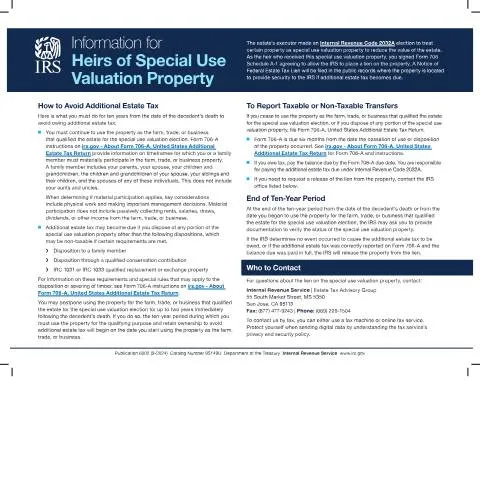
Understanding the complexities of taxation can be a daunting task, particularly when it involves specialized documents like the IRS Publication 6002. This essential publication outlines the implications for heirs of estates that have elected for special use valuation under Internal Revenue Code (IRC) Section 2032A. It serves as a crucial guide for heirs, executors, and estate planners alike. In this article, we delve into the nuances of Publication 6002, shedding light on its significance, the details you need to know for proper compliance, and the various situations that may arise.
Understanding Special Use Valuation and Its Significance
The concept of special use valuation allows certain properties to be assessed at a lower value for estate tax purposes if they are actively used in farming, business, or trade. This provision can lead to significant tax savings for heirs of the deceased. However, it comes with specific requirements and obligations.
The Role of Form 706 Schedule A-1
As an heir receiving property under this special use valuation, you will have signed Form 706 Schedule A-1, which essentially agrees to the IRS placing a lien on the property. This lien is a security measure for the IRS should there be additional estate taxes due in the future. Understanding this document is vital for navigating your responsibilities and rights as an heir.
Here’s a breakdown of what this entails:
- Executor's Election: The estate's executor made an election under IRC 2032A to treat certain property as special use valuation property.
- Impact of the Lien: The lien ensures that the IRS has a claim to the property until any potential additional estate tax is resolved.
Essential Obligations Post-Election
Once you inherit special use property, your responsibilities begin. For a ten-year period following the decedent's death, certain actions must be taken to avoid incurring additional estate tax liabilities.
Maintaining Qualified Use
To avoid additional estate taxes, the property must continue to be used for the same qualifying purpose. This means:
- You must engage in the farm, trade, or business that justified the special use valuation election.
- If you or a family member materially participates, this can include significant management roles or physical work.
Key participants are defined broadly, encompassing parents, spouses, children, and grandchildren.
Dispositions and Their Implications
If you decide to dispose of any portion of the special use property, you must be aware of specific rules regarding non-taxable dispositions. Acceptable disposals include:
- Transfers to family members.
- Qualified conservation contributions.
- IRC 1031 or IRC 1033 qualified replacements or exchanges.
Each of these categories has distinct requirements that must be met to ensure they do not trigger additional estate taxes.
Reporting Changes: Form 706-A and Its Timelines
When changes occur—whether ceasing the use of the property or its disposition—Form 706-A, United States Additional Estate Tax Return, becomes essential. This form must be filed within six months of any significant change in the status of the property.
Payment Responsibilities
If additional estate tax is owed, it is imperative to pay any balance due by the Form 706-A due date. Failing to meet this obligation can lead to penalties or additional interest accruing on the unpaid tax.
Documentation and Verification: The Importance of Record-Keeping
At the end of the ten-year period, documentation will be required to verify compliance with the terms of special use valuation. This may include:
- Proof of continued use in the qualifying business or trade.
- Records demonstrating that no taxable events occurred during the ten years.
If the IRS determines that no additional taxes are due, they will release the lien on the property, allowing for greater freedom in its use or transfer.
Unique Situations: Handling Complex Cases
Every estate has its unique challenges, especially when it involves properties under special use valuation. Understanding how to navigate these complexities is vital.
Foreign Heirs and Non-Resident Considerations
For foreign heirs or non-residents, the implications of IRS Publication 6002 can be even more intricate due to various tax treaties and regulations that may apply. It’s essential to:
- Consult an estate planning attorney familiar with both U.S. and international tax law.
- Thoroughly understand the obligations related to filing U.S. tax returns as a non-resident.
Minor Heirs: Legal Guardianship Issues
For minor heirs, the involvement of a legal guardian is necessary to manage the estate and make decisions regarding the property. This can complicate the filing processes significantly.
Practical Steps for Success
Filing and compliance with IRS Publication 6002 is not just about understanding the forms and their nuances; it is also about being proactive. Here are some practical steps you can take:
- Thorough Documentation: Keep meticulous records of all activities related to the property, including maintenance, sales, or transfers.
- Consult Professionals: Working with tax professionals or estate planners can help navigate tricky situations and ensure compliance.
- Regular Updates: Stay informed on any changes in IRS policies or tax laws that may affect your obligations.
Channels for Filing and Submitting Forms
Understanding the various channels for submitting IRS Publication 6002 and related forms is crucial. The methods include:
- Online Submission: Utilize the IRS e-filing system for timely submissions, where applicable.
- Paper Filing: Send completed forms via mail to the appropriate IRS office. Ensure you keep copies for your records.
- In-Person Meetings: For complex issues or disputes, consider scheduling an appointment at your local IRS office.
What to Expect from the IRS
Once submitted, it’s essential to be prepared for any follow-up questions or additional documentation requests from the IRS. This process can vary based on the complexity of your case.
Tracking Your Submission
Monitoring the status of your filings can help you stay informed. You can:
- Utilize IRS online tools for tracking your submission and ensuring timely responses.
- Maintain ongoing communication with IRS representatives, especially if dealing with complications or discrepancies.
Conclusion: Staying Vigilant and Informed
IRS Publication 6002 plays a vital role for heirs dealing with properties subject to special use valuation. By understanding its requirements, maintaining detailed records, and ensuring compliance, you can navigate the complexities of estate taxes more effectively. Furthermore, being proactive and seeking professional guidance can ease the burdens associated with managing and preserving family assets through this intricate process.
Understanding IRS Publication 6002: Key Highlights
IRS Publication 6002, officially titled "Tax Provisions and Administrative Guidance for the International Tax Compliance Program," serves as an essential resource for taxpayers navigating international tax obligations. This publication outlines critical aspects of compliance for U.S. citizens and residents engaged in foreign transactions, as well as foreign entities interacting with the U.S. tax system.
One of the primary focuses of Publication 6002 is the Foreign Account Tax Compliance Act (FATCA), which mandates U.S. taxpayers to report certain foreign financial accounts and offshore assets. This reporting is crucial for ensuring compliance and avoiding significant penalties. Individuals must file Form 8938, Statement of Specified Foreign Financial Assets, if they exceed specified asset thresholds. For example, the threshold is $200,000 for single filers residing in the U.S. at the year-end, while it increases to $300,000 for married couples filing jointly.
Publication 6002 also discusses the implications of the Common Reporting Standard (CRS), an international standard for the automatic exchange of financial account information. U.S. taxpayers must be aware of how CRS may affect their reporting obligations, particularly if they have foreign investments or bank accounts in countries participating in the CRS.
Filing Requirements and Deadlines
Complying with the regulations stated in IRS Publication 6002 includes adhering to various filing requirements and deadlines. It's crucial to understand the specific forms that must be submitted based on your circumstances. For instance, in addition to Form 8938, taxpayers may also need to file the FBAR (FinCEN Form 114) if their foreign accounts exceed $10,000 in aggregate value at any point during the calendar year.
The filing deadline for both Form 8938 and the FBAR typically aligns with the tax return due date, which is April 15 for most U.S. taxpayers. However, taxpayers can request an automatic extension to file their tax return, which also extends the deadline for these forms. Keep in mind that while the IRS allows for an extension, any tax owed is still due by April 15 to avoid penalties and interest.
For those who may qualify for the Foreign Earned Income Exclusion or the Foreign Tax Credit, Publication 6002 provides guidance on how these considerations can impact your total tax liability. Understanding these options can significantly reduce your taxable income, making it essential to assess your eligibility appropriately.
Common Pitfalls and How to Avoid Them
Navigating the complexities of international tax compliance as outlined in IRS Publication 6002 poses several challenges, and many taxpayers fall into common pitfalls. One prevalent issue is the failure to accurately report foreign financial assets or accounts. The penalties for non-compliance can be severe, ranging from monetary fines to criminal charges for willful neglect. To avoid such pitfalls, taxpayers are encouraged to maintain meticulous records of all foreign transactions and accounts.
Another common mistake involves misunderstanding the thresholds for reporting requirements. Taxpayers should be aware that the asset thresholds for Form 8938 and FBAR reporting differ and must ensure that they are not merely complacent about their reporting responsibilities if they fall below one threshold but exceed another. Consulting IRS guidance and, if necessary, obtaining advice from a tax professional can help clarify these requirements.
Lastly, many taxpayers underestimate the importance of timely submissions. The IRS is strict about deadlines, and late submissions can result in significant penalties. Setting reminders in advance and preparing your documentation well before the filing deadline can help mitigate the chance of late submissions. Utilizing tools and resources provided by the IRS can also aid in ensuring that all necessary forms are correctly completed and submitted on time.