Navigating the IRS Publication 5905: Your Comprehensive Guide
As consumers increasingly turn toward clean vehicles, understanding the nuances of IRS Publication 5905 becomes crucial for anyone looking to leverage tax credits associated with these purchases. This document outlines the essential procedures and requirements for claiming clean vehicle tax credits and is designed to guide buyers through the often-complex landscape of federal tax law.
Understanding the Role of IRS Publication 5905
IRS Publication 5905 serves as an informational resource that provides clarity on the clean vehicle tax credit system. This publication is particularly relevant for buyers of both new and used clean vehicles, detailing what is required to claim the tax credits allowable under federal law.
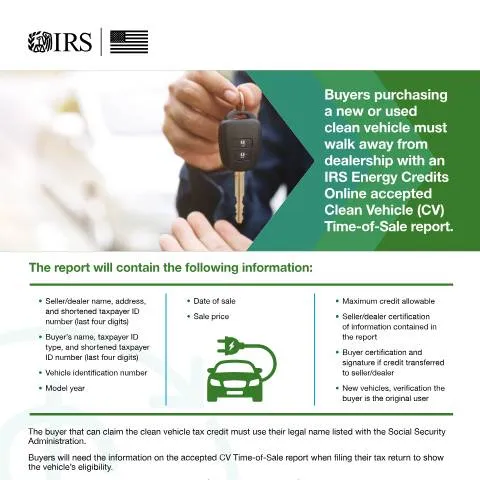
The publication explains that buyers must obtain a Clean Vehicle Time-of-Sale report from the dealership, which contains critical information necessary for filing a tax return claiming these credits.
Key Elements of the Clean Vehicle Time-of-Sale Report
- Seller/Dealer Information: Name, address, and shortened taxpayer ID number (last four digits).
- Buyer Information: Name, taxpayer ID type, and shortened taxpayer ID number (last four digits).
- Vehicle Details: Vehicle Identification Number (VIN), model year, sale date, and sale price.
- Credit Information: Maximum credit allowable for the vehicle, along with seller/dealer certification of the information.
- Certification: Buyer’s certification and signature if credit is transferred to the seller/dealer.
- Original User Verification: For new vehicles, confirming that the buyer is the original user.
Who Should File and When? Key Timelines
Understanding deadlines is pivotal not just for compliance, but also for optimizing your financial situation. Buyers looking to claim clean vehicle tax credits must file their tax returns using the information from the Time-of-Sale report by the federal tax deadline, typically falling on April 15 each year. This means:
- If you purchase a clean vehicle in 2023, ensure your tax return is filed by April 15, 2024.
- Any extensions to your tax return filing deadline would apply, but it's crucial to have the Time-of-Sale report ready to avoid delays.
Next Steps After Filing
Once you've filed your tax return with the necessary documentation, the IRS will process your claim. Be prepared to wait for confirmation, especially if you are submitting a claim for the first time or if there are discrepancies in your filings.
Distinctions Between IRS Publication 5905 and Other Forms
Several IRS publications and forms exist regarding tax credits and deductions, but IRS Publication 5905 is specifically focused on clean vehicles. Unlike other tax forms, such as Form 1040 for individual income tax or Form 8862 for claiming credits after disallowance, Publication 5905 is not a filing form itself but rather a guide for consumers on how to execute their claims accurately.
This distinction is essential because it mitigates the risk of confusion regarding documentation requirements. Each document has its place, and knowing which one to refer to can significantly simplify the tax credit claiming process.
Additional Forms to Consider
| Form Name | Description | Use Case |
|---|---|---|
| Form 1040 | Individual Income Tax Return | All taxpayers must file to report income and calculate tax liability. |
| Form 8862 | Application for the Renewal of Credit After Disallowance | Used when a taxpayer previously had credits disallowed and wishes to reclaim. |
| Publication 5899 | Clean Vehicle Credit Transfer | Details the transfer process of clean vehicle tax credits to dealers. |
| Publication 5900 | Information for Consumers Transferring Clean Vehicle Tax Credits | Guidance for consumers who decide to transfer their credits at the point of sale. |
Challenges: Errors, Missing Information, and Refusals
It’s not uncommon for buyers to encounter challenges while navigating the clean vehicle tax credit process. Mistakes or missing information can lead to delays or even denials of tax credits. Here are some scenarios one might face and how to address them:
Error Rectification Process
If your claim for a clean vehicle tax credit is denied or if you've received a notice regarding errors, here’s a step-by-step action plan:
- Review the Notice: Carefully examine the notice from the IRS to understand why your credit was denied.
- Check Your Documentation: Ensure you have all necessary documentation, including the Time-of-Sale report.
- Submit a Corrected Claim: If the error is on your part, prepare a corrected tax return and submit it using Form 1040X.
- Contact the Dealer: If the error stems from dealership information, reach out to them for clarification or corrections.
- Follow Up: Once you’ve submitted corrections, keep an eye on the status of your claim through the IRS website.
Handling Missing Documentation
In cases where the Time-of-Sale report or other necessary documents are missing, prompt action is essential. You can:
- Request a copy from the dealership.
- Check your records for any emails or communication regarding the vehicle purchase.
- Document your attempts to obtain the required information to present to the IRS if necessary.
The Legal Framework Surrounding IRS Publication 5905
The IRS operates within a complex legal framework, governed by the Administrative Procedure Act and various enabling statutes that dictate how publications and forms are created and disseminated. IRS Publication 5905 is rooted in legislative efforts to promote clean vehicle usage as part of broader environmental conservation goals.
This publication reflects congressional intent to encourage the purchase of clean vehicles through tax incentives. By outlining the process for claiming credits, it serves as guidance aimed at maximizing taxpayer compliance and support for clean energy initiatives.
Historical Context and Evolution of Clean Vehicle Tax Credits
The clean vehicle tax credit system has evolved significantly since its inception. Initially introduced as part of the Energy Policy Act of 2005, the program has seen numerous amendments and updates to reflect changing environmental policies and consumer needs. Publication 5905 represents the latest iteration of IRS guidance, ensuring taxpayers are informed of current credit limits and eligibility requirements.
Identifying the Target Audience for Publication 5905
The primary audience for IRS Publication 5905 includes individual taxpayers who purchase new or used clean vehicles. However, it also extends to:
- Dealerships: Who must provide accurate documentation to buyers.
- Tax Preparers: Who assist clients in navigating the complexities of tax credits.
- Policy Makers: Who are interested in the efficacy of tax incentives and their impact on clean vehicle adoption.
Specific User Scenarios
Consider the following scenarios:
- A first-time buyer of an electric vehicle seeking to maximize their tax benefits.
- A consumer purchasing a used hybrid vehicle and needing clarification on eligibility for the credit.
- A dealer attempting to understand their responsibilities in providing the necessary documentation.
Breaking Down the Components of IRS Publication 5905
Each section of Publication 5905 plays a critical role in helping navigate the clean vehicle tax credits. Let’s dissect the key components:
Eligibility Criteria Explained
Eligibility for clean vehicle tax credits can vary based on several factors:
- Type of Vehicle: Both new and used vehicles qualify, but they must meet specific emission standards.
- Purchaser's Tax Status: Buyers must have a legal name consistent with the Social Security Administration records.
- Transfer of Credit: Understanding how to transfer credits to the dealer at point of sale can affect overall savings.
Common Pitfalls in the Application Process
Buyers often make mistakes while completing their claims. Common pitfalls include:
- Inaccurate taxpayer ID numbers.
- Failure to obtain the Time-of-Sale report.
- Not filing by the deadline.
By familiarizing themselves with the nuances of IRS Publication 5905 and the clean vehicle tax credit process, buyers can ensure they are well-prepared to take advantage of the available incentives, contributing to a cleaner environment while also benefiting financially.
Understanding the Impact of IRS Publication 5905 on Retirement Planning
IRS Publication 5905 provides critical information for individuals planning their retirement, specifically regarding the rules governing Roth IRAs and traditional IRAs. One key aspect of this publication is its guidance on required minimum distributions (RMDs) and the implications for taxpayers of different age brackets.
As of 2023, individuals must begin withdrawing a minimum amount from their retirement accounts by April 1 of the year following the year they turn 73. However, those who reach 70½ before January 1, 2020, have different rules that apply to them. This difference is crucial for financial planning as it affects how much individuals can potentially save and grow their retirement funds tax-deferred.
Taxpayers should also be aware of the tax implications of these withdrawals. For traditional IRAs, RMDs are considered taxable income, which can impact an individual’s tax bracket and overall tax liability. On the other hand, Roth IRAs do not have RMDs during the owner's lifetime, which allows for greater flexibility in retirement income planning.
Strategically planning for RMDs can also present opportunities for tax-loss harvesting or charitable gifting strategies, which can mitigate tax liabilities. Understanding the provisions laid out in Publication 5905 can help taxpayers make informed decisions about how and when to withdraw from their retirement accounts.
The Role of IRS Publication 5905 in Estate Planning
Estate planning is another area significantly influenced by IRS Publication 5905. For individuals with substantial IRA assets, knowing the guidelines for inherited IRAs is essential. The publication outlines the rules governing how heirs can access IRA funds and the tax implications of those distributions.
One crucial change enacted through the SECURE Act in 2019 is the elimination of the “stretch IRA” for most beneficiaries. This means that non-spouse beneficiaries must withdraw the entire balance of an inherited IRA within 10 years of the original account holder's death. This shift can lead to a substantial tax burden for heirs if they do not plan carefully.
Publication 5905 emphasizes the importance of naming beneficiaries correctly on IRA accounts to ensure that the funds are distributed according to the account holder's wishes while minimizing tax liabilities. This includes considerations for spouses, children, and charitable organizations. Each beneficiary type has different tax implications, and planning accordingly can significantly affect the after-tax value of inherited IRAs.
Furthermore, the publication provides guidance on how to roll over inherited IRA funds into a new IRA account, preserving the tax-advantaged status of those funds. Understanding these rules as outlined in IRS Publication 5905 can help individuals craft a more effective estate plan that minimizes taxes and maximizes the wealth passed down to heirs.
Tax Filing Considerations Related to IRS Publication 5905
When it comes to tax filing, IRS Publication 5905 lays out specific considerations for taxpayers who have IRAs. One of the significant aspects covered is how to report contributions and distributions accurately on Form 1040. Understanding these requirements is essential to avoid potential pitfalls during tax season.
Taxpayers must report any contributions to traditional or Roth IRAs, as well as any distribution withdrawals made during the tax year. For traditional IRAs, contributions may be tax-deductible, depending on the taxpayer's income level and whether they or their spouse is covered by an employer-sponsored retirement plan. However, excess contributions can lead to penalties, so understanding the contribution limits outlined in the publication is crucial.
Additionally, for distributions from IRAs, taxpayers must report any taxable amounts correctly. This includes understanding the tax implications of different types of distributions, such as early withdrawals or rollovers. Publication 5905 details how to determine whether a distribution is subject to the 10% early withdrawal penalty, which applies to individuals under the age of 59½, with specific exceptions.
Lastly, taxpayers using IRA funds for qualified higher education expenses or first-time home purchases can also find valuable information in the publication regarding how these distributions are treated for tax purposes. By following the guidelines set forth in IRS Publication 5905, taxpayers can ensure compliance and potentially maximize their tax benefits associated with their IRA accounts.