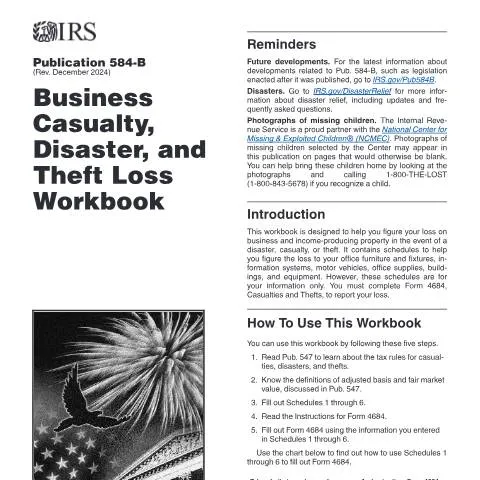
Understanding IRS Publication 584-B: Your Guide to Business Losses
In the event of a disaster, casualty, or theft, business owners may find themselves in need of a structured approach to assess their financial losses. IRS Publication 584-B, updated in December 2024, is designed specifically for this purpose, facilitating the reporting and management of losses associated with business and income-producing properties.
The Context: Why IRS Publication 584-B Matters
The IRS recognizes that disasters and thefts can severely impact businesses, affecting their operational capabilities and financial health. Publication 584-B serves as a crucial tool for business owners to navigate through the complexities of claiming losses on their tax returns. Understanding the role of this publication is essential for accurate reporting and maximizing potential deductions.
Real-world Impact of Business Losses
Consider a small business owner who operates a retail store. A sudden fire causes substantial damage to the inventory and fixtures. Without a clear understanding of how to document and claim these losses, the owner risks significant financial instability. Publication 584-B provides structured schedules and guidelines to ensure that business losses are accurately calculated and reported, allowing the owner to recover some financial footing through tax relief.
Navigating the Loss Reporting Process
To effectively utilize IRS Publication 584-B, one must follow a specific sequence of steps that leads from the assessment of loss to the filing of tax forms. Here’s how to navigate the process:
Step-by-Step Approach to Determine Losses
- Read Related Publications: Begin by reviewing IRS Publication 547. This document outlines the general tax rules associated with casualties, disasters, and thefts, providing a foundational understanding necessary for the subsequent steps.
- Understand Key Terms: Familiarize yourself with the definitions of adjusted basis and fair market value. These terms are critical in accurately determining the extent of the financial loss.
- Utilize Schedules: Complete the schedules in Publication 584-B that correspond to your business property. These schedules facilitate the calculation of losses related to various types of business assets, including office furniture, equipment, and vehicles.
- Consult the Instructions for Form 4684: This form is used to report casualties and thefts. The instructions accompanying Form 4684 will guide you on how to transfer the information from your schedules accurately.
- Complete Form 4684: Finally, input the calculated losses into Form 4684 using the information from your schedules. Ensure that every section is filled out carefully to avoid any discrepancies.
Key Differences: Understanding Publication 584-B vs. Other Forms
Publication 584-B is often confused with other IRS forms related to loss reporting. Understanding its unique purpose can help business owners avoid errors in their filings.
Comparative Overview of Related Documents
| Document | Purpose | Usage Context |
|---|---|---|
| Publication 584-B | Guidelines for calculating business losses due to disasters, thefts, and casualties. | Business and income-producing properties. |
| Form 4684 | Official form to report losses from casualties and thefts. | Required for tax filings. |
| Publication 547 | Comprehensive overview of tax rules affecting casualties and thefts. | Preliminary research before loss calculation. |
Timeline: When to Utilize Publication 584-B
Timing is critical when dealing with disasters or thefts. The filing timeline can directly affect the ability to claim losses on tax returns. Here’s a breakdown of significant dates and deadlines:
Important Dates for Business Owners
- Incident Occurrence: Document the date and details of the disaster or theft as soon as it occurs.
- Loss Assessment Period: Conduct a thorough assessment of the losses incurred within a reasonable timeframe following the incident.
- Filing Deadline: Business losses must be reported on tax returns by the typical deadline of April 15 of the following tax year. Any extensions for filing must also be taken into account.
- Amendment Period: If necessary, there may be a period for amending past tax returns to include previously unreported losses, typically within three years from the original filing date.
Who Should Use Publication 584-B?
While Publication 584-B is primarily geared toward business owners, specific profiles may find themselves in different scenarios regarding loss reporting. Understanding these profiles can help tailor the use of the publication to individual circumstances.
Diverse Scenarios and Profiles
- Small Business Owners: Typically the primary users of this publication, who experience losses due to natural disasters or thefts.
- Income-Producing Property Owners: Individuals who own rental properties may also utilize this publication if losses occur affecting their property income.
- Non-Profit Organizations: Non-profits often face similar risks of loss and can apply the guidelines in Publication 584-B for accounting purposes.
- Franchise Owners: Franchisees may face unique circumstances, depending on their franchise agreement and the nature of their business losses.
Filing Channels: Navigating Submission Routes
Filing your claims accurately and efficiently requires understanding the various channels available. The IRS allows several options for submitting forms and information.
Available Submission Methods
- Online Filing: Many business owners opt for electronic submission through IRS e-file systems, which provide quicker processing times and immediate confirmation of receipt.
- Papercuts: Traditional paper filing is still available, but it may involve longer wait times for processing and potential delays, especially during peak filing seasons.
- In-person Assistance: For those needing help, the IRS offers face-to-face assistance at local offices. It’s advisable to schedule appointments to minimize wait times.
Final Thoughts: Leveraging IRS Publication 584-B for Successful Claims
Successfully navigating the aftermath of a disaster involves more than just assessing losses — it's about understanding the legal and procedural frameworks that govern tax claims. IRS Publication 584-B is a vital resource that not only guides business owners through calculating losses but also prepares them for critical future tax implications. By comprehending its role and leveraging its resources effectively, business owners can make informed decisions that secure their financial stability in challenging times.
Remember, the path through loss recovery is often complex, and utilizing tools like Publication 584-B can make a significant difference in how effectively you reclaim your business's financial health.