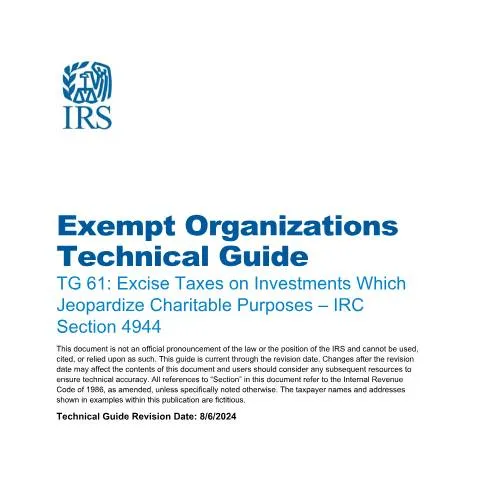
Navigating IRS Publication 5584: A Comprehensive Guide
Understanding the intricacies of IRS Publication 5584 can feel daunting, especially for those involved with charitable organizations. This document, which concerns excise taxes on investments that jeopardize charitable purposes under Section 4944 of the Internal Revenue Code, serves a vital role in ensuring that charitable entities maintain compliance with federal regulations. For organizations that rely on donor trust and public goodwill, grasping the nuances of this publication is critical.
Your Role as a Charitable Organization: Compliance Essentials
Charitable organizations, including private foundations, must navigate a complex landscape to ensure they do not engage in jeopardizing investments. These are investments that, according to the IRS, could risk the foundation’s ability to fulfill its charitable goals. The IRS expects organizations to exercise ordinary business care and prudence when making investment decisions.
Who is Affected?
- Private Foundations: Organizations classified as private foundations must be particularly wary of jeopardizing investments as they can face hefty excise taxes.
- Public Charities: While primarily concerned with public support, public charities must also adhere to the guidelines set forth in this publication.
- Investment Managers: Individuals or firms managing investment portfolios on behalf of charitable organizations must be informed of these regulations to avoid incurring liabilities.
Understanding Jeopardizing Investments: A Closer Look
Section 4944 defines jeopardizing investments in detail. An investment is considered jeopardizing if it does not align with the charitable purposes of the organization or if it poses a risk to the assets necessary for achieving those purposes.
Key Definitions and Considerations
To navigate the complexities of jeopardizing investments, organizations should consider the following:
- Ordinary Business Care and Prudence: This principle requires organizations to act as a prudent investor would, taking into account the financial health and purpose of their investments.
- Time of Investment: Decisions made at the time of investment are crucial; organizations must evaluate whether their investments align with their long-term objectives.
- Close Scrutiny: Certain investments require heightened scrutiny due to their nature or the market in which they operate.
Case Studies: Identifying Jeopardizing vs. Non-Jeopardizing Investments
Real-world examples help clarify the distinction between jeopardizing and non-jeopardizing investments. Understanding these nuances can prevent organizations from incurring unnecessary taxes.
Examples of Investments
| Investment Type | Jeopardizing? | Rationale |
|---|---|---|
| High-risk startup funding | Yes | Excessive risk with no clear charitable outcome. |
| Municipal bonds | No | Stable and typically low-risk, aligned with charitable goals. |
| Investments in non-charitable entities | Yes | May divert funds from charitable purposes. |
| Program-related investments | No | Directly support charitable objectives and missions. |
Filing Requirements: When and How
Organizations must be aware of the filing requirements associated with IRS Publication 5584. The need to report investments and any potential jeopardizing actions is critical not only for compliance but also for transparency with stakeholders.
Critical Deadlines
Tax-exempt organizations operate on a fiscal calendar that typically aligns with the calendar year; thus, understanding key deadlines is essential:
- Tax Return Filing Deadline: Organizations must file Form 990-PF for private foundations by the 15th day of the 5th month after the end of their accounting period. For calendar year foundations, this is typically May 15.
- Amendments: If an organization realizes a jeopardizing investment after filing, it may need to amend its tax return or report changes during the next filing period.
The Aftermath: What Happens Next?
After filing, organizations may wonder what steps to expect from the IRS. The administration’s review process can be thorough and may involve direct communications with the organization.
Managing Communications with the IRS
If your organization is flagged for potential jeopardizing investments, here are steps to take:
- Documentation: Ensure all correspondence with the IRS is documented meticulously.
- Clarification Requests: If unclear about the IRS's stance, do not hesitate to seek clarifications directly from the agency.
- Consult Professionals: Consider hiring a tax professional familiar with IRS excise tax regulations for guidance.
Strategic Abatement of Excise Taxes
Understanding the processes surrounding tax abatement is crucial for organizations that find themselves facing excise taxes for jeopardizing investments. IRS Publication 5584 outlines procedures for both first-tier and second-tier taxes, which can save your organization significant funds if approached correctly.
First and Second Tier Taxes Explained
- First Tier Tax: Imposed on the amount of the investment that jeopardizes the charitable purpose. The tax rate is generally 10% of the amount involved.
- Second Tier Tax: If the jeopardizing investment is not corrected in a timely manner, a second-tier tax of 200% may apply.
Rehabilitation of Jeopardizing Investments
Should your organization identify a jeopardizing investment, the IRS allows for certain remedial actions to rehabilitate the investment and avoid penalties. The IRS encourages proactive communication and remediation.
Steps to Remove Jeopardy
- Transfer of Investment: Organizations may transfer the investment to another private foundation or sell it to a third party.
- Corrective Actions: Engage in corrective measures to ensure the organization's investments align with its charitable purposes.
- Seek IRS Guidance: Before making significant decisions, consider consulting with the IRS for guidance specific to your situation.
Closing Thoughts: Embracing Compliance and Best Practices
Navigating the complexities of IRS Publication 5584 requires diligence, a comprehensive understanding of regulations, and proactive engagement with the IRS. By embracing compliance and implementing best practices, charitable organizations can safeguard their missions and foster trust with their communities and stakeholders. Frequent training and consultations with tax professionals can also enhance an organization's ability to stay compliant while effectively managing its investments.
Understanding the Importance of IRS Publication 5584
IRS Publication 5584 serves as a crucial document for taxpayers, particularly those involved in the world of tax-exempt organizations. In this publication, the IRS lays out the definitions, eligibility requirements, and operational guidelines pertinent to these organizations. Familiarity with this publication not only aids in compliance but also enhances understanding among those involved in managing these entities.
This document is especially essential for organizations seeking tax-exempt status under Section 501(c)(3) of the Internal Revenue Code. By clearly delineating the responsibilities, benefits, and specific requirements, it sets the groundwork for organizations to ensure they meet all necessary qualifications. One key takeaway from Publication 5584 is the emphasis on ongoing compliance; receiving tax-exempt status is not a one-time event but an ongoing obligation. Organizations must stay informed about changes in tax law and maintain proper accounting records to uphold their status.
Additionally, understanding the implications of unrelated business income is critical for tax-exempt organizations. The publication details how income earned from activities unrelated to an organization's exempt purpose could lead to taxation under unrelated business income tax (UBIT). This nuanced understanding can assist organizations in strategic planning, enabling them to diversify funding sources while remaining compliant with IRS regulations.
Common Misconceptions Regarding Tax-Exempt Status
Tax-exempt status is often shrouded in misconceptions that can lead to costly mistakes for organizations. One prevalent myth is that achieving tax-exempt status means that the organization is entirely exempt from all federal, state, and local taxes. In reality, while tax-exempt organizations do not pay federal income tax on income related to their exempt purpose, they may still be subject to other types of taxes, such as payroll taxes or sales tax in certain jurisdictions. Understanding this distinction is vital for effective financial planning.
Another misconception is the belief that all donations to tax-exempt organizations are tax-deductible for the donor. While most contributions to 501(c)(3) organizations do qualify for tax deductions, there are exceptions, such as donations made to private non-operating foundations. This can create confusion among donors and potentially lead to decreased contributions if individuals believe their donations are not deductible.
Organizations must be proactive in educating their donors about the conditions under which contributions are deductible. Transparency around the organization’s tax status and its implications for donors can promote trust and potentially increase funding. Moreover, some organizations may not realize that lobbying activities are permissible as long as they do not constitute a substantial part of their overall activities. Understanding what constitutes "substantial" is key in navigating the complexities of allowable advocacy under IRS guidelines.
Steps to Apply for Tax-Exempt Status: A Detailed Guide
Applying for tax-exempt status can be a daunting process, but being methodical can simplify your journey. The first step involves determining the type of tax-exempt status your organization qualifies for, commonly under Section 501(c)(3) for charitable organizations. After this determination, it is essential to develop a clear mission statement that aligns with IRS expectations.
Once your mission is established, prepare for the application. This involves gathering necessary documents, including articles of incorporation, bylaws, and a detailed narrative of your organization’s activities. Form 1023, also known as the Application for Recognition of Exemption Under Section 501(c)(3) of the Internal Revenue Code, is the primary form that organizations must complete and submit to the IRS. It’s crucial to be thorough and transparent in this form to avoid delays or potential rejection.
Upon submission, the IRS may take several months to process your application, and they may request additional information. It is essential to maintain communication with the IRS during this time and respond promptly to any requests. After approval, organizations should closely adhere to governance practices and record-keeping as outlined in IRS Publication 5584.
Regular audits and updates to your organization’s practices can help ensure ongoing compliance with federal regulations. Moreover, it’s advisable to consult legal or tax professionals specializing in nonprofit law to navigate any complexities that may arise during your application process.