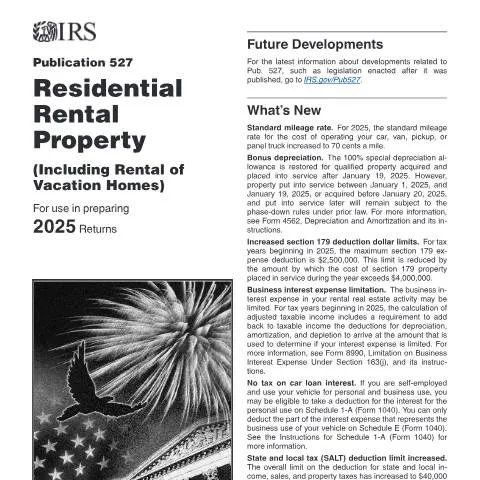
Navigating IRS Publication 527: Your Guide to Residential Rental Property Taxation
When you own rental properties, understanding the tax implications can be daunting. IRS Publication 527 serves as a vital resource for landlords, detailing how to report income, deductions, and the nuances involved with both long-term rentals and vacation homes. Whether you're a seasoned property owner or new to the rental market, comprehending the intricacies of this publication is crucial for optimizing your tax situation.
The Purpose of IRS Publication 527 in Tax Filing
Publication 527 is not merely a guide; it is an essential tool that provides instructions on how to report income and expenses related to residential rental properties. It delineates how different types of rental activities affect your tax obligations. Here are the main points this publication covers:
- Rental Income Reporting: All rental income must be reported, regardless of whether it comes from a long-term lease or a short-term rental arrangement.
- Deductions Allowed: It clarifies which expenses can be deducted, including repairs, utilities, and depreciation.
- Depreciation Guidelines: The publication outlines how to depreciate your property over time, which can substantially reduce taxable income.
- Special rules for vacation homes: The tax treatment differs if you rent out a property part-time versus full-time.
Understanding Different Profiles: Who Should File Publication 527?
Publication 527 is designed for various profiles of property owners, including:
- Full-time Landlords: Individuals who rent out properties full-time for profit must be well-acquainted with the details of this publication.
- Vacation Home Owners: Those who rent out a vacation home when not in use have particular rules to follow, which are elaborated in the publication.
- Individuals with Mixed-Use Properties: If you live in your rental property part of the year and rent it out the rest, understanding the rules for mixed-use properties is essential.
Payment and Documentation: Essential Preparations for Filing
Before completing your tax return, it's imperative to gather all necessary documentation. The IRS requires specific forms and records, which may include:
- Income Statements: Documentation of all rents received, including any security deposits that were not returned.
- Expense Records: Invoices and receipts for all deductibles such as maintenance, repairs, and management fees.
- Depreciation Schedules: Records of the property's cost basis and previous depreciation taken, if applicable.
- Form 4562: This form is crucial for reporting depreciation and amortization of assets.
Filling Out IRS Publication 527: Key Sections to Address
When it comes time to fill out the details required by Publication 527, certain sections demand careful attention. Here’s a breakdown of important components:
Reporting Rental Income
All income from your rental activities must get reported on your tax return. This includes:
- Rent payments from tenants.
- Any additional fees received, such as pet deposits or late fees.
Failure to report all income can lead to penalties.
Deducting Expenses
You'll want to categorize your expenses into operational costs, maintenance, and improvements. Here are some examples:
- Operational Costs: Utilities, insurance, and property taxes.
- Maintenance: Repairs that do not enhance the property’s value but keep it functional.
- Improvements: Significant upgrades that add value, which will be depreciated over time.
Understanding Depreciation
Depreciation allows property owners to recover the cost of the property over several years. Familiarize yourself with the Modified Accelerated Cost Recovery System (MACRS) as it applies to residential rental property. The core points include:
- Properties are typically depreciated over 27.5 years.
- Improperly accounting for this expense can lead to financial losses and IRS scrutiny.
Electronic vs. Paper Submission: Navigating the Filing Process
Choosing how to submit your tax documents can affect the timeline and security of your filing. IRS allows for both electronic and paper submissions, each with its own set of pros and cons:
| Submission Method | Advantages | Limitations |
|---|---|---|
| Electronic Filing | Speed: Faster processing and quicker refunds. Accuracy: Many programs offer checks for common errors. | Requires Software: Must have access to electronic filing software or services. |
| Paper Filing | Familiarity: Some find traditional paper forms easier to manage. No Software Costs: Avoids fees associated with e-filing services. | Longer Processing Time: Refunds take longer to receive. |
Dealing with Discrepancies: What Happens if Errors Occur?
In the event of a tax return error or missing documentation, timely action is crucial. Here are steps to manage discrepancies:
- Filing Amended Returns: If you discover an error, file Form 1040-X to amend your return, ideally as soon as possible.
- Responding to IRS Notices: If the IRS reaches out regarding discrepancies, respond promptly to avoid penalties or audits.
- Keep Accurate Records: Always maintain clear records to substantiate your claims in case of an audit.
Consequences of Non-compliance: Understanding Your Obligations
Failing to comply with the requirements set forth in Publication 527 can have serious implications. Some potential consequences include:
- Financial Penalties: Underreporting income could result in fines or additional taxes owed.
- Audits: Non-compliance may trigger an IRS audit, which can be time-consuming and stressful.
- Loss of Deductions: Missing out on legitimate deductions can inflate your taxable income.
In preparation for filing, it’s essential to understand that meticulous attention to detail can save you from potential pitfalls. IRS Publication 527 is more than a guideline; it provides a roadmap through the complexities of residential rental property taxation, ensuring you remain compliant while maximizing your deductions.
Looking Ahead: Updates and Future Considerations
Tax regulations can evolve, and staying informed is key. Regularly check the IRS website for updates related to Publication 527 and other relevant tax changes. Here’s how to stay current:
- Subscribe to IRS News: Get updates directly from the IRS on changes in tax laws and regulations.
- Consult a Tax Professional: Regular consultations with a CPA can help navigate complex issues.
- Use Reliable Resources: Ensure that the information you gather comes from trusted sources, such as .gov websites.
Understanding Special Rules for Certain Types of Income
IRS Publication 527, "Residential Rental Property," provides detailed guidelines on the taxation of rental income, but it also highlights special rules that apply to certain types of income and deductions that landlords may encounter. If you rent out a unit of your home while also residing there, the IRS allows you to deduct expenses related to the rental activity proportionally based on the rented area versus the total area of your home. This can include a portion of your mortgage interest, property taxes, utilities, and even depreciation.
It’s crucial to keep accurate records of all income received and expenses incurred, as this documentation will be invaluable should the IRS request further information during an audit. Special rules also come into play when income is derived from transient rentals, such as rentals through short-term platforms, where the nature of the service might shift the standard deduction rules or introduce additional reporting requirements.
Furthermore, understanding how to properly report rental income is essential. The IRS categorizes rental income as passive income, impacting how it interacts with losses incurred in other business ventures. For instance, passive activity loss rules may restrict your ability to deduct losses from your rental property against other types of income unless you actively participate in the management of the rental.
Landlords should also be aware of the implications of rental income from mixed-use properties, where the property serves both residential and commercial purposes. IRS guidelines emphasize the importance of accurately allocating expenses and income between the two uses to remain compliant with tax regulations.
Tax Implications of Selling Rental Property
When it comes time to sell your rental property, IRS Publication 527 outlines the necessary steps and considerations to take into account concerning capital gains tax. Generally, when you sell a rental property, the profit made is subject to capital gains tax, but there are nuances to this that are important to understand.
If you've owned and lived in the property for at least two of the five years preceding the sale, you might qualify for the homeowners' exclusion, which allows you to exclude up to $250,000 of the gain from your taxable income ($500,000 for married couples filing jointly). However, this exclusion does not apply to the portion of gain attributable to depreciation deductions taken while the property was used as a rental.
Moreover, the IRS requires you to calculate depreciation recapture, which means you pay tax on the amount of depreciation you claimed in prior years when you sell the property. This can significantly reduce the gain exclusion amount and affect your overall tax liability.
Understanding the interplay of these factors is critical for effective tax planning. Certain strategies, such as 1031 exchanges, allow you to defer capital gains taxes by reinvesting the proceeds from the sale into a like-kind property. This requires strict adherence to IRS timelines and documentation and should be considered in advance of the sale to ensure compliance with the current tax laws.
Common Pitfalls to Avoid When Filing Taxes for Rental Properties
Filing taxes for rental properties can be complicated, and owners often make avoidable mistakes that could lead to increased tax liability or audits. IRS Publication 527 serves as a guide to help mitigate these issues, but it is essential to be aware of some common pitfalls.
One of the most significant mistakes is failing to report rental income accurately. All income must be reported, irrespective of the source. Owners who neglect to include even small amounts can face penalties and interest on unpaid taxes. Additionally, miscalculating deductible expenses can lead to missed tax benefits. It is crucial to track all expenses meticulously, ensuring that only those directly related to the rental activity are deducted.
Another common error is misunderstanding the eligibility for deductions related to home office use. Many landlords operate their rental business from home and might think they can claim their entire home office proportion. However, only the portion of the home used exclusively for business qualifies for the deduction. This intricacy can lead to challenges during an audit, so understanding the distinction is crucial.
Moreover, landlords should be cautious about the classification of repairs versus improvements. Repairs to maintain the property, such as fixing a leaky faucet, are deductible in the year incurred. Conversely, improvements that enhance the property's value or extend its life must be capitalized and depreciated over time. Misclassifying these expenses can have significant tax repercussions.
Finally, failing to keep proper records to substantiate income and expenses can lead to difficulties during tax season. The IRS recommends retaining records for at least three years after the filing date, but in some cases, you may need to keep them longer, especially if they pertain to property sold or depreciated.