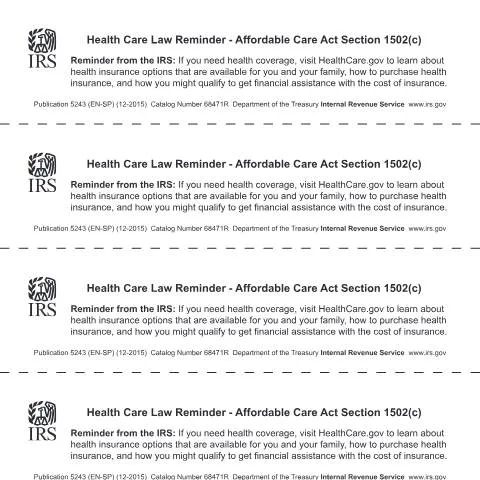
Understanding IRS Publication 5243: A Vital Resource for Health Coverage
As individuals navigate the complex landscape of health insurance in the United States, IRS Publication 5243 emerges as an essential guide. This publication addresses the implications of the Affordable Care Act, specifically Section 1502(c), which mandates certain requirements for health coverage. Its relevance extends to a broad audience, including taxpayers, health insurance enrollees, and those considering their options. Ignoring or misunderstanding this document can lead to severe financial repercussions and complications regarding health coverage eligibility.
The Historical Context Behind Publication 5243
The Affordable Care Act (ACA), enacted in 2010, marked a significant shift in the American healthcare system. It aimed to increase health insurance quality and affordability, expand coverage, and reduce the overall costs of healthcare. IRS Publication 5243 was introduced to clarify the tax implications of the ACA, particularly for individuals who do not maintain minimum essential health coverage. By outlining the obligations and rights of taxpayers under the ACA, the IRS ensures that individuals are well-informed about their responsibilities and potential penalties.
The Legislative Framework
Publication 5243 is grounded in the provisions of the ACA, which established a foundation for health coverage requirements. The IRS plays a crucial role in enforcing compliance, and as such, this publication details how taxpayers must report their health coverage status on their tax returns. Noncompliance can result in a shared responsibility payment, also known as a penalty, designed to encourage enrollment in health coverage plans.
Who Should Refer to Publication 5243?
Any individual who is required to file a federal tax return should familiarize themselves with IRS Publication 5243. The following profiles highlight specific situations where this publication is particularly relevant:
- Taxpayers Without Health Coverage: Those who did not have minimum essential health coverage for any month in the year may face penalties.
- Self-Employed Individuals: Entrepreneurs and self-employed persons must understand how their lack of coverage affects their taxes.
- Families with Dependents: Parents must be cautious of coverage gaps for their dependents, as penalties may apply to children and spouses as well.
- Low-Income Households: Those who might qualify for Medicaid or financial assistance through the health insurance marketplace need to be aware of their eligibility requirements.
Essential Components of Publication 5243
This publication is structured to provide clear guidance on several critical topics regarding health coverage and tax obligations:
- Coverage Requirements: Detailed information about what constitutes minimum essential coverage.
- Reporting Health Coverage: Instructions on how to report your health coverage status on your tax return.
- Penalties for Noncompliance: An explanation of potential penalties for failing to maintain health coverage.
- Exemptions: Clarification of circumstances under which individuals may qualify for an exemption from coverage requirements.
What is Considered Minimum Essential Coverage?
Minimum essential coverage encompasses various health insurance plans that meet ACA standards. This includes:
- Employer-sponsored insurance
- Health insurance purchased through the Health Insurance Marketplace
- Medicaid and Medicare
- Children's Health Insurance Program (CHIP)
Understanding what qualifies as minimum essential coverage is vital. Individuals must ensure that their health plans meet these criteria to avoid penalties.
Navigating the Filing Process with Publication 5243
Properly completing your tax return in alignment with the guidelines provided in IRS Publication 5243 is essential. Here are the steps to follow:
Step-by-Step Guide
- Gather Documentation: Collect all necessary documents confirming your health coverage status for the tax year.
- Review Coverage Types: Ensure that your plan qualifies as minimum essential coverage.
- Complete IRS Form 1040: Report your health coverage using the relevant sections of your Form 1040 or its variants.
- Calculate Potential Penalties: If applicable, determine any shared responsibility payment based on your coverage status.
- Submit Your Return: Ensure timely filing of your tax return by the deadline, typically April 15 of the following year.
Dealing with Errors: What Happens Next?
Errors or omissions related to health coverage reporting can result in complications during tax assessments. Here’s what you can do if you encounter issues:
Steps to Address Errors
- Review Your Submission: Double-check your Form 1040 for any inaccuracies regarding your health coverage.
- Contact the IRS: If discrepancies are found, reach out to the IRS directly for clarification and guidance.
- File an Amended Return: If corrections are necessary, file Form 1040-X to amend your previous tax return.
- Stay Informed: Keep abreast of any changes in regulations that may affect your health coverage responsibilities in future tax years.
Exemptions: Can You Bypass the Penalty?
Not every individual without health coverage will face penalties. IRS Publication 5243 outlines several exemptions that may apply:
- Income Below Filing Threshold: Individuals whose income falls below the federal filing requirement may qualify for an exemption.
- Short Coverage Gaps: If you were without coverage for less than three consecutive months during the year, you may be exempt.
- Hardship Exemptions: Certain life circumstances, such as homelessness or eviction, can qualify for exemptions.
It’s crucial to document any exemptions you claim appropriately, as the IRS may request verification during audits or reviews.
Distinguishing Publication 5243 from Related Resources
IRS Publication 5243 often gets confused with other IRS publications and forms related to health coverage. Understanding the distinctions can help taxpayers avoid missteps:
| Document | Purpose | Key Differences |
|---|---|---|
| Publication 5243 | Guidance on ACA health coverage requirements | Focuses specifically on tax implications of health coverage |
| Form 1095-A | Health Insurance Marketplace Statement | Reports coverage information for individuals enrolled in Marketplace plans |
| Form 8962 | Premium Tax Credit Form | Used to claim premium tax credits for lower-income individuals |
Each document serves a unique purpose, and taxpayers must familiarize themselves with all relevant forms to ensure compliance and optimize their health coverage reporting.
Proactive Steps for Future Tax Years
To ensure compliance and avoid penalties in future tax years, individuals can take proactive measures:
- Stay Informed: Regularly review the IRS website for updates regarding health coverage and tax obligations.
- Consider Coverage Options: Evaluate your health insurance options during open enrollment periods to secure continuous coverage.
- Consult Professionals: Seek guidance from tax professionals or financial advisors who are knowledgeable about health care laws and tax impacts.
By being proactive and informed, taxpayers can navigate the complexities of health coverage and tax reporting with confidence.
Final Thoughts on IRS Publication 5243
IRS Publication 5243 is more than just a tax document; it serves as a crucial guide for individuals striving to understand their responsibilities under the Affordable Care Act. By following the guidelines set forth in this publication, taxpayers can ensure compliance, potentially avoid penalties, and ultimately make informed decisions about their health coverage. As the landscape of health insurance continues to evolve, remaining aware of one’s obligations is not just wise, but essential for fiscal health and well-being.
Understanding IRS Publication 5243: A Comprehensive Overview
IRS Publication 5243 serves as an essential resource for taxpayers navigating the complexities of tax deductions related to unreimbursed employee expenses. This publication is particularly relevant for those in the workforce who incur costs that are not covered by their employers. It details the types of expenses that qualify, the necessary documentation, and how to accurately report these deductions on your tax returns.
To begin with, this publication outlines what constitutes unreimbursed employee expenses, including but not limited to travel expenses, vehicle use, education, and tools or supplies needed for your job. Understanding the definition of these expenses is crucial for taxpayers to determine if they can claim them on their Form 1040, particularly on Schedule A for itemized deductions.
Taxpayers need to be aware that not all employee expenses are deductible. For instance, any expenses incurred while commuting to and from work typically do not qualify. Moreover, the IRS has specific criteria for what qualifies as necessary and ordinary expenses—meaning they must be common and accepted in the taxpayer's profession. The nuances of these definitions are thoroughly explained in Publication 5243, offering examples that can assist taxpayers in identifying eligible expenses.
Documentation and Record Keeping for Deductible Expenses
One of the fundamental requirements for claiming any deductions on your tax return is proper documentation. IRS Publication 5243 emphasizes the importance of maintaining detailed records of all unreimbursed employee expenses. This includes receipts, invoices, and other relevant documents that substantiate your claims. The publication advises taxpayers to keep these records for at least three years from the date you file your return, or two years from the date you pay the tax, whichever is later.
Taxpayers should categorize their expenses systematically, ensuring that they can easily reference them when preparing their tax returns. For instance, creating a dedicated folder—either physical or digital—can help streamline this process. Using accounting software or spreadsheets can also assist in tracking expenses throughout the year, thereby minimizing the workload during tax season.
An important aspect of documentation that Publication 5243 highlights is the distinction between direct and indirect expenses. Direct expenses are those that are specifically incurred for the job, such as the purchase of a uniform or specialized tools, while indirect expenses may include costs like home office supplies or internet access. Understanding these categories will aid taxpayers in accurately assessing what qualifies for deductions and ensuring they provide sufficient documentation for the IRS.
Navigating the Tax Implications of Changes in Employment Status
Life changes, such as job loss, changes in employment status, or transitioning from being an employee to a self-employed individual, can significantly impact the ability to claim unreimbursed employee expenses. IRS Publication 5243 provides guidance on how these changes affect tax filings.
If you lose your job, it can typically result in the inability to claim future unreimbursed expenses for that specific employment. However, if you had incurred expenses prior to the layoff, you could still claim those, provided they meet the necessary criteria. It's imperative to keep the timing of expenses in mind, as the IRS rules stipulate that deductions must be claimed in the tax year they were incurred.
Moreover, for individuals transitioning to self-employment, the landscape of deductible expenses shifts dramatically. Self-employed individuals can claim a wider range of business-related expenses, but they must adhere to more stringent record-keeping requirements. IRS Publication 5243 helps distinguish these differences, informing taxpayers about what qualifies in their new tax situation and guiding them through the appropriate forms, such as Schedule C for self-employed individuals.
Changes in employment may also impact eligibility for certain tax credits and deductions. Understanding these potential changes is crucial for taxpayers to avoid unexpected tax liabilities. Consulting IRS Publication 5243 can help clarify these nuances, ensuring that taxpayers remain compliant and informed of their rights and responsibilities under the changing conditions of their employment.