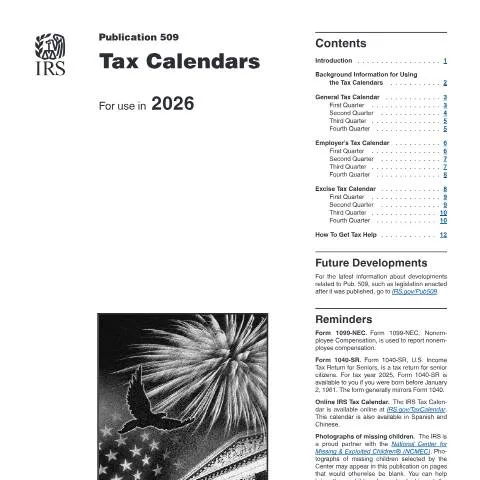
Essential Insights on IRS Publication 509: Navigating Taxation Calendars
When it comes to managing your tax obligations in the United States, understanding the intricate timelines and procedures can be daunting. IRS Publication 509, often referred to as the tax calendar publication, serves as a vital resource, streamlining the complex web of tax due dates that taxpayers need to keep track of. Whether you're an individual, a business owner, or an employer, familiarizing yourself with this document can safeguard you against late fees and penalties.
The Historical Context Behind Publication 509
IRS Publication 509 has evolved over the years, reflecting changes in tax law and the operational needs of the IRS. Initially designed to assist taxpayers in managing their filing obligations, the publication has adapted to the growing complexity of tax regulations. The dynamic nature of tax legislation necessitates constant updates to this publication, aligning it with the latest legal requirements. Understanding the historical context of this document offers insight into its current structure and purpose.
Regulatory Evolution and Significance
The Internal Revenue Service (IRS) operates under the Administrative Procedure Act, which mandates the publication of clear guidelines and timelines to aid taxpayers. This legislative environment has shaped the content and format of Publication 509, making it a trusted resource for both individuals and businesses. The IRS embraces technology, complementing the traditional publication with an online calendar available at IRS.gov/TaxCalendar, ensuring accessibility and up-to-date information.
Decoding the Tax Calendar: Key Dates and Deadlines
Publication 509 outlines essential due dates for various tax-related activities throughout the year. It categorizes these deadlines into general, employer, and excise tax calendars, offering a comprehensive overview tailored to different taxpayer needs.
General Tax Calendar
The General Tax Calendar is crucial for individuals and businesses, providing a month-by-month breakdown of important deadlines. Below is a table summarizing key dates:
| Month | Key Deadline |
|---|---|
| January | File Form 1099-MISC by January 31 |
| April | Individual tax returns due by April 15 |
| July | Second quarter estimated tax payments due |
| October | Extended tax returns due if applicable |
Employer’s Tax Calendar: A Focus for Businesses
For employers, adhering to tax obligations is critical. The Employer's Tax Calendar specifies dates for submitting payroll taxes, including withholding and FICA contributions. The publication provides semiweekly and monthly schedules that facilitate timely deposits, ensuring compliance and avoiding penalties.
Preparing for Tax Obligations: Documents and Evidence
Submission of accurate and timely information is paramount in the tax filing process. Publication 509 advises taxpayers to gather necessary documents based on their specific situations, which may include:
- W-2 forms for employees
- 1099 forms for independent contractors
- Previous year’s tax return for reference
- Receipts for deductible expenses
Utilizing checklists based on individual circumstances can enhance preparedness, minimizing last-minute scrambles as deadlines approach. For instance, individuals might prioritize personal identification numbers such as their Social Security Number (SSN) or Employer Identification Number (EIN). Businesses should ensure that their accounting records are up-to-date and reflect any changes in employment status or income streams.
Unique Situations and Special Considerations
Complex scenarios, such as those involving non-resident aliens or dual-status individuals, necessitate careful examination of the publication. Specific guidance is available for:
- Foreign nationals working in the U.S.
- Individuals with both resident and non-resident status during the tax year
- Minors or dependents who may have filing responsibilities
Engaging a tax professional can be invaluable in these cases, ensuring compliance with IRS requirements while optimizing tax outcomes.
From Trigger to Resolution: Following the Tax Filing Path
Understanding the tax filing process from start to finish is essential. The journey typically unfolds in several stages:
- Preparation: Assemble all necessary documentation and information.
- Filing: Submit the relevant tax forms by the specified deadlines.
- Payment: Ensure any taxes owed are paid promptly to avoid interest and penalties.
- Confirmation: Verify receipt of your tax return and payment confirmation from the IRS.
- Follow-Up: Monitor your tax return status and address any inquiries from the IRS.
Post-Filing Procedures
After submitting your tax return, the IRS typically processes returns within six to eight weeks. Taxpayers can track the status of their return through the IRS website or a dedicated phone line. Should issues arise, such as errors or requests for additional documentation, being proactive is essential. Addressing such communications swiftly can ensure a smoother resolution.
Handling Refusals and Corrections: Your Rights and Obligations
Receiving a denial or indication of missing documentation can be disheartening. However, understanding your rights in such scenarios is crucial. Taxpayers are entitled to:
- Request a detailed explanation from the IRS regarding denials.
- File an amended return using Form 1040-X for corrections.
- Appeal IRS decisions within the prescribed time frames.
In the event of missing documents, consult the IRS guidelines for re-submission. Keeping copies of all communication and documentation submitted is advisable, as it provides a clear record should disputes arise.
Potential Implications of Inaction
Neglecting to adhere to tax deadlines can lead to severe consequences, including:
- Increased penalties and interest charges
- Delayed refunds or adjustments to tax credits
- Legal repercussions in severe cases of non-compliance
Therefore, staying informed and proactive about tax responsibilities can alleviate stress and foster better financial management.
Unfolding Opportunities: What Lies Ahead for Taxpayers
IRS Publication 509 serves not merely as a guide but as a tool for empowerment. By mastering the details within, taxpayers can navigate their obligations effectively, opening doors to potential benefits.
Accessing Additional Resources and Support
Taxpayers seeking further assistance can explore a wealth of resources on the IRS website. The Publication 509 contains references to additional forms and publications that may be pertinent, ensuring that individuals and businesses have the support they need. Engaging with tax professionals can provide tailored advice and support, particularly for complex situations.
Final Remarks: Embracing Tax Literacy
As tax season approaches, the importance of proficiency in handling tax calendars cannot be overstated. IRS Publication 509 is a cornerstone for anyone navigating the U.S. tax landscape, offering the necessary framework to fulfill obligations while maximizing potential benefits. Taking the time to understand and apply the insights herein can result in a more seamless tax experience, safeguarding against pitfalls and ensuring compliance.
Understanding the Role of IRS Publication 509
IRS Publication 509 serves as a vital resource for taxpayers, tax professionals, and anyone involved in the process of understanding federal income tax regulations. This publication delves into specific aspects of the federal tax system, detailing crucial elements such as tax filing requirements, the various forms needed, and guidelines for taxpayers who may need additional assistance. One notable feature of Publication 509 is its focus on compliance and clarity, ensuring that individuals can navigate their tax obligations with confidence.
The publication outlines detailed instructions for completing different tax forms—including Form 1040 and Form 1040-SR—while emphasizing the importance of accuracy. Taxpayers are encouraged to familiarize themselves with this resource, as it provides practical examples and hypothetical scenarios that illustrate common questions and concerns regarding tax liabilities. Additionally, Publication 509 reflects the latest updates in tax law, incorporating changes from recent fiscal policy updates to ensure that all information is current and relevant.
Special Situations Addressed in IRS Publication 509
Publication 509 is particularly useful for individuals who find themselves in unique tax situations, such as those with multiple sources of income, non-resident aliens, or individuals who are newly self-employed. It offers tailored guidance for these scenarios, including details about how to report different types of income and how to account for various deductions properly.
For example, a self-employed individual may have to navigate different tax obligations compared to someone who receives a W-2 form from an employer. Publication 509 outlines how to report business income on Schedule C and lays out the applicable tax treatment for various business expenses. Moreover, it addresses common deductions that self-employed individuals can claim, such as home office deductions and vehicle mileage rates, which is essential for maximizing deductions and minimizing tax liabilities.
Additionally, Publication 509 elaborates on more complex situations such as tax implications for individuals in cases of divorce, inheritance, or substantial financial settlements. For instance, it discusses how alimony payments are treated for tax purposes—what is deductible and what must be reported as income—helping individuals navigate these intricate tax regulations.
Using IRS Publication 509 for Tax Planning
Beyond just a guide for filing, IRS Publication 509 can be a powerful tool for tax planning. By understanding the information in this publication, taxpayers can take proactive steps to optimize their tax situations throughout the year rather than just during filing season. This includes keeping accurate records of income and expenses, which can lead to substantial tax savings when it comes time to file.
For instance, individuals can use insights from Publication 509 to determine which deductions they might qualify for or to understand how changes in their personal or professional life—such as getting married, having children, or changing jobs—can affect their tax obligations. Furthermore, the publication's advice on estimated taxes is invaluable, particularly for those who are self-employed or have significant non-wage income, helping them avoid underpayment penalties by accurately estimating their tax liabilities in advance.
Taxpayers can also leverage the information in Publication 509 to explore tax credits they may be eligible for, such as the Earned Income Tax Credit (EITC), which can significantly reduce their tax liability and potentially lead to a refund. By planning ahead and applying the guidance from this publication, taxpayers can strategically position themselves to take full advantage of available tax benefits.