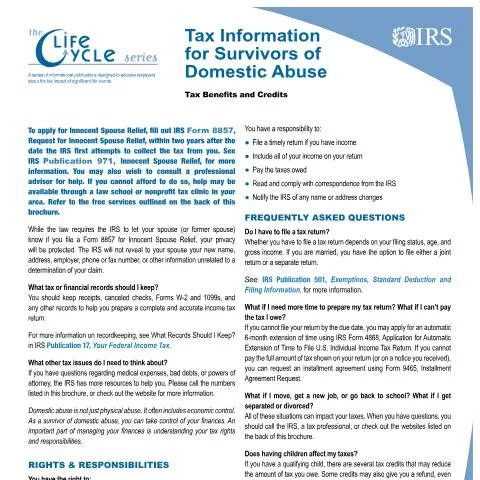
Navigating the Complex Terrain of IRS Publication 3865: A Survivor's Guide
For individuals facing the aftermath of domestic abuse, understanding the implications of tax responsibilities can be daunting. IRS Publication 3865 serves as a critical resource for survivors, laying out their rights and responsibilities while guiding them through the intricacies of tax filing in the context of their experiences. This publication is especially vital for those who need to navigate financial independence after a tumultuous relationship.
Understanding Your Rights and Responsibilities
Survivors of domestic abuse often find themselves in a complex financial situation, struggling to regain control over their lives. The IRS emphasizes several rights that individuals should be aware of:
- Right to File Separately: Even if married, survivors have the option to file a separate tax return, protecting themselves from potential liabilities incurred by their spouse.
- Access to Information: Individuals have the right to see and comprehend their entire tax return, including all supporting documents, before signing a joint return.
- Independent Legal Advice: Survivors should seek independent advice to understand their situation better and make informed decisions regarding their tax filing.
However, with rights come responsibilities:
- Timely filing of returns if income is present.
- Inclusion of all income when submitting tax returns.
- Reading and complying with IRS correspondence.
- Notifying the IRS of any changes in name or address.
Preparing Your Documentation: A Lifeline
Gathering the necessary documentation can mean the difference between a smooth filing process and a cumbersome one. The IRS recommends keeping a comprehensive record of financial documents:
Essential Records to Keep
- Forms W-2 and 1099 from employers or clients.
- Receipts and canceled checks that reflect income and expenses.
- Any documents supporting tax credits you plan to claim.
Before filing, ensure your records are organized. This preparation can simplify matters, especially if you decide to file separately or need to dispute a claim.
The Path to Filing: Choosing Your Method
Filing your taxes can be done through various channels, each with its benefits and drawbacks. Understanding these methods will help you select the one that fits your needs best.
Filing Options Explained
| Method |
Description |
Pros |
Cons |
| Online Filing |
Submitting your tax return via the IRS website or authorized software. |
Quick, efficient, often with immediate confirmation. |
Requires Internet access and may incur software fees. |
| Paper Filing |
Mailing your tax return using printed forms. |
Traditional method, can be done without Internet. |
Slower processing, risk of postal delays. |
| In-person Filing |
Visiting a local IRS office or VITA site for assistance. |
Face-to-face help from knowledgeable staff. |
May require an appointment, limited hours. |
What to Do When Things Don’t Go as Planned
Filing can sometimes lead to unexpected outcomes, such as errors or requests for additional information from the IRS. Knowing how to respond can alleviate stress during a challenging time.
Handling Rejections and Missing Information
If your filing is rejected, quickly address the reasons given. The IRS will generally provide a notice detailing the issue. Common problems include:
- Missing signatures or incomplete forms.
- Discrepancies with reported income.
Submit corrected or missing documents as soon as possible to avoid penalties.
Seeking Relief: Protections for Abuse Survivors
For survivors, IRS Publication 3865 outlines avenues for seeking Innocent Spouse Relief. If you filed jointly but your spouse misrepresented income or deductions, you may qualify for relief from joint liability. To pursue this, complete IRS Form 8857 within two years from the time the IRS attempts to collect taxes from you. Remember that while the IRS must inform your spouse of your request, your personal information remains confidential.
Legal Framework: The Foundation of Publication 3865
Understanding the historical context surrounding IRS Publication 3865 can provide further insight into its importance. This publication was developed to address the unique challenges faced by abuse survivors in relation to tax obligations and benefits.
The Role of the Administrative Procedure Act
The framework for IRS publications is governed by the Administrative Procedure Act (APA), which mandates transparency and citizen input in administrative processes. This act enables the IRS to provide guidance that reflects the needs of diverse populations, including survivors of domestic abuse.
From Trigger to Filing: A Chronological Journey
Successfully navigating the tax filing process requires understanding the timeline from the moment you recognize your filing obligation to the submission of your return. Here’s a step-by-step breakdown:
- Assess Your Filing Requirement: Determine if your income meets the threshold necessitating a tax return based on your filing status.
- Gather Documentation: Collect necessary financial records, including W-2s, 1099s, and receipts.
- Choose Your Filing Method: Decide whether to file online, on paper, or in person.
- Complete Your Return: Fill out your tax return, ensuring that all information is accurate and complete.
- Submit Your Return: File your return through your chosen method, keeping a copy for your records.
- Address Any Follow-ups: Be prepared to respond to requests for additional information or corrections from the IRS.
- Monitor the Status: Utilize IRS tools to check the status of your refund and ensure all is in order.
Empowerment Through Knowledge: Additional Resources
Survivors of domestic abuse often need more than just tax information; they require comprehensive support. Beyond IRS Publication 3865, there are additional resources available:
- Legal Assistance: Local law schools and nonprofit tax clinics offer free services for those unable to afford professional help.
- IRS Resources: The IRS website contains a wealth of information tailored to survivors, including FAQs and links to relevant publications.
- Community Support Groups: Joining support groups can provide emotional support and practical advice from others who have faced similar challenges.
By arming yourself with knowledge and utilizing available resources, you can take control of your financial situation and navigate the tax filing process successfully.
Understanding IRS Publication 3865: Key Provisions and Benefits for Taxpayers
IRS Publication 3865, titled “Business Expenses, It Has Strong Implications for Small Business Owners,” serves as a critical resource for understanding the various tax deductions available for business-related expenses. This publication is particularly beneficial for small business owners who may not be fully aware of the range of expenses that can be deducted from their taxable income. One of the main objectives of Publication 3865 is to clarify the conditions under which these deductions are valid and to outline how to properly document and report them.
The publication breaks down several categories of business expenses, including but not limited to advertising costs, supplies, and vehicle expenses. Understanding the nuances of each category is essential for taxpayers aiming to maximize their deductions. For instance, vehicle expenses can be calculated using either the actual expense method or the standard mileage rate, which may vary based on current IRS guidelines.
Moreover, Publication 3865 emphasizes the importance of maintaining accurate and detailed records to substantiate any deductions claimed. Taxpayers are urged to keep receipts, invoices, and any other documentation that supports their business expenses for at least three years from the date they file their return. In the event of an audit, having these records readily available can significantly streamline the verification process and reduce potential penalties.
It's also important to note that certain expenses might be subject to limitations or special considerations. For example, meals and entertainment expenses are generally limited to 50% of the cost, a rule that has been in place for several years. Understanding these specific exceptions helps taxpayers avoid common pitfalls and ensures compliance with IRS regulations.
If you are a small business owner, it's advantageous to review IRS Publication 3865 annually to stay updated on any changes to the tax code that may affect your deductions. The IRS often revises guidelines and limits, and being informed can provide significant tax savings.
Common Mistakes to Avoid When Filing Taxes Based on Publication 3865
When delving into IRS Publication 3865, many taxpayers, especially small business owners, often make several common mistakes that can lead to increased scrutiny from the IRS or missed opportunities for deductions. Understanding these pitfalls is crucial for effective tax filing.
One of the most frequent mistakes is the misclassification of expenses. Small business owners may inadvertently classify personal expenses as business expenses, which can lead to significant issues during an audit. For instance, if a taxpayer uses their vehicle for both personal and business purposes, they must accurately track the mileage and ensure that only the business-related portion is claimed. Failure to do so could result in penalties and back taxes.
Another common error is neglecting to keep adequate documentation. IRS Publication 3865 highlights the necessity of thorough record-keeping but many taxpayers underestimate its importance. Missing receipts or lack of detailed records can lead to disallowed deductions. Using digital tools for expense tracking is one effective way to maintain comprehensive records, which can be invaluable come tax season.
Additionally, some taxpayers overlook the tax implications of asset depreciation. Understanding how to properly account for depreciation can significantly impact the bottom line. For example, if a business purchases a vehicle for $25,000, they cannot deduct the entire amount in the first year but must instead spread the deduction over the asset's useful life. Publication 3865 provides guidance on how to calculate depreciation, which can help maximize tax benefits over time.
Finally, failing to consult with a tax professional can be a substantial error. While IRS publications, including 3865, provide a wealth of information, the tax code is complex and ever-evolving. A qualified tax advisor can help navigate the nuances of the law, ensuring that taxpayers take full advantage of available deductions while remaining compliant with IRS regulations.
In summary, being aware of these common mistakes and actively working to avoid them can lead to a smoother tax filing experience and potentially significant savings for small business owners.
Practical Tips for Maximizing Benefits from IRS Publication 3865
To fully leverage the information provided in IRS Publication 3865, taxpayers can employ several practical strategies designed to maximize their tax benefits while ensuring compliance with the IRS regulations.
First, taxpayers should perform a thorough review of their business expenses throughout the year rather than waiting until tax season. By keeping an updated ledger or a digital record of expenses, business owners can ensure that no eligible deductions are overlooked. Regularly reviewing this information allows for timely adjustments and thorough documentation, which is essential when preparing tax returns.
Moreover, engaging in tax planning throughout the fiscal year can yield significant advantages. Business owners should consider consulting with a tax professional who can offer tailored advice based on their specific circumstances and help strategize about which expenses to prioritize. This preemptive approach can lead to a more efficient tax preparation process and identify deductions that may not be immediately obvious.
Utilizing tools and resources that help quantify business expenses can also contribute to maximizing benefits. For instance, many financial software programs offer functionalities specifically for tracking deductible expenses, simplifying the process of categorizing and substantiating costs. Additionally, keeping abreast of changes to IRS guidelines can provide insights into new opportunities for deductions that may arise.
Furthermore, networking with other small business owners can provide valuable insights and strategies for managing business expenses effectively. Sharing experiences and advice can uncover deductions that others have successfully claimed, which may apply to your situation.
Lastly, consider the timing of your expenses. Sometimes, deferring or accelerating certain expenditures can have a favorable tax impact. For example, if you anticipate being in a higher tax bracket next year, it may be beneficial to accelerate expenses into the current year to take advantage of a lower tax rate now. IRS Publication 3865 outlines several factors to consider when timing your business expenses, allowing business owners to make informed decisions.
By incorporating these practical tips and leveraging the knowledge in IRS Publication 3865, taxpayers can optimize their tax outcomes and ensure that they are fully compliant with IRS regulations.