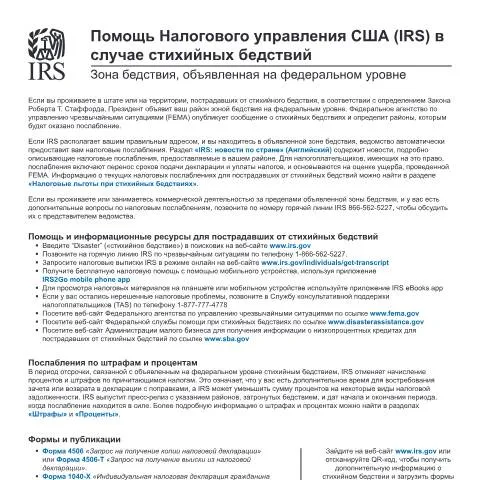
Understanding IRS Publication 3067RU: An Essential Guide for Taxpayers
Filing your taxes can feel like navigating a labyrinth, especially when it comes to understanding specific IRS publications like Publication 3067RU. This document serves as a roadmap for taxpayers who may be impacted by federal disaster declarations. It's crucial for individuals and businesses in declared disaster areas to grasp the contents and implications of this publication to ensure compliance and to leverage any available tax relief. This guide will delve deep into the functionalities, processes, and practical aspects surrounding IRS Publication 3067RU.
The Mechanics of IRS Publication 3067RU
Publication 3067RU outlines the procedures and considerations for taxpayers affected by federally declared disasters. Specifically, it addresses how taxpayers in disaster-stricken areas can manage their tax obligations while facing the aftermath of such events. Understanding this publication is vital for those who may find their usual filing processes disrupted.
Key Aspects Covered in Publication 3067RU
- Disaster Declaration: Outlines what constitutes a federally declared disaster and the implications for tax relief.
- Filing Extensions: Detailed guidelines on how to apply for extensions if you reside in a disaster area.
- Penalty Relief: Information on potential penalties and interest relief related to tax filings.
- Documentation Requirements: Guidance on necessary documentation to support claims for relief.
Who Needs to Pay Attention to This Publication?
While it seems that only those in disaster areas need to read this, Publication 3067RU is pertinent to a variety of stakeholders:
- Individuals: If you live in a federally declared disaster area, understanding this publication is essential for your tax filings.
- Businesses: Corporations in affected regions must be aware of how disasters impact their tax obligations and potential relief options.
- Tax Professionals: CPAs and tax advisors should familiarize themselves with this publication to effectively guide their clients through the process.
Documenting Your Situation: What You Need to Prepare
Accurate documentation is critical when claiming relief due to federal disasters. Depending on your unique circumstances, different documents may be required. Here's a breakdown of essential documentation:
Individual Taxpayers
- Tax Returns: Previous year’s tax returns are often required to compare income and deductions.
- Proof of Damage: Photos or receipts documenting property damage can support claims for casualty losses.
- Insurance Statements: Statements from your insurance provider regarding claims can help clarify any relief needed.
Businesses
- Business Returns: Prior year business tax forms (e.g., Form 1120 for corporations) provide a baseline for assessing impacts.
- Financial Statements: Recent financial statements indicating operational disruptions due to the disaster.
- Loss Documentation: Any documentation detailing losses incurred, including invoicing and inventory records.
Filing Calendar: Timing is Everything
Tax deadlines can shift dramatically during disaster scenarios. Understanding the timeline outlined in Publication 3067RU can help you navigate these changes:
| Event | Standard Deadline | Disaster Extension Deadline |
|---|---|---|
| Tax Return Due Date | April 15 | Varies (based on disaster declaration) |
| Estimated Tax Payments | April 15, June 15, September 15, January 15 | Varies (based on disaster declaration) |
| IRS Notifications | N/A | Typically within 60 days post-disaster declaration |
Being aware of these timelines helps to ensure that you do not miss out on vital extensions or relief provisions that the IRS offers under these circumstances.
What Happens If You Miss Filing or Submit Incorrect Information?
Failure to comply with the new deadlines or inaccuracies in your submissions can lead to various complications. Here’s what to consider:
Consequences of Missed Deadlines
- Punitive Measures: The IRS may apply penalties or interest to unpaid taxes.
- Loss of Relief Eligibility: Missing deadlines may disqualify you from receiving disaster-related tax relief.
- Increased Scrutiny: Filing errors may trigger audits or further inquiries from the IRS.
What to Do If an Error Occurs
If you discover an error after submission:
- File an Amended Return: Use Form 1040-X to correct any mistakes in your submitted tax return.
- Contact the IRS: If the error pertains to a disaster relief claim, call the IRS helpline for specific instructions.
Disasters and Special Cases: Unique Considerations
Not all taxpayers are treated the same in disaster situations. Special cases include:
Foreign Nationals
If you're a foreign national residing in the U.S. and affected by a disaster, be aware of your unique filing obligations:
- You may still need to file a return if you had U.S. source income.
- Tax treaties could affect your eligibility for relief or extensions.
Minors Under Guardianship
For minors, a parent or guardian must file on their behalf:
- Documentation of guardianship and tax identification numbers may be required.
- Be conscious of additional filing requirements that may apply based on the child’s income levels.
Complex Financial Situations
Taxpayers with complicated financial portfolios or those operating in multiple jurisdictions face unique challenges:
- Consult with tax professionals to navigate multi-state tax laws and disaster declarations.
- Understand how different states interpret federal disaster relief claims.
Moving Forward: The Bigger Picture
Understanding IRS Publication 3067RU is not merely about compliance; it's about empowerment. Taxpayers armed with knowledge can better navigate the treacherous waters that disasters often create.
Moreover, knowing your rights and obligations can open doors to financial relief, allowing you to focus on rebuilding rather than stressing over tax compliance. The IRS provides tools and resources designed to assist taxpayers during these challenging times.
Accessing IRS Resources
- IRS Website: Visit www.irs.gov for the latest updates and additional resources related to tax relief.
- IRS2Go App: Download the IRS mobile application for easy access to tax resources and assistance.
- Contact the IRS: For personalized help, call the IRS helpline or the Taxpayer Advocate Service at 1-877-777-4778.
By being proactive and informed, you can turn the challenges of a disaster into an opportunity for growth and resilience, ensuring that your tax obligations do not add unnecessary stress during already trying times.
Final Thoughts on Publication 3067RU
IRS Publication 3067RU is more than just a document; it’s a lifeline for many facing the repercussions of disasters. Whether you are an individual taxpayer, a business owner, or a tax professional, familiarizing yourself with its contents is crucial for effectively managing your tax obligations and ensuring you are taking full advantage of the available relief options. Keep this guide on hand as a reference to navigate your tax responsibilities amidst the challenges posed by federally declared disasters.
Understanding IRS Publication 3067RU: Key Features and Purpose
IRS Publication 3067RU serves as a crucial resource for taxpayers, particularly those who are non-residents or foreign nationals, offering essential guidance on tax liabilities and obligations within the United States. This publication outlines the specific criteria under which non-residents must file their tax returns, detailing income types that are subject to U.S. taxation, and clarifying the distinctions between resident and non-resident aliens for tax purposes.
In this publication, the IRS provides clarity on various issues, including what constitutes effectively connected income (ECI) and fixed, determinable, annual, or periodic (FDAP) income. Understanding these categories is vital for compliance. Non-residents may have different tax rates applied depending on their income type and source. Some income might be exempt from U.S. taxation due to treaties between the U.S. and other countries. The publication also provides information on claiming tax treaty benefits, allowing taxpayers to minimize their liabilities effectively.
Another essential aspect of IRS Publication 3067RU is the section dedicated to filing requirements. Non-residents who only have income from certain sources may not need to file a tax return, yet they must be aware of the income thresholds that necessitate a filing. Additionally, the publication discusses the necessary forms, such as Form 1040-NR for non-resident aliens, and clarifies additional schedules that might be necessary based on specific income types.
Common Pitfalls in Tax Reporting for Non-Residents
Tax reporting can be particularly challenging for non-residents due to a variety of factors, and Publication 3067RU highlights several common pitfalls that taxpayers often encounter. One significant issue is underreporting income, which can lead to penalties and interest on any unpaid taxes. Non-residents might fail to recognize that income from U.S. sources is taxable even if they are not residing in the U.S. This includes income from rental properties, business operations, or stocks and bonds. Understanding the source of income is crucial for compliance.
Another common pitfall is neglecting the necessity of filing forms and deadlines. Non-residents are generally required to file Form 1040-NR by June 15 unless they are granted an extension or have income that necessitates an earlier filing. Failing to file on time can result in significant penalties. IRS Publication 3067RU clearly outlines these deadlines, but taxpayers often overlook them due to confusion about their status and obligations.
Additionally, non-residents sometimes misinterpret their tax treaty benefits. While tax treaties can significantly reduce tax liabilities, incorrect interpretations can lead to disputes with the IRS and potential audits. It’s crucial that taxpayers thoroughly understand the treaty provisions and how they apply to their specific situations. The publication offers guidance on how to properly claim these benefits, emphasizing the importance of accurate record-keeping to support treaty claims.
Practical Tips for Navigating IRS Publication 3067RU
Navigating IRS Publication 3067RU can be daunting, but there are practical tips that non-residents can employ to ensure compliance and optimize their tax situation. First, taxpayers should maintain accurate and complete records of all income received from U.S. sources. This includes documentation such as W-2 forms, 1099 forms, and statements from financial institutions. Keeping detailed records is essential for substantiating claims on tax returns.
Next, taxpayers should consider seeking professional assistance, especially if their financial situation is complex or if they are unsure about their residency status for tax purposes. Certified Public Accountants (CPAs) and tax professionals with experience in international taxation can provide invaluable guidance to ensure compliance and maximize tax benefits.
Additionally, taxpayers should take advantage of IRS online tools and resources, including the Interactive Tax Assistant, which can help answer specific questions about tax situations. Understanding the interpretation of IRS guidelines can mitigate the risk of errors on tax returns.
Lastly, awareness of the filing status and tax implications of their home country is crucial. Taxpayers should consult with local tax professionals to understand how their U.S. tax obligations intersect with their home country's tax laws, especially regarding any foreign tax credits that may be available to them. This holistic approach can help non-residents navigate the complexities of the U.S. tax system effectively.