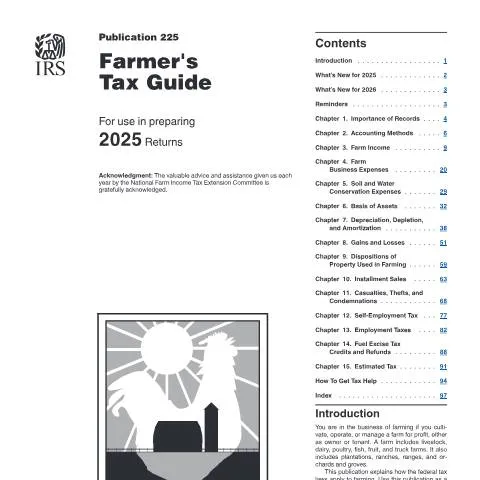
Understanding IRS Publication 225: The Farmer's Tax Guide
In the intricate world of farming and agriculture, taxes might seem like an overwhelming burden, yet they are an essential part of maintaining and growing a successful farm business. IRS Publication 225, often referred to as the Farmer's Tax Guide, serves as a comprehensive resource for farmers navigating their tax obligations. This document is not merely a guide; it is a lifeline connecting farmers to the internal revenue system of the United States.
The Historical Context Behind IRS Publication 225
The need for IRS Publication 225 stems from the unique nature of farming as a business. Unlike traditional businesses, farmers face specific income and expense structures that the IRS recognizes through special provisions. With federal tax laws evolving over the years, the IRS has continually updated Publication 225 to reflect new regulations, changes in tax law, and insights gained from interpreting complex agricultural taxation issues.
Historically, farming has been impacted by various economic factors, including market fluctuations and natural disasters. These realities necessitated a publication that could address the specific circumstances farmers encounter. Since its inception, this guide has been indispensable, aiding in tax preparation and compliance for countless farmers across the nation.
Decoding the Structure of IRS Publication 225
This publication covers a range of topics that are crucial to a farmer's tax situation. It is structured into chapters, each addressing different aspects of tax law as they apply to farming. Here are some key sections you’ll find within the publication:
- Importance of Records - Emphasizes how essential it is for farmers to maintain accurate financial records.
- Farm Income - Outlines various sources of income that farmers should report.
- Farm Business Expenses - Details what constitutes deductible expenses for farmers.
- Depreciation, Depletion, and Amortization - Discusses how to account for the wear and tear on farm assets.
- Self-Employment Tax - Clarifies the obligations farmers have concerning self-employment tax.
This concise organization allows users to easily navigate through the complexities of farming-related tax issues.
Who Utilizes IRS Publication 225?
While the title suggests it is aimed solely at farmers, the scope of IRS Publication 225 extends to a diverse range of agricultural professionals. Here are some profiles of individuals who may find this document particularly beneficial:
- Farm Owners: Individuals who cultivate, manage, or operate a farm for profit.
- Farm Tenants: Those who lease land for farming purposes, often facing unique tax situations.
- Agricultural Corporations: Entities engaged in farming practices that require comprehensive tax compliance.
- Farm Managers: Professionals overseeing farming operations who need to understand the tax landscape.
Each of these profiles may face different tax obligations, ensuring that understanding IRS Publication 225 is crucial for effective compliance and financial management.
Getting Specific: Key Sections of IRS Publication 225
Delving deeper into the content, each chapter in IRS Publication 225 offers important insights into various tax-related items:
Farm Income
Farm income can come from multiple sources, such as:
- Crop sales
- Livestock sales
- Government payments
- Rental income from farm property
Each source of income has specific reporting requirements, and understanding these nuances is critical for accurate tax filings.
Farm Business Expenses
Farmers can deduct numerous expenses from their income, which significantly affects their taxable income. Common deductible expenses include:
- Seeds and plants: The cost of acquiring seeds, plants, and other materials necessary for farming.
- Labor costs: Wages paid to employees, including benefits.
- Equipment maintenance: Costs incurred for repairing and maintaining farming equipment.
Understanding what qualifies as a deductible expense can substantially reduce a farmer's overall tax burden.
The Role of Accurate Record-Keeping
The backbone of successful tax filing lies in maintaining meticulous records. IRS Publication 225 highlights the importance of documentation in three main areas:
- Income tracking: Every source of income should be tracked and documented to substantiate reported figures.
- Expense documentation: Receipts and invoices should be retained, providing evidence for all claimed deductions.
- Asset records: Detailed records of all farm assets, including acquisition costs and depreciation schedules, must be maintained.
Failure to maintain adequate records can lead to complications during audits and may result in missed deductions or penalties.
Common Challenges and How to Overcome Them
Despite the thoroughness of IRS Publication 225, farmers may face challenges when filing their taxes. Common issues include:
- Misinterpretation of guidelines: Tax laws can be complex, and misreading the publication can lead to mistakes.
- Errors in calculating deductions: Farmers might unintentionally overlook eligible deductions, costing them money.
- Tax code changes: Keeping up with changes in tax legislation can be a daunting task.
To address these challenges, farmers are encouraged to:
- Consult a tax professional with experience in agricultural tax matters.
- Attend workshops or seminars focused on farming taxes.
- Utilize resources from the IRS to clarify confusing topics.
Next Steps After Filing: What to Expect
Having submitted your taxes based on the guidance provided in IRS Publication 225, what happens next? Here’s a brief overview of the post-filing landscape:
- Processing time: The IRS typically processes returns within 21 days, but this can vary based on volume and complexity.
- Potential audits: Although most returns are accepted without issue, some may be flagged for audit. Keeping thorough records can ease this process.
- Refund or balance due: Depending on your filing, you may either receive a refund or owe additional taxes. Understanding this is crucial for financial planning.
Addressing Mistakes and Missing Information
Sometimes, mistakes happen, or documents may be inadvertently omitted from a tax filing. IRS Publication 225 provides insight into how to address these situations:
- Filing an amendment: If you discover an error after filing, you can file Form 1040-X to amend your return. Ensure to provide the correct information and explanations for the amendments.
- Responding to IRS inquiries: If the IRS contacts you regarding your filing, respond promptly and provide the necessary documentation to resolve the issue.
- Keeping a record of correspondence: Document all communications with the IRS regarding your tax filings to have a clear history of interactions.
Continuing Education and Resources for Farmers
Staying informed about tax obligations is crucial for every farmer. IRS Publication 225 is just one of the many resources available. Farmers are encouraged to:
- Participate in tax education workshops offered by state Cooperative Extension Services.
- Utilize the IRS website for the latest updates on tax laws relevant to farming.
- Engage with agricultural organizations for peer support and shared insights on managing taxes.
IRS Publication 225 remains an essential tool for understanding the complexities of farming taxes, ensuring that farmers are well-equipped to navigate their financial responsibilities successfully.
Understanding IRS Publication 225: Farmer's Tax Guide
IRS Publication 225, also known as the Farmer's Tax Guide, serves as an essential resource for farmers and agricultural producers in the United States. It provides detailed information on various tax-related matters specific to farming operations, helping farmers navigate the complexities of tax laws that pertain to their unique financial situations. This publication is crucial for understanding how to report income, deduct expenses, and take advantage of special tax provisions available to farmers.
One of the most critical aspects covered in Publication 225 includes the definition of a farmer for tax purposes. According to the IRS, a farmer is considered anyone who cultivates, operates, or manages a farm for profit. This definition encompasses a wide range of activities, including crop production, livestock rearing, and even the business aspects of farming like agricultural cooperatives. Understanding this definition is vital, as it helps farmers determine their eligibility for various deductions and credits available to agricultural businesses.
Key Deductions Available to Farmers
Publication 225 outlines numerous deductions that farmers can claim to minimize their taxable income. Each of these deductions has specific requirements and limitations that must be understood to maximize tax savings effectively. Here are some noteworthy deductions:
- Operating Expenses: Farmers may deduct ordinary and necessary expenses incurred in the operation of their farm. This can include costs such as seed, fertilizer, and feed. It also covers repairs and maintenance on farm equipment and buildings.
- Depreciation: Farmers can take advantage of depreciation for property used in their farming operations, including buildings, machinery, and equipment. The IRS provides guidelines for different methods of depreciation, including the Modified Accelerated Cost Recovery System (MACRS), which is often beneficial for farmers.
- Vehicles: If farmers use vehicles for transportation related to their farming business, they can deduct the associated expenses. Farmers can choose between standard mileage rates or actual expenses incurred.
- Conservation Expenses: Farmers may also qualify for deductions related to conservation efforts, including soil and water conservation measures. These deductions encourage sustainable practices while providing financial relief to farmers.
Each of these deductions has specific eligibility criteria and documentation requirements, emphasizing the importance of record-keeping. Farmers should maintain precise records of their expenses to substantiate their claims during tax filing.
Navigating Special Tax Provisions for Farmers
In addition to standard deductions, Publication 225 elaborates on several special tax provisions that can significantly benefit farmers. These provisions include:
- Farm Income Averaging: Farmers often experience fluctuating incomes due to the seasonal nature of agricultural production. The IRS allows farmers to average their income over a three-year period, which can potentially lower their tax liability during high-income years.
- Like-Kind Exchanges: Under Section 1031 of the IRS Code, farmers may defer taxes on the sale of property if they reinvest the proceeds into similar property. This provision can be particularly useful in the context of upgrading equipment or expanding farming operations without incurring immediate tax consequences.
- Small Business Health Care Tax Credit: Farmers who operate as small businesses may qualify for a health care tax credit if they provide health insurance to their employees. This credit can reduce their overall tax liability while helping to provide essential benefits to their workforce.
These special provisions highlight the importance of understanding the tax code in relation to the agricultural sector. Farmers are encouraged to consult with a tax professional who has experience in agricultural tax issues to ensure they are fully benefiting from the provisions available to them.
Record-Keeping Practices for Farmers
Effective record-keeping is a cornerstone of successful farming operations, particularly when it comes to tax preparation. Publication 225 emphasizes the need for farmers to develop and maintain organized records that clearly document income and expenses. Here are some recommended practices for effective record-keeping:
- Use Accounting Software: Implementing accounting software designed for agricultural businesses can streamline the record-keeping process. These programs often offer features tailored to farming operations, allowing for easy categorization of expenses and income.
- Maintain Receipts: Keeping detailed receipts for all purchases related to farm operations is essential. This includes receipts for supplies, equipment, and any other expenses incurred during the tax year.
- Daily Logs: Consider maintaining daily logs of farm activities. This can help clarify the context for expenses and improve accuracy during tax reporting. Daily logs can also assist in tracking labor hours, production outputs, and other relevant metrics.
- Consult Professionals: Engaging an accountant or tax professional with experience in agricultural tax law can provide invaluable insights. These professionals can help ensure compliance with IRS regulations while maximizing deductions and credits.
In conclusion, adhering to strong record-keeping practices not only facilitates easier tax preparation but also provides farmers with a clearer picture of their business's financial health. This can ultimately lead to more informed decision-making and improved operational efficiency.
Challenges and Changes: Staying Updated with IRS Guidelines
The agricultural sector is subject to frequent changes in tax laws and IRS guidelines, making it imperative for farmers to stay informed. Understanding the nuances in IRS Publication 225, as well as broader changes in tax legislation, can have a significant impact on a farmer's tax strategy. Here are some common challenges and how to navigate them:
- Policy Changes: Farmers must keep abreast of any policy changes that may affect their tax situation. This includes shifts in allowable deductions, eligibility for credits, or changes in reporting requirements. Subscribing to IRS updates or joining agricultural associations can help keep farmers informed.
- Complexity of Tax Regulations: Tax regulations can be complex, particularly for new farmers who may not have prior experience navigating the tax landscape. Utilizing resources from the IRS, such as Publication 225, and seeking expert advice can demystify the process.
- Impact of Natural Disasters: Agriculture is often adversely affected by natural disasters, which can lead to unexpected financial strain. Farmers may want to explore disaster relief provisions offered by the IRS, which can provide additional tax relief and support during challenging times.
By remaining proactive and engaged with changes in the tax landscape, farmers can protect their financial interests and ensure compliance with IRS guidelines. Continued education and preparation can lead to a more resilient farming operation capable of thriving in an ever-evolving regulatory environment.