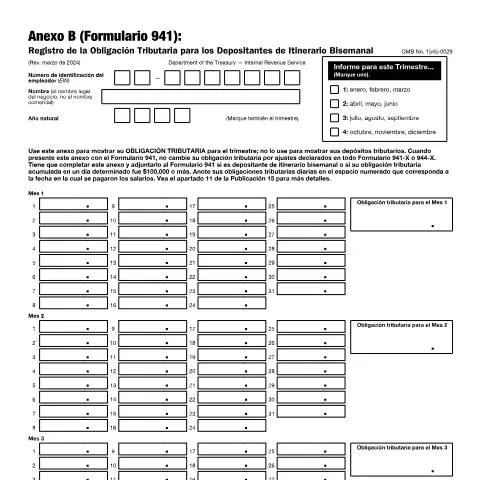
Navigating Form 941-SPB: A Guide for Employers
Filling out the IRS Form 941-SPB is more than just a routine task; it is an essential responsibility for employers who pay wages to employees and are subject to federal employment taxes. The stakes are high, as this form plays a crucial role in reporting income taxes, Social Security tax, and Medicare tax withheld from employee paychecks, as well as the employer's portion of Social Security and Medicare taxes. Without proper completion and timely submission, employers may face penalties that could impact their business operations.
Understanding Your Tax Obligations
When it comes to federal employment taxes, employers must be diligent in tracking and reporting their liabilities. The IRS Form 941-SPB is specifically designed for those who are semi-weekly depositors or have an accumulated tax liability of $100,000 or more on any given day. This form serves a dual purpose: it records your tax obligations and is accompanied by your regular Form 941, which summarizes your employment tax liabilities for the quarter.
Here’s why understanding your tax obligations is critical:
- Compliance: Failure to accurately report and pay employment taxes can lead to severe penalties, including interest on unpaid taxes.
- Cash Flow Management: Knowing your tax liabilities helps in planning your business cash flow effectively.
- Employee Benefits: Accurate reporting affects employee benefits such as Social Security and Medicare, impacting their future entitlements.
Step-by-Step: Completing Form 941-SPB
As you prepare to complete the IRS Form 941-SPB, be mindful of the specific sections that require careful attention. Each subsection has its own nuances, so let’s break it down.
Section 1: Employer Identification
In this initial section, you must enter your Employer Identification Number (EIN) and the legal name of your business. Make sure this information matches what is recorded with the IRS to avoid processing delays.
Section 2: Reporting Period
Indicate the calendar year and the specific quarter you are reporting for. The form requires you to mark one of the four quarters:
- 1: January, February, March
- 2: April, May, June
- 3: July, August, September
- 4: October, November, December
Section 3: Daily Tax Liability Reporting
This section is designed to record your daily tax liabilities. You need to enter the taxes owed based on the salaries you paid on each date. Completing this accurately is vital, as it affects the total tax obligations you report on the main Form 941.
Take special care to ensure the dates correspond to the payroll dates; inaccuracies can result in discrepancies that may trigger audits or penalties.
Deadlines: Timing is Everything
Understanding the timeline for submitting the Form 941-SPB is crucial for compliance. The IRS mandates that this form is filed quarterly.
Important Dates:
| Quarter | Due Date |
|---|---|
| Q1 (Jan - Mar) | April 30 |
| Q2 (Apr - Jun) | July 31 |
| Q3 (Jul - Sep) | October 31 |
| Q4 (Oct - Dec) | January 31 |
Be aware that if the due date falls on a weekend or holiday, the submission date is pushed to the next business day. Missing these deadlines can lead to penalties.
Submission Methods: How to File Form 941-SPB
Employers have several options for submitting Form 941-SPB based on their preferences and operational capabilities:
- Online Submission: Utilize IRS e-file for a streamlined submission experience. This method often speeds up processing times and provides immediate confirmation.
- Paper Filing: You may opt to mail a paper form. Ensure you send it to the address specified for your state on the IRS website to avoid delays.
- In-Person Filing: While not common, some employers may deliver forms directly to local IRS offices. However, this is less efficient due to potential wait times.
Regardless of your method, always keep a copy of your submitted forms and any correspondence with the IRS for your records.
Dealing with Errors or Omissions
Errors in reporting can happen. If you find mistakes after submitting Form 941-SPB, it’s crucial to act quickly. The IRS provides options for correcting errors, primarily through the filing of Form 941-X.
Steps to Correct Errors:
- Identify the mistake: Review your submitted form against your payroll records.
- Complete Form 941-X: This form is specifically for correcting errors on previously filed 941 forms.
- Submit the correction: File Form 941-X as soon as possible, and include an explanation of the corrections being made.
In cases where you are missing essential pieces of information or documentation for your filing, reach out to the IRS directly or consult with a tax professional to avoid complications.
Following Up: Tracking Your Submission
Once you have submitted your Form 941-SPB, you may wish to confirm that it has been received and processed. Here’s how to effectively track your submission:
- Check IRS Acknowledgment: For online submissions, you will receive an automatic acknowledgment. For paper submissions, consider using certified mail for tracking purposes.
- IRS Contact: If you haven’t received confirmation within 45 days, contact the IRS directly. Be prepared with your EIN and details about your submission.
- Monitor Your Account: Regularly check your business account with the IRS. You can view payment history and outstanding obligations.
What Happens After Filing?
After you submit Form 941-SPB, the IRS processes your information and applies it to your tax obligations. This can influence your payment schedule and potential refunds or credits. Here’s what you can expect:
- Review for Accuracy: IRS agents will review your submission for accuracy and compliance.
- Potential Audits: Be aware that the IRS may select your return for audit based on various factors, including discrepancies or unusual reporting patterns.
- Refunds and Credits: If your payments exceed your liabilities, the IRS may issue a refund or apply the excess as a credit towards future liabilities.
Staying informed about your submission and promptly addressing any issues that arise will help mitigate risks associated with tax reporting.
Leveraging Resources for Success
The IRS provides a wealth of resources to assist employers in navigating their tax responsibilities. Here are essential tools to consider:
- IRS Publication 15: This publication provides comprehensive guidelines for employers regarding federal tax responsibilities.
- Online Calculators: Use available online calculators on the IRS website to estimate your payroll taxes accurately.
- Tax Professional Consultation: Engaging a tax professional can provide tailored advice and ensure compliance with federal tax regulations.
Employers who leverage these resources can effectively manage their tax obligations and reduce the likelihood of errors in their filings.
Understanding IRS Form 941-SP: Key Features and Requirements
The IRS Form 941-SP, officially known as the “Employer's Quarterly Federal Tax Return,” is a Spanish-language version of the standard Form 941. It is specifically designed for employers who pay wages to their employees and must report federal income tax withheld and FICA taxes (Social Security and Medicare taxes). Understanding the essential features and requirements of this form is crucial for compliance and accurate reporting. Employers must file this form for each quarter of the year.
One of the key features of Form 941-SP is its requirement for accurate reporting of employee wages, tips, and other compensation. Employers must keep meticulous records of payments made to employees, including any tax withholding and contributions. When filling out the form, employers must also indicate the number of employees, which directly affects the calculations for tax liabilities.
Furthermore, the form provides specific sections for reporting adjustments. If an employer has made overpayments or corrections to previously reported wages or taxes, these can be reconciled on Form 941-SP. This aspect is particularly important to ensure that the IRS has accurate records and that employers avoid potential penalties associated with discrepancies.
It’s worth noting that Form 941-SP must be submitted to the IRS by the designated due dates, which are typically the last day of the month following the end of the quarter. For example, the deadline for the first quarter (January through March) is April 30. Employers can face late fees for not filing on time. The form can be filed electronically or via mail, but considering the current trend towards digital submissions, many employers prefer the electronic route for efficiency and convenience.
Common Mistakes When Filing Form 941-SP and How to Avoid Them
Filing IRS Form 941-SP accurately is critical, but many employers make common mistakes that can lead to delays, penalties, or audits. Below, we explore some of these frequent errors and provide practical tips on how to avoid them.
One common mistake is incorrect reporting of wages and tax withheld. Employers might miscalculate the amounts due to misclassifying employee types or failing to account for all remuneration types. To minimize these errors, it’s advisable to use accounting software that integrates payroll functions, ensuring that wage reports are generated correctly and consistently.
Another frequent issue is failing to report corrections and adjustments accurately. It's important for employers to keep diligent records of any changes throughout the reporting period. If corrections need to be made on the Form 941-SP, they should be clearly documented, and the employer should follow up with any necessary paperwork that may be required by the IRS to rectify previous submissions.
Additionally, employers sometimes overlook the deadlines for filing Form 941-SP. Missing these deadlines can result in penalties that accrue quickly. To avoid this, setting reminders or utilizing a calendar specifically for tax obligations can help ensure timely submissions. Some employers find it useful to file their forms as soon as payroll processes are completed, rather than waiting until the last moment.
Finally, failing to maintain a clear understanding of changes in tax laws can result in incorrect filings. The IRS periodically updates tax rates and regulations affecting payroll taxes. Employers should stay informed through IRS publications or consult with tax professionals to ensure they are aware of the most current guidelines. Regular training for HR and payroll staff on compliance issues can also help mitigate these risks.
The Importance of Maintaining Accurate Payroll Records for Form 941-SP Compliance
One of the crucial components of successfully filing IRS Form 941-SP is maintaining comprehensive and precise payroll records. Accurate payroll documentation not only aids in the preparation of tax returns but also serves as a protective measure in the event of an IRS audit.
Employers are required to maintain detailed records that include employee names, addresses, Social Security numbers, wages paid, tips reported, and the amount of federal income tax withheld. This documentation should cover all relevant time periods and should be easily accessible. Organizing records by employee, rather than by pay period, can streamline the process of gathering necessary information when it comes time to file Form 941-SP.
Furthermore, keeping accurate payroll records enables employers to establish a clear audit trail that shows compliance with federal tax obligations. In the event of an audit, having organized documentation can significantly reduce the stress and uncertainty of the process. Employers should consider conducting regular internal audits to verify that records are complete and accurate, ensuring that any discrepancies can be addressed promptly.
In addition to federal requirements, states may have their own payroll tax reporting requirements that need to be considered. It’s essential for employers to be aware of both federal and state regulations to ensure they remain compliant across the board. Integrating payroll systems that automatically update both federal and state tax requirements can aid employers in keeping their records compliant and up-to-date.
Lastly, it is advisable to train all relevant staff members on the importance of accurate record-keeping and the specific requirements needed for Form 941-SP submissions. Ensuring that payroll staff understand both the legal implications and the practical processes involved can facilitate smoother operations and increase compliance rates.