The Essential Role of IRS Form 8879-C in Corporate Tax Filing
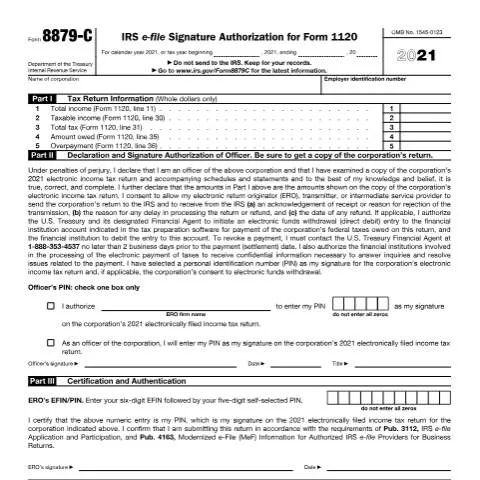
In the intricate landscape of corporate tax filing, IRS Form 8879-C stands out as a pivotal document for businesses operating in the United States. This form, the IRS e-file Signature Authorization for Form 1120, is not merely a procedural formality; it serves as an essential bridge between the corporate officer and the IRS, enabling electronic filing of corporate tax returns. Understanding the nuances of Form 8879-C is crucial for corporations aiming to navigate their tax responsibilities efficiently.
Understanding the Context: The Journey of a Corporate Tax Return
When a corporation prepares to file its tax return, it embarks on a series of interconnected steps that ultimately lead to the submission of its income tax return. The completion of Form 1120, the U.S. Corporation Income Tax Return, is the centerpiece of this process. However, before that return can be electronically filed, the corporation must secure the necessary electronic signature through Form 8879-C.
The importance of this form cannot be overstated. It not only verifies the accuracy of the income tax return but also allows for an expedited filing process through electronic means. By authorizing the use of a Personal Identification Number (PIN), the corporate officer effectively places their signature on the tax return, thereby ensuring compliance with IRS requirements without the need for paper signatures.
Who Needs to Get Involved?
The utilization of Form 8879-C necessitates the involvement of two primary parties: the corporate officer and the Electronic Return Originator (ERO). Each party has specific roles that are critical to the successful completion and submission of the tax return.
- Corporate Officer: This individual, generally holding a high-ranking position within the corporation, verifies the accuracy of the corporate tax return and provides their signature—whether by entering a PIN or signing the form directly. Their thorough review of the tax return is vital for ensuring compliance and minimizing the risk of errors.
- Electronic Return Originator (ERO): The ERO is responsible for facilitating the electronic filing process. They must complete Part I of Form 8879-C with income tax return details and ensure that the form is signed by the corporate officer before submitting the return to the IRS.
Navigating the Specifics of Completing Form 8879-C
Filling out Form 8879-C requires attention to detail, as the information provided will set the stage for the electronic submission of the corporate tax return.
Step-by-Step Breakdown of the Form
Identify the Corporation: At the top of the form, the ERO must enter the name and Employer Identification Number (EIN) of the corporation. This ensures that the IRS can accurately connect the form to the appropriate corporate tax return.
Input Tax Return Information: In Part I, the ERO is required to enter specific financial figures derived from Form 1120:
- Total Income (Line 11 of Form 1120)
- Taxable Income (Line 30 of Form 1120)
- Total Tax (Line 31 of Form 1120)
- Amount Owed (Line 35 of Form 1120)
- Overpayment (Line 36 of Form 1120)
Each of these figures must be entered in whole dollars, ensuring that no decimals or cents are included.
Declaration and Signature Authorization: In Part II, the corporate officer must declare the accuracy of the corporation's tax return and indicate whether they authorize the ERO to enter their PIN on their behalf or choose to enter it manually. The officer's signature, date, and title must also be provided here.
Certification of the ERO: Part III must be completed by the ERO, who certifies their EFIN (Electronic Filing Identification Number) followed by their self-selected PIN. This signature affirms their responsibility throughout the filing process.
Essential Considerations for Accuracy
It is imperative that both the corporate officer and the ERO pay close attention to the details recorded on Form 8879-C. Mistakes in the figures or incomplete sections can lead to delays in processing or even rejection of the tax return. Thus, it’s advisable for all parties involved to double-check their entries before submission.
Understanding the Path Forward: What Happens After Submission?
Once Form 8879-C is completed and the electronic return is filed, what can a corporation expect? The journey does not end with the successful submission of the tax return; the corporation enters a phase of monitoring and response.
Awaiting Confirmation and What to Do Next
After the electronic return is transmitted to the IRS, the ERO and the corporate officer can anticipate several outcomes:
Acknowledgment of Receipt: The IRS will acknowledge receipt of the return, which serves as confirmation that the submission has been successfully received. The ERO will typically receive this acknowledgment directly from the IRS.
Possible Rejection: If there are discrepancies or errors, the IRS may reject the return. In such cases, the corporate officer must promptly correct the issues and resubmit the return, potentially involving a new Form 8879-C if significant changes are made.
Processing Delays: Sometimes, the IRS may take longer than expected to process the return. Delays can arise from various factors, including increased tax season volume or missing information.
Monitoring Outcomes
It is wise for corporations to monitor their tax situation closely after filing. The IRS provides various tools through its official website for tracking the status of filed returns. Additionally, any notifications received from the IRS regarding delays, rejections, or requests for further information should be addressed promptly to mitigate potential issues.
Distinguishing Form 8879-C from Similar Forms
In the realm of corporate tax forms, confusion can easily arise due to the similarity in naming and function between various IRS documents.
Key Differences Between Form 8879-C and Form 8453-C
While both forms serve the purpose of authorizing electronic signatures, they cater to different filing scenarios. Here’s how they differ:
| Feature | Form 8879-C | Form 8453-C |
|---|---|---|
| Purpose | Signature authorization for electronic filing of Form 1120 | Declaration for paper filing of Form 1120 |
| Use with ERO | Yes, for e-filing | No, for paper filing |
| Submission to IRS | No, retain for records | Yes, must be submitted with the return |
This differentiation is vital for corporate officers to understand, as utilizing the correct form is essential for compliance and efficient processing of their tax returns.
Handling Special Cases and Exceptions
Despite the straightforward nature of the electronic filing process, certain unique scenarios may complicate the use of Form 8879-C.
When to Seek Additional Help
Complex Corporations: Corporations with complex structures, such as those involving multiple subsidiaries or various state tax obligations, may require additional consultation to determine the best filing strategy.
Changes in Officer Designation: If the corporate officer responsible for signing the return changes, it is critical to ensure that the new officer is properly authorized and trained in the use of Form 8879-C.
IRS Inquiries: Following submission, if the IRS contacts the corporation for clarification, it is essential to respond quickly and thoroughly to avoid delays or potential penalties.
Common Pitfalls to Avoid
Incomplete Information: Ensure that all fields are completed accurately, as leaving out key information can result in processing delays.
Failing to Retain Copies: While Form 8879-C should not be sent to the IRS, it is essential to keep it on file for your records, as it serves as proof of authorization for electronic filing.
Miscommunication with ERO: Clear communication with the ERO regarding any changes or updates is vital to ensure a smooth filing process.
Final Thoughts: The Importance of Staying Informed
Navigating the complexities of corporate tax filing can be a daunting task, but understanding the role of Form 8879-C can simplify the process significantly. By ensuring that all parties involved are informed and engaged in the process, corporations can enhance their compliance and efficiency in filing corporate taxes.
For more detailed information about Form 8879-C, including any updates, it is advised to regularly check the official IRS website at www.irs.gov/Form8879C. Staying informed will not only help in managing current obligations but also prepare corporations for future tax seasons.
Understanding IRS Form F8879-C: Key Concepts and Definitions
IRS Form F8879-C, formally known as the "IRS e-file Signature Authorization for Corporations," is crucial for tax-exempt organizations and corporations when e-filing their tax returns. This form serves as the official declaration that the electronic return has been reviewed and is accurate as of the date signed. Understanding the nuances of this form is essential for ensuring compliance and avoiding potential penalties.
One of the critical aspects of Form F8879-C is the definition of an authorized signer. Generally, this includes corporate officers or other individuals who have been given explicit authority to sign tax documents on behalf of the corporation. This can include the President, Vice President, Treasurer, or other designated officers. It’s imperative for organizations to have clear internal policies regarding who is authorized to sign such forms to protect against unauthorized filings or potential fraud.
Additionally, organizations must understand the implications of e-filing as it relates to their legal obligations. E-filing allows for faster processing times and quicker refunds, but it also means that the organization must adhere strictly to electronic filing regulations set forth by the IRS. Non-compliance could result in delays or fines, making Form F8879-C’s role even more critical. Organizations are also encouraged to maintain adequate documentation and records that support the accuracy of the information contained within their electronic filings.
Common Mistakes and How to Avoid Them When Completing IRS Form F8879-C
Completing IRS Form F8879-C may seem straightforward, but several common pitfalls can lead to errors that may complicate the filing process. Recognizing these mistakes ahead of time can save both time and resources.
One frequent mistake involves mismatched information. It is critical that the information provided on Form F8879-C matches exactly with that on the corporation's tax return. This includes the Employer Identification Number (EIN), business name, and address. If discrepancies arise, the IRS may reject the electronic filing or request additional information, leading to delays.
Another common issue is neglecting to include the signature of the authorized signer. Unlike paper forms, e-filed documents require proper electronic signatures, which reinforces the need for authorized personnel to review and finalize the form. Corporations should establish a protocol ensuring that the designated signer reviews the tax return and signs the Form F8879-C before submission.
Moreover, some filers may overlook the importance of ensuring that software used for filing is up-to-date with the latest IRS specifications. Tax laws and electronic filing rules can change from year to year, and outdated software may not comply with current regulations. Regular updates and checks can help mitigate this risk significantly.
Filing Status and Its Impact on Using IRS Form F8879-C
The filing status of a corporation can greatly influence the requirements associated with IRS Form F8879-C. Corporations categorized as C corporations, S corporations, or even partnerships each carry distinct obligations under tax law, and understanding how these classifications interact with Form F8879-C is critical for accurate compliance.
C corporations, for example, must use Form F8879-C when e-filing their federal tax returns, specifically Form 1120. This form not only applies to traditional C corporations but also to certain types of tax-exempt organizations that file as corporations. In contrast, S corporations have their specific e-filing requirements, but they also use Form F8879-C when submitting their Form 1120-S.
Partnerships, while not classified as corporations, must also be aware of their obligations regarding IRS Form F8879-C if they choose e-filing for their partnership tax returns (Form 1065). Though Form F8879-C is primarily focused on corporations, partnerships may still need to designate an authorized person for signing purposes.
It is also vital for corporations to consider their fiscal year-end when filing taxes. Depending on the corporation's fiscal year-end, deadlines for e-filing can vary significantly. While the general deadline for corporations is typically the 15th day of the fourth month following the end of the tax year, these dates can shift for corporations operating under different fiscal years or extensions. Understanding these timelines can significantly affect the process of completing and submitting Form F8879-C.