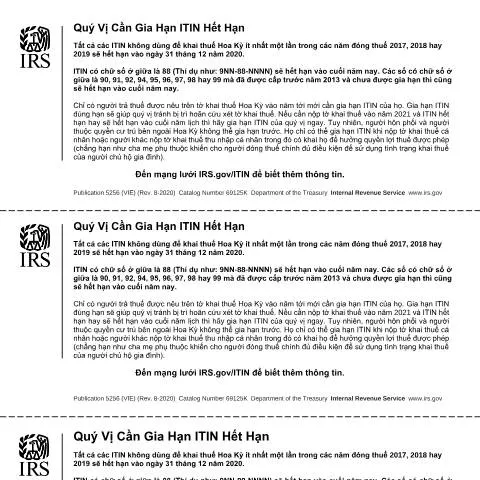
Navigating the Intricacies of IRS Publication 5256VN
When it comes to managing your tax obligations as a non-resident alien or someone without a Social Security Number (SSN), understanding IRS Publication 5256VN is crucial. This publication serves as a comprehensive guide to the Individual Taxpayer Identification Number (ITIN) and the renewal process, ensuring that you remain compliant with U.S. tax laws and avoid potential penalties. But how does one navigate the complexities of this publication? Here we delve into its role, significance, and the step-by-step process to ensure you're adequately prepared.
The Context: Who Needs to Pay Attention to Publication 5256VN?
IRS Publication 5256VN is particularly relevant for individuals from foreign countries who are required to file U.S. taxes but do not qualify for an SSN. This document provides crucial information for:
- Non-resident aliens looking to file their taxes.
- Foreign nationals who have been assigned an ITIN but have not used it in recent tax years.
- Taxpayers who need to renew their ITINs and ensure they remain active for tax filing purposes.
In essence, if you fall into any of these categories, understanding the contents of Publication 5256VN is not just beneficial—it's necessary for compliance.
Understanding the ITIN Renewal Process
The renewal of an ITIN can become a pressing issue, particularly for those who have not used it in the last three tax years. The IRS has set clear guidelines regarding ITINs that have expired or are about to expire. It's imperative to be aware of the key deadlines:
- ITINs not used to file a tax return for the years 2017, 2018, or 2019 expired on December 31, 2020.
- ITINs with middle digits of 88 or those with specific numbers ranging from 90-99 that were assigned before 2013 also face expiration if not renewed.
Failure to renew your ITIN can lead to significant delays in the processing of your tax returns, which highlights the importance of timely action.
Steps to Prepare for ITIN Renewal
Renewing your ITIN involves several preparatory steps to ensure you have all necessary documentation and comply with IRS guidelines. Here’s a detailed outline:
- Gather Required Documents: You will need a valid passport or other identification documents that prove your foreign status and identity.
- Complete Form W-7: Download and fill out Form W-7, Application for IRS Individual Taxpayer Identification Number, ensuring all sections are accurately completed. This form is crucial for the renewal process.
- Include Supporting Documentation: Attach copies of documents that prove your identity and foreign status. This can include visas, passports, and government-issued identification.
Filing the ITIN Renewal Application: What to Expect
Once you have gathered your documents and completed Form W-7, you can then submit your application. The process involves:
- Submission Method: Send your Form W-7, along with the necessary documentation, to the IRS. You can do this by mail or in person at designated IRS offices.
- Await Confirmation: After submission, the IRS will review your application. Expect to wait several weeks for processing—typically around 7-11 weeks during peak times.
- Receiving Your ITIN: Upon approval, you'll receive a new ITIN via mail. This number will be essential for your tax filings moving forward.
Consequences of Not Renewing Your ITIN
It's fundamental to grasp the implications of allowing your ITIN to expire. Potential consequences include:
- Delays in processing your tax return, which could lead to penalties or interest on unpaid taxes.
- Inability to claim tax benefits, including potential refunds or credits that require an active ITIN.
- Increased scrutiny from the IRS, leading to audits or further inquiries into your tax filings.
Thus, proactive management of your ITIN status is essential to avoid these pitfalls.
Tracking the Status of Your ITIN Renewal
After submitting your ITIN renewal application, it's vital to monitor its status. You can do this by:
- Contacting the IRS: You can reach out to the IRS directly via their designated phone numbers for ITIN inquiries.
- Online Resources: Visit the IRS website for updates or any changes in processing times for ITIN applications.
This proactive approach will help you stay informed and avoid unnecessary delays in your tax obligations.
Common Pitfalls in Completing IRS Publication 5256VN
While navigating IRS Publication 5256VN, there are several common pitfalls that applicants should be wary of:
- Incomplete Applications: Ensure that all sections of Form W-7 are filled out completely. Incomplete forms will lead to delays in processing.
- Incorrect Documentation: Double-check the documents you are submitting. Any missing or incorrect identification can result in denial of your application.
- Missing Deadlines: Pay attention to renewal deadlines to avoid penalties and complications. Setting up reminders can be advantageous.
Final Steps: What Happens After ITIN Renewal?
Once your ITIN is renewed, it's essential to keep track of your tax obligations moving forward. Here are key considerations:
- Use Your ITIN Promptly: Ensure that you use your renewed ITIN in your upcoming tax filings to avoid another lapse in status.
- Stay Informed: Keep abreast of any changes to IRS regulations regarding ITINs as tax laws evolve.
- Seek Professional Guidance: If your situation is complex or you have additional questions, consider consulting a tax professional familiar with international tax matters.
By being proactive and informed, you ensure that you remain compliant with U.S. tax laws while maximizing your potential benefits as a taxpayer.
Understanding IRS Publication 5256: A Detailed Overview
IRS Publication 5256 is a crucial document for taxpayers, particularly those involved in specific industries or activities that face unique tax regulations. This publication discusses the tax treatment of certain income and expenses, aimed at helping taxpayers understand their obligations and rights. Providing clarity on complex tax matters, IRS Publication 5256 covers various income categories, including, but not limited to, wages, interest income, and self-employment earnings.
One significant section discusses the tax implications of various forms of income. For example, taxpayers must be aware of how different income streams are taxed under federal law. This includes differentiating between ordinary income and capital gains, with the latter often benefiting from lower tax rates. Understanding these distinctions can lead to more effective tax planning and ultimately, significant savings.
The Role of Deductions in IRS Publication 5256
IRS Publication 5256 outlines various deductions available to taxpayers, which can reduce their taxable income. Tax deductions are vital in reducing the overall tax obligation and can significantly impact financial planning. This publication details both standard and itemized deductions, providing examples of eligible expenses that can be deducted, such as business expenses for self-employed individuals or educational expenses for students.
One noteworthy aspect of the publication is its emphasis on the importance of keeping accurate records to substantiate any claims for deductions. Taxpayers should maintain organized documentation, including receipts, invoices, and bank statements, to support their deductions in case of an audit by the IRS. Additionally, the publication offers guidance on how to prioritize which deductions to take, advising taxpayers to evaluate both their standard deduction versus itemizing to see which method results in a lower tax bill.
Common Mistakes and How to Avoid Them When Using IRS Publication 5256
While IRS Publication 5256 serves as a comprehensive guide, taxpayers often make common mistakes when interpreting its content. One frequent error involves misunderstanding eligibility criteria for certain deductions or credits. For instance, many taxpayers fail to realize that not all business expenses are deductible, leading to inadvertent underreporting of income or incorrect claims. To avoid this pitfall, it is crucial for taxpayers to read the publication thoroughly and seek advice when uncertain about specific claims.
Another frequent issue arises from not updating personal information with the IRS, especially after significant life changes such as marriage, divorce, or the birth of a child. The IRS requires accurate information, and failing to keep records up to date can result in errors during tax preparation. Taxpayers may want to ensure their name, address, and Social Security number (SSN) are current to avoid delays or complications related to their tax filings.
Additionally, individuals should be aware of the deadlines associated with using the IRS Publication 5256 information. The typical tax filing deadline is April 15, but in some cases, extensions may apply. Understanding these timelines is essential for accurate and timely filing, as late submissions can incur penalties and interest charges. Utilizing IRS Publication 5256 effectively requires diligence and attention to detail, which is why ongoing education about tax obligations is vital.