Understanding IRS Publication 5337: A Comprehensive Guide
The IRS Publication 5337, officially known as the "Individual Noncash Charitable Contributions," plays a pivotal role in informing taxpayers about the recording and reporting of noncash charitable donations on their tax returns. This comprehensive guide delves into the essential facets of this publication, shedding light on its purpose, historical context, and practical steps for completion and submission.
The Crucial Role of Publication 5337 in Tax Reporting
Publication 5337 serves as a vital resource for taxpayers who intend to claim deductions for noncash charitable contributions exceeding $500. Such contributions could include a variety of items, from clothing and household goods to more intricate donations like art or securities. Understanding how to navigate this publication can significantly affect a taxpayer's financial obligations and the overall integrity of their tax return.
What Constitutes Noncash Charitable Donations?
Noncash charitable donations encompass a wide array of goods and property that taxpayers donate to qualified charitable organizations. These contributions must be reported when their total value exceeds $500. Notably, this category of donations is distinct from cash contributions, which are typically simpler to report.
- Examples of Noncash Contributions:
- Clothing and household items
- Real estate or land
- Securities, such as stocks or bonds
- Artwork and collectibles
A Historical Overview of Noncash Charitable Deductions
The IRS has recognized the importance of noncash charitable deductions for many years, with evolving regulations shaping Publication 5337. Historical data reveals trends in charitable giving and the significant impact these contributions have on the tax system.
The Evolution of IRS Guidelines
Initially, the IRS provided limited guidance concerning noncash donations, causing confusion among taxpayers. Over the years, various tax reforms have aimed to streamline the reporting process and enhance compliance. The introduction of Form 8283, which must be completed for all contributions exceeding the $500 threshold, marked a significant milestone in the documentation of noncash charitable contributions.
Statistical Insights from Historical Data
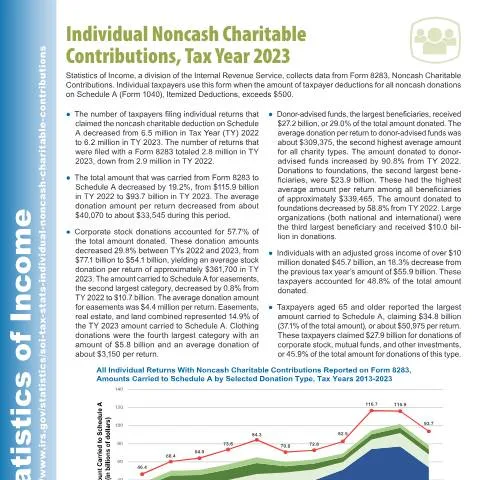
According to the IRS Statistics of Income Division, the total value of noncash charitable contributions claimed in recent tax years has showcased a stable yet fluctuating trend. In Tax Year 2022, for instance, taxpayers reported approximately $115.9 billion in noncash contributions, reflecting a slight decrease from the previous year. Notably, corporate stock donations represented a substantial portion of these contributions.
Specific Scenarios Requiring Special Consideration
Taxpayers may find themselves in unique situations when dealing with Publication 5337. Understanding how to navigate these circumstances is essential for accurate reporting and compliance with IRS regulations.
Non-U.S. Citizens and Nonresident Aliens
Foreign nationals often face additional complexities when reporting charitable contributions in the U.S. Nonresidents are generally subject to different tax rules, and their ability to deduct noncash contributions can be limited. It's crucial for non-U.S. citizens to consult IRS guidelines specific to their circumstances to ensure compliance.
Minors Making Donations
Minors wishing to claim deductions for noncash contributions may need to navigate specific procedures. Typically, their parents or guardians must report these contributions on their tax returns. However, properly documenting the contribution and its value is necessary to avoid complications during the review process.
Urgent and Emergency Situations
In cases of urgent donations—such as contributions made during disaster relief efforts—taxpayers may need to expedite their reporting. IRS guidelines do accommodate certain emergency provisions, but it is advisable to maintain comprehensive records to support these claims.
Completing Publication 5337: A Step-by-Step Approach
Completing Publication 5337 entails careful attention to detail and adherence to IRS guidelines. Here’s a step-by-step breakdown of how to approach the form and related documents effectively.
Documenting Your Noncash Contributions
Before completing the form, gather all necessary documentation related to your noncash contributions:
- Receipts or written acknowledgments from the charity.
- Photographs of the donated items.
- Appraisals for items valued over $5,000.
Ensuring that you have these documents prepared will streamline the filling process and reduce the chances of errors.
Filling Out Form 8283
Form 8283 is integral to the reporting process. For contributions exceeding $500, complete the following sections:
- Part I: Donor Information. Provide your personal details and the charity's information.
- Part II: Description of Donated Property. Detail the items donated, including their condition and fair market value.
- Part III: Signature and Acknowledgment. Obtain the signature of an authorized representative from the charity.
Submitting Your Tax Return
Once Form 8283 is complete, it should be attached to your federal tax return, typically due by April 15 each year. This ensures that the IRS can review your deductions accurately. If you are filing electronically, ensure that your software supports the inclusion of the form.
What to Do if You Face Issues with Your Submission
Taxpayers may encounter various issues during the filing process, from rejection of deductions to missing documentation. Knowing how to respond can help mitigate potential penalties or complications.
Receiving a Denial or Rejection
If the IRS denies your deduction for any noncash contributions, you will receive a notice detailing the reasons for the denial. Common issues include lack of proper documentation or failure to adhere to valuation guidelines.
- Review the notice carefully to understand the denial.
- Gather any additional documentation that supports your claim.
- Consider filing an appeal if you believe the deduction was wrongly denied.
Addressing Missing Documentation
In cases where documentation is incomplete or missing, it is critical to act promptly. Here are steps to follow:
- Contact the charitable organization first to retrieve lost receipts or acknowledgments.
- If necessary, obtain a new appraisal for valuable items to support your contribution's fair market value.
Handling Errors on Your Return
Errors can occur during the preparation of tax returns. If you discover an error after submission, you may need to file an amended return using Form 1040-X. Ensure that this form includes the corrected information about your noncash charitable contributions.
Understanding the Submission Channels for Publication 5337
The IRS provides several channels through which taxpayers can submit their noncash contribution documentation. Selecting the right channel can influence processing times and accuracy.
Online Filings vs. Paper Submissions
Filing your tax return electronically is generally considered the most efficient method. However, those opting for paper submissions should be aware of the differences:
| Channel | Processing Time | Common Issues | Documentation Requirements |
|---|---|---|---|
| Online Filing | Faster (typically within 21 days) | Software compatibility issues | Scan and upload supporting documents |
| Paper Filing | Longer (up to 8 weeks or more) | Lost or delayed mail | Attach physical copies of documents |
In-Person Submissions
For those who prefer a face-to-face interaction, visiting an IRS office may be viable for resolving complex issues. While it may not be feasible for all taxpayers, this approach can sometimes expedite the resolution of questions or problems regarding charitable contributions.
Distinguishing Publication 5337 from Similar Forms
Taxpayers often confuse Publication 5337 with other forms and publications related to charitable contributions. Understanding these distinctions is essential for accurate reporting.
Comparison with Form 8283
While both Publication 5337 and Form 8283 pertain to noncash charitable contributions, they serve different purposes:
- Publication 5337: A guide outlining the requirements and procedures for reporting noncash donations.
- Form 8283: The actual form used to report individual noncash charitable contributions on your tax return.
Connecting with Other Charitable Contribution Forms
Taxpayers should also recognize the differences between Publication 5337 and other forms related to cash donations, like Form 1040 Schedule A. Understanding the nuances ensures that taxpayers adhere to IRS expectations and minimize complications during tax time.
Prepping the Necessary Supportive Documentation
A well-prepared submission will often make the difference between a smooth tax filing experience and one fraught with unnecessary complications. Below are key categories of documentation that should be prepared alongside your noncash contributions.
General Requirements for Documentation
General documentation should include:
- Receipts from charitable organizations for all donated items.
- Detailed descriptions of the items, including their condition and anticipated value.
- Any appraisals for items exceeding the threshold of $5,000 in value.
Item-Specific Documentation
Different items may require additional documentation:
- Clothing and Household Items: A list of items donated with their fair market values generally suffices.
- Real Estate: An appraisal and transfer documents are necessary to validate the contribution.
- Securities: Documentation proving the transfer of ownership to the charitable organization should be included.
Final Considerations for Submitting Noncash Contributions
Successfully navigating the complexities of IRS Publication 5337 involves thorough preparation, understanding of the regulations, and careful documentation. By taking the time to familiarize yourself with the forms and processes involved, taxpayers can ensure that they maximize their deductions while adhering to IRS requirements.
Whether you're making a large donation or a series of smaller contributions, knowing how to accurately report these can lead to significant financial benefits. Taking each step seriously—from documenting your contributions to understanding the distinctions among various IRS forms—will help foster a seamless tax filing experience.
Understanding IRS Publication 5337: A Comprehensive Overview
IRS Publication 5337, titled "Tax Benefits for Persons with Disabilities," is an essential resource tailored for individuals with disabilities and their caregivers. This publication delves into the financial aspects of living with a disability, offering valuable insights into the tax benefits available to eligible taxpayers. It's crucial to understand not just the benefits but also the eligibility criteria, application processes, and potential pitfalls when navigating this complex area of tax law.
The publication covers a variety of relevant topics including:
Understanding the Definition of Disability: The IRS outlines specific criteria that define disability for tax purposes, which may differ from other definitions used by the Social Security Administration (SSA). This distinction is crucial as it affects eligibility for various deductions, credits, and benefits.
Key Tax Benefits Available: IRS Publication 5337 details several tax benefits that individuals with disabilities may be eligible for, such as the Earned Income Tax Credit (EITC), the Child and Dependent Care Credit, and deductions related to medical expenses and impairment-related work expenses. Each benefit has its own set of eligibility requirements and documentation needs, which are thoroughly explained to help taxpayers maximize their claims.
How to Apply for Benefits and Credits: The publication provides step-by-step guidance on how to apply for tax benefits through the appropriate IRS forms. It includes details on necessary documentation, filing deadlines, and tips for ensuring that your claims are processed smoothly. For example, Form 8862 may be required for taxpayers claiming the EITC after it has been denied in previous years.
Local Resources and Assistance Programs: Knowing where to seek help can significantly ease the process of applying for tax benefits. The publication lists various resources, including local non-profit organizations and government agencies that provide assistance with tax preparation and disability advocacy. This is particularly beneficial for individuals who may not have access to professional tax advice.
Frequently Asked Questions: The FAQ section is a valuable component in addressing common concerns and misconceptions regarding tax benefits for individuals with disabilities. It covers scenarios like income thresholds, the impact of receiving disability benefits on tax liability, and how dependents affect eligibility for specific credits.
By utilizing the information from IRS Publication 5337, individuals with disabilities can make informed decisions about their tax filings and ensure they are taking full advantage of the benefits available to them.
Navigating the Tax Filing Process for Individuals with Disabilities
Filing taxes can be a daunting task for anyone, but for individuals with disabilities, the process often comes with additional complexities. Understanding the nuances of tax filing in relation to disability can empower taxpayers to navigate this landscape more effectively.
Choosing the Right Filing Status: Taxpayers with disabilities should carefully consider their filing status, as it can significantly impact their tax rate and eligibility for various tax credits. For example, those who qualify as head of household—often applicable for caregivers or single parents—may enjoy higher deductions and credits.
Itemizing Deductions vs. Standard Deduction: Taxpayers may face the decision of whether to take the standard deduction or itemize their deductions. For individuals with disabilities, itemizing medical expenses can yield significant tax savings, especially if they incurred high healthcare costs. IRS guidelines specify that only the portion of unreimbursed medical expenses exceeding 7.5% of adjusted gross income (AGI) can be deducted.
Special Considerations for Dependent Care: Caregivers of individuals with disabilities often incur additional expenses related to personal care and assistance. Understanding how these costs interact with dependent care credits and deductions is crucial. Publication 5337 clarifies which costs are eligible and how caregivers can maximize their claims.
State-Specific Considerations: While IRS guidelines set the framework for federal taxes, it's essential for taxpayers to be aware of state-specific tax laws that govern disability benefits. Some states offer additional credits or deductions that can further alleviate tax burdens. For example, certain states have tax benefits specifically designed for veterans with service-related disabilities.
The Importance of Record Keeping: Proper documentation is the backbone of successful tax filing. Individuals and caregivers should maintain detailed records of all expenses related to the care of individuals with disabilities. This includes receipts for medical expenses, documentation for additional caregiving services, and records of any income received. Creating a dedicated file for these documents can simplify the preparation process and provide peace of mind during audits or inquiries.
By approaching tax filing with a well-informed strategy, individuals with disabilities and their caregivers can ensure they meet their obligations while maximizing available benefits.
Common Pitfalls and Misconceptions Regarding Disability Tax Benefits
As individuals with disabilities navigate the often confusing waters of tax benefits, misconceptions and pitfalls can lead to missed opportunities or even costly mistakes. Awareness of these common issues can help taxpayers make better-informed decisions.
Misunderstanding What Constitutes a Disability: One prevalent misconception is the belief that only individuals receiving Social Security Disability Insurance (SSDI) are considered disabled for tax purposes. As mentioned previously, the IRS has its own definition that may differ. It is essential to review the specific eligibility criteria outlined in IRS Publication 5337 to understand who qualifies.
Failing to Claim Available Credits: Many taxpayers may not realize they are eligible for certain tax credits unless they actively research their options. For instance, the EITC can be a valuable benefit, but it requires meeting specific income thresholds. Taxpayers often leave money on the table simply because they are unaware of the credits available to them.
Incorrectly Reporting Income: Individuals with disabilities sometimes receive multiple streams of income, including disability benefits, wages, and possibly supplemental income. It is crucial to accurately report all sources of income on tax returns, as misreporting can lead to audits, penalties, or delay in processing refunds. IRS guidelines provide details on how different types of income should be reported.
Overlooking Medical Expense Deductions: As previously highlighted, medical expenses can be a significant deduction for individuals with disabilities. However, many taxpayers shy away from itemizing, believing their expenses do not meet the threshold. It is advisable to keep detailed records of all medical costs throughout the year and consult the IRS guidelines to ascertain eligibility for deductions.
Not Seeking Professional Guidance: Finally, individuals with disabilities may feel overwhelmed and not seek help when preparing their taxes. Engaging with a tax professional knowledgeable in disability-related tax issues can provide invaluable assistance. Professional guidance can help taxpayers navigate the nuances of the tax code, ensuring that they do not miss out on benefits they deserve.
By recognizing these common pitfalls and misconceptions, individuals with disabilities can take proactive measures to enhance their understanding of tax benefits and make the most of their filing experiences.