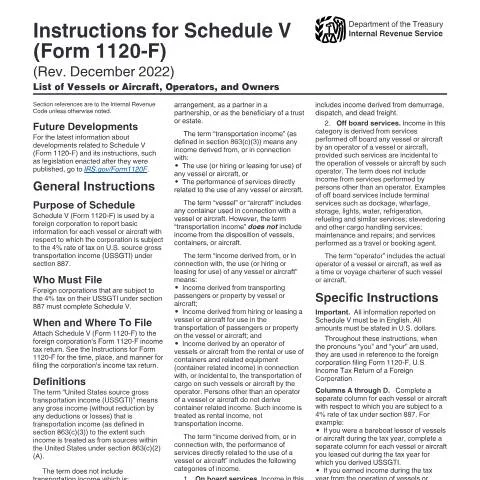
Navigating the Maritime Tax Landscape: A Deep Dive into IRS Instructions for Schedule V (Form 1120-F)
For foreign corporations engaged in maritime and aviation activities, understanding the intricacies of U.S. taxation is crucial. The IRS Instructions for Schedule V (Form 1120-F) serve as a vital resource for foreign entities that are subject to a 4% tax on U.S. source gross transportation income (USSGTI). This guide outlines how to effectively utilize these instructions to navigate the complexities of compliance.
Understanding the Core Purpose of Schedule V
Schedule V is not your typical tax form; it is a comprehensive reporting tool for foreign corporations. This schedule assists in detailing essential information about each vessel or aircraft for which the corporation is liable to pay the 4% tax under section 887 of the Internal Revenue Code. Key definitions and examples elucidate the specific types of income that fall under the purview of USSGTI.
- USSGTI Definition: Gross income derived from transportation activities sourced within the U.S.
- Transportation Income: Income generated from services related to the use of vessels or aircraft.
By understanding these definitions, corporations can ensure accurate reporting and compliance with U.S. tax obligations.
Critical Definitions to Grasp Before Filing
Before diving into the specifics of the Schedule V filing process, it is essential to familiarize oneself with critical terminologies:
Gross Transportation Income
The term "gross transportation income" (USSGTI) refers to income generated from transportation services, which includes but is not limited to:
- Transporting passengers or cargo
- Leasing or hiring vessels or aircraft
- Income from services performed directly related to transportation
Scope of Transportation Income
Additionally, it is crucial to recognize that not all income tied to vessels or aircraft is considered transportation income. The instructions explicitly exclude:
- Income that is not sourced under section 863(c)(2)
- Income that is effectively connected to a U.S. trade or business
- Income taxable in U.S. possessions under specific provisions of the Code
Understanding these nuances will significantly improve the accuracy of the information reported on Schedule V.
The Filing Procedure: Step-by-Step Guide
Filing Schedule V requires careful attention to detail and adherence to specific guidelines. Below, you will find a systematic approach to ensure compliance:
- Identification of Vessels or Aircraft: Identify each vessel or aircraft subject to the 4% tax. Each entity must be listed in separate columns of the Schedule V.
- Income Determination: Assess the income categories applicable to your operations, including on-board and off-board services.
- Conversion of Amounts: Ensure all financial amounts are converted into U.S. dollars for uniformity.
- Preparation of Schedule V: Fill out Schedule V, providing detailed information for each vessel or aircraft, including the income derived from various services.
- Attachment to Form 1120-F: Finally, attach Schedule V to the Form 1120-F when filing your complete income tax return.
Challenges and Common Misinterpretations
When it comes to navigating tax obligations, foreign corporations often encounter pitfalls. Here are common areas of misinterpretation regarding Schedule V:
Misunderstanding USSGTI
Foreign corporations sometimes mistakenly classify income as USSGTI when it does not meet the specified criteria. A clear understanding of source rules under section 863 is critical.
Scope of Services
Another frequent issue arises in recognizing the distinction between transportation income and other service revenues. For example, revenue derived from renting staterooms or operating casinos on board is transportation income, whereas income from non-transportation-related services is not.
Clarity in these definitions can prevent costly mistakes during filing.
Public Entities: Who Needs to File Schedule V
While the primary focus of Schedule V revolves around foreign corporations, understanding its relevance to various stakeholders can illuminate its importance:
- Foreign Corporations: Any foreign corporation that operates vessels or aircraft and generates USSGTI must file.
- Partnerships and Joint Ventures: Entities involved in joint service arrangements or partnerships may also be subject to these reporting requirements.
- Trusts and Estates: Beneficiaries of trusts and estates that derive income from vessels or aircraft should be aware of their obligations.
Limitations of Schedule V and its Instructions
While Schedule V is a critical tool, it comes with its own limitations. Understanding what is not covered can assist in compliance:
Non-Transportation Income
The instructions make it clear that any income not generated from transportation activities does not need to be reported here. This includes:
- Sales of vessels or aircraft
- Income not linked to transportation services
International Tax Treaties
Foreign corporations should also take into account that certain international tax treaties may influence how income is taxed. The Schedule V instructions do not address treaty benefits, thus requiring further research into applicable treaties for specific cases.
Interconnections with Other IRS Documents
Schedule V does not exist in a vacuum; it relates to various other IRS documents that contribute to a comprehensive tax strategy for foreign corporations. Understanding these connections can enhance your filing process:
Form 1120-F
Schedule V must be attached to Form 1120-F, which is the general income tax return for foreign corporations. Filing both documents correctly is crucial for compliance.
Other Schedules
Foreign corporations may also need to complete other schedules depending on their specific operations, such as:
- Schedule A for income from sources other than transportation
- Schedule B for additional deductions related to the operation of vessels or aircraft
Record-Keeping
Maintaining accurate records of income and expenses related to transportation activities is essential. Corporations should be prepared to substantiate their reported figures during potential audits.
Final Thoughts on Using Schedule V Effectively
By leveraging the IRS Instructions for Schedule V (Form 1120-F), foreign corporations can navigate the complex terrain of U.S. taxation on transportation income. Awareness of the definitions, correct reporting practices, and a clear understanding of the limitations can significantly enhance compliance efforts.
For the most current updates and developments impacting Schedule V and related filings, always refer to the official IRS website at IRS.gov/Form1120F. Keeping informed about legislative changes and IRS guidance will further bolster your organization’s compliance posture.
Understanding Form 1120-FV: Key Components and Eligibility
Form 1120-FV, the U.S. Income Tax Return for Foreign Corporations, is specifically designed for foreign entities engaged in business or trade within the United States. Understanding the eligibility requirements and the key components of this form is crucial for compliance with the IRS regulations.
To be eligible to file Form 1120-FV, a foreign corporation must be involved in a trade or business within the U.S. during the tax year. This activity can include but is not limited to, selling goods, services, or other activities that generate income. It’s important to determine if the income is effectively connected with the U.S. trade or business, as this will dictate the necessity of filing this form. Additionally, foreign corporations must ensure they are following the guidelines set by the Internal Revenue Code (IRC), especially sections that pertain to international taxation.
Key components of Form 1120-FV include:
- Part I: Income – Here, entities must report their gross income from U.S. sources. Understanding the U.S. source income rules is essential, as certain types of income may be exempt or subject to different tax treaties.
- Part II: Deductions – Foreign corporations can claim various deductions, such as operating expenses, which are essential for calculating their taxable income.
- Part III: Tax Computation – This section allows for the calculation of the income tax owed, utilizing the applicable rates depending on the type of income earned.
- Schedules A and B – These schedules are used for additional reporting and may require detailed information about shareholders or specific income types, which can impact the overall tax liability.
Filing deadlines for Form 1120-FV typically coincide with the U.S. tax calendar, usually on the 15th day of the 6th month after the end of the corporation's tax year. For foreign corporations operating on a calendar year basis, this translates to June 15. However, extensions can be requested using Form 7004, but it is vital to understand that this does not extend the time to pay taxes owed.
Common Mistakes in Filing Form 1120-FV and How to Avoid Them
Filing Form 1120-FV can be a complex process, and several common mistakes can lead to delays, penalties, or additional scrutiny from the IRS. Awareness of these pitfalls is crucial for foreign corporations wanting to navigate U.S. tax compliance effectively.
One frequent mistake is failing to accurately determine whether income is effectively connected with a U.S. trade or business. Corporations should thoroughly review the IRS guidelines and consult the applicable tax treaty provisions to ascertain the correct classification of their income. Misclassification can result in incorrect tax calculations and penalties.
Another common error involves the incorrect reporting of deductions. Foreign corporations must ensure that they are only claiming legitimate expenses that are directly related to their U.S. operations. This requires maintaining thorough documentation, as the IRS requires evidence to substantiate all claimed expenses. Without proper records, corporations may face disallowances that can significantly increase their taxable income.
Moreover, many foreign entities overlook the requirement to include all necessary attachments and schedules when submitting Form 1120-FV. This can include, but is not limited to, Schedule A and Schedule B, which require detailed information about the company's structure and operations. Missing attachments can lead to rejection or delayed processing times.
Lastly, foreign corporations often underestimate the importance of compliance with filing dates. It's essential to mark your calendar and allow ample time for preparation and submission, including any potential complexities in gathering financial details from multiple jurisdictions. Remember that while extensions for filing are available, they do not extend payment deadlines, leading to potential interest and penalties if taxes are not paid on time.
Tax Treaties and Their Impact on Form 1120-FV Filings
Understanding tax treaties is vital for foreign corporations filing Form 1120-FV, as these agreements can significantly affect the taxation of income earned in the United States. The U.S. maintains tax treaties with numerous countries designed to prevent double taxation and encourage cross-border investment.
Under these treaties, a foreign corporation may be eligible for reduced tax rates or even exemptions on certain types of income, such as dividends, interest, or royalties. For instance, if a corporation based in a treaty partner country receives dividends from a U.S. corporation, the applicable tax rate may be lower than the standard rate due to treaty benefits. This can reduce the overall tax liability reported on Form 1120-FV.
When claiming treaty benefits, it is essential to correctly complete IRS Form W-8BEN-E, which certifies the entity's status as a foreign corporation, allowing it to claim reduced withholding tax rates under the applicable treaty. This form should accompany the income reporting on Form 1120-FV to validate the claimed benefits and ensure compliance with IRS requirements.
Foreign corporations should also be aware that tax treaties contain specific provisions regarding the definitions of residency, permanent establishment, and the types of income covered. Therefore, it is advisable to review the specific treaty language applicable to the country of incorporation to ensure proper filing and compliance with Form 1120-FV.
Filing Form 1120-FV without considering existing tax treaties can lead to overpayment of taxes, which can impact business operations and cash flow. It is prudent for foreign corporations to consult with tax professionals who specialize in international taxation and are familiar with the nuances of U.S. tax law and relevant treaties.