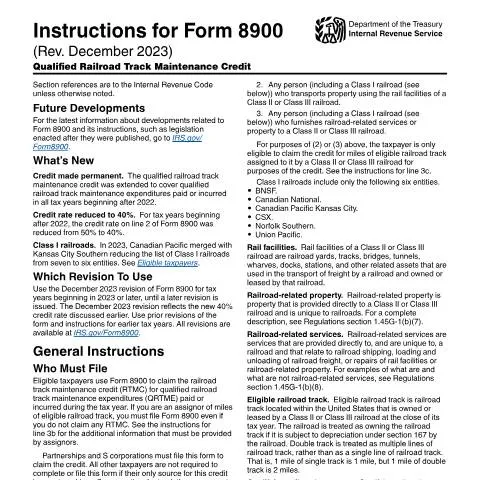
Navigating the IRS Instructions for Form 8900: A Comprehensive Guide
The ever-evolving landscape of tax regulations can often feel overwhelming, particularly for those involved in the railroad industry. Understanding the IRS Instructions for Form 8900, which pertains to the Qualified Railroad Track Maintenance Credit (RTMC), is crucial for eligible taxpayers. This guide aims to dissect the vital components of these instructions, providing clarity and practical insights into how they can be utilized effectively.
Understanding the Scope of Form 8900 Instructions
The IRS Instructions for Form 8900, revised in December 2023, serve a distinct purpose: they delineate the requirements and guidelines for claiming the RTMC for qualified railroad track maintenance expenditures (QRTME). Key elements covered include eligibility criteria, definitions of essential terms, and the filing process. However, it is equally important to recognize the limitations of this document.
Key Elements Covered
- Eligibility for the Credit: Detailed criteria for who qualifies as an eligible taxpayer.
- Definitions of Terms: Clarification on terms like Class II and Class III railroads, rail facilities, and qualifying expenditures.
- Filing Requirements: Instructions on who must file and the obligations associated with the filing.
Despite the thorough nature of the instructions, they do not encompass every potential situation that might arise. For instance, taxpayers engaged in partnerships may have specific considerations not fully detailed in Form 8900’s instructions. Therefore, it's imperative to approach the document with an understanding of both its utility and its boundaries.
Who Should Pay Attention to Form 8900?
The audience for these instructions primarily comprises railroad operators, service providers, and related entities. Specifically, eligible taxpayers include Class II and Class III railroads, as defined by the Surface Transportation Board, as well as individuals and businesses that utilize Class II and Class III railroad facilities.
Common Scenarios Where Form 8900 Becomes Essential
Understanding when Form 8900 is necessary can save time and prevent potential issues with the IRS. Here are several scenarios where the instructions become indispensable:
- Class II and Class III Railroads: If you own or lease track and have incurred maintenance expenditures, you must utilize Form 8900 to claim the credit.
- Service Providers: Businesses providing services or property to Class II or Class III railroads may also need to file, as they can claim the credit for the mileage assigned to them.
- Partnerships and S Corporations: These entities must file Form 8900 to claim the credit on behalf of their partners or shareholders, even if the partners do not directly claim it.
In essence, if your operations revolve around the maintenance of railroad tracks or providing relevant services, the IRS Instructions for Form 8900 are critical for ensuring compliance and maximizing available credits.
Avoiding Misunderstandings: Common Misinterpretations
The intricacies of tax regulations can often lead to misunderstandings. Here are some common misinterpretations related to Form 8900 and how to sidestep them:
Common Misinterpretations
- Assuming All Railroad Operators Qualify: Not all railroads qualify for the RTMC; only Class II and III railroads and certain other entities do.
- Misunderstanding Eligible Expenditures: QRTME must specifically pertain to maintaining, repairing, or improving qualifying railroad structures; not all railroad-related costs are eligible.
- Filing Requirements: Some may assume that if they are part of a partnership or S corporation, they are exempt from filing. However, the entity itself must file to claim the credit on behalf of its partners.
Awareness of these misunderstandings can provide clarity and enhance compliance when navigating the railroad maintenance credit landscape.
Essential Terms and Definitions for Clarity
Diving into the specifics of the IRS Instructions for Form 8900 necessitates familiarity with key terms. Here’s a breakdown of significant definitions that can aid in understanding the instructions more thoroughly:
Explaining Key Terminology
| Term | Description |
|---|---|
| Qualified Railroad Track Maintenance Expenditures (QRTME) | Expenses incurred for maintaining, repairing, and improving qualifying railroad structures owned or leased by eligible railroads. |
| Eligible Taxpayer | Entities including Class II and III railroads and those transporting property using their facilities. |
| Class I Railroad | The largest freight railroads in the United States, serving as a crucial part of the infrastructure. |
| Rail Facilities | Assets such as tracks, bridges, and stations owned or leased by railroads that facilitate freight transport. |
| Qualifying Railroad Structure | Specific structures such as tunnels, bridges, and tracks that qualify under IRS regulations. |
Understanding these terms is not only vital for proper filing but also for identifying what qualifies under the RTMC, thus helping taxpayers streamline their claims.
Step-by-Step Approach to Leveraging Form 8900 Instructions
Utilizing the IRS Instructions for Form 8900 effectively requires a structured approach. Here’s a step-by-step guide to integrating these instructions into your tax preparation process:
Step-by-Step Breakdown
- Identify Eligibility: Determine if you qualify as an eligible taxpayer under the defined criteria.
- Understand Expenditures: Review your maintenance expenditures to ascertain whether they qualify as QRTME.
- Gather Documentation: Compile all necessary documentation supporting your claims for QRTME, ensuring compliance with IRS requirements.
- Complete Form 8900: Accurately fill out Form 8900 based on the instructions provided, paying close attention to each section.
- File with Other Forms if Necessary: If applicable, coordinate the filing of Form 8900 with other related tax forms to ensure comprehensive compliance.
- Keep Records: Maintain copies of your submitted form and all supporting documentation for your records, as the IRS may request them in the future.
By following these steps, eligible taxpayers can navigate the complexities of the IRS Instructions for Form 8900, maximizing their benefit from the RTMC while remaining compliant with federal regulations.
Connections to Other IRS Documents and Procedures
Form 8900 does not exist in isolation; it interacts with several other IRS documents and procedures. Understanding these connections can provide a holistic view of the tax landscape for railroad maintenance.
Related Documents and Their Relevance
| Related Document | Overview |
|---|---|
| Form 3800 | This form summarizes the General Business Credit, where taxpayers can report their RTMC directly if they received it through a partnership or S corporation. |
| IRS Publication 535 | This publication provides information on business expenses, including discussion on capitalizing expenditures and determining qualified costs. |
| IRS Revenue Procedure 2011-36 | This procedure outlines the eligibility criteria and requirements for claiming various tax credits for businesses, including those applicable to railroads. |
Familiarity with these documents enriches the tax filing experience and ensures taxpayers are comprehensively informed about their obligations and entitlements.
Final Thoughts: Ongoing Updates and Future Considerations
The IRS Instructions for Form 8900 are subject to change as federal tax policies evolve. Therefore, staying abreast of updates is crucial for maintaining compliance and maximizing benefits.
Monitoring Changes in Tax Policies
Taxpayers and businesses involved in qualifying railroad operations should regularly consult the IRS website or subscribe to updates regarding Form 8900 and relevant tax credits. Engaging with professional tax advisors can also provide tailored guidance and insights, ensuring that all potential benefits are utilized effectively.
In conclusion, leveraging the IRS Instructions for Form 8900 requires an understanding of the outlined processes, clarity regarding eligibility and definitions, and an awareness of related IRS documents. By approaching this guide with diligence and care, eligible taxpayers can navigate the complexities of the railroad track maintenance credit with confidence, optimizing their tax strategy effectively.
Understanding Form I-8900: Who Needs It?
Form I-8900 is not just a general form; it serves specific populations under particular circumstances. Primarily, this form is for individuals who have made investments in qualified opportunity funds (QOFs) and wish to defer or reduce capital gains taxes. Understanding who qualifies for this form is essential in ensuring that you are navigating the tax landscape correctly.
To be eligible to utilize Form I-8900, a taxpayer must have realized capital gains that they intend to reinvest in a QOF. This means that if you sold an asset, such as stocks or real estate, and made a profit, you may be able to defer the tax on that gain if you reinvest it within a specified timeframe. The qualifying investment must be made within 180 days of the gain’s realization. Furthermore, to maximize benefits, the investment should also meet certain requirements outlined in the IRS guidance concerning QOFs.
While the benefits of using Form I-8900 can be significant, it is also crucial to understand the limitations. For instance, losses from QOF investments cannot offset capital gains from other investments, which could impact your overall tax strategy. Additionally, not all funds qualify as QOFs, so proper due diligence is required to ensure that your chosen investment meets the qualifications established by the IRS. This is where the nuances of the form come into play, and any taxpayer interested in utilizing this form should consider consulting a tax professional who specializes in QOFs.
Common Pitfalls When Filing Form I-8900
Filing Form I-8900 comes with its own set of challenges and potential pitfalls. One common mistake is failing to correctly calculate the eligibility of the gains being deferred. The IRS has strict rules regarding what constitutes a capital gain, and miscalculating this can lead to penalties or lost opportunities for tax deferral.
Another issue arises when taxpayers do not follow the specific documentation requirements mandated by the IRS. For instance, when claiming deferred capital gains on your tax return, you need to ensure that you maintain records that substantiate your investment in a QOF. This includes maintaining documentation that proves the timing and amount of your reinvestment, as well as how it complies with IRS regulations. Failing to keep adequate records can result in complications if the IRS questions your tax filings.
Additionally, many individuals overlook the reporting requirements associated with Form I-8900. Simply completing the form is not enough; you must also ensure that you accurately report the pertinent information on your tax return, typically using Form 1040 and its associated schedules. Filing deadlines must also be adhered to, as failing to meet deadlines can result in automatic penalties and an inability to claim potential tax benefits.
Lastly, it is essential to stay informed about changes in legislation that may impact the eligibility or requirements for Form I-8900. Tax laws can evolve, and missing updates could lead to filing incorrect information or missing out on potential tax benefits. Keeping abreast of IRS announcements and guidance is crucial for anyone planning to utilize this form.
How to Amend Previous Year Filings Involving Form I-8900
If you have previously filed Form I-8900 and later discover that there were errors or omissions, you may need to amend your tax return. The process can seem daunting, but it is essential to correct any inaccuracies in order to maintain compliance with IRS regulations and avoid potential penalties.
To amend a prior year's tax return involving Form I-8900, you will need to file Form 1040-X, Amended U.S. Individual Income Tax Return. This form allows you to correct mistakes on your previously filed Form 1040, including any associated schedules that were affected by your investment in a QOF. When completing Form 1040-X, you must clearly explain the reasons for the amendments in Part III of the form.
Be aware that the IRS requires you to attach a copy of the original Form I-8900, the amended version, and any other supporting documentation that justifies the changes being made. This could include evidence of the QOF investment, statements reflecting the original gain, and any correspondence with the IRS regarding the issue. Failing to provide sufficient documentation can lead to delays in processing your amended return.
Keep in mind that there are specific time limits for amending returns. Generally, you must file an amended return within three years from the original filing date, or two years from the date you paid the tax, whichever is later. If the original return involved an extension, the timeline may shift slightly, so it’s important to keep your filing dates in mind.
Once submitted, allow the IRS sufficient time to process your amended return. Typically, it can take up to 16 weeks for the IRS to process amendments. During this period, monitor the status of your amended return through the IRS website or by contacting the IRS directly. If there are additional questions from the IRS, be prepared to respond promptly.