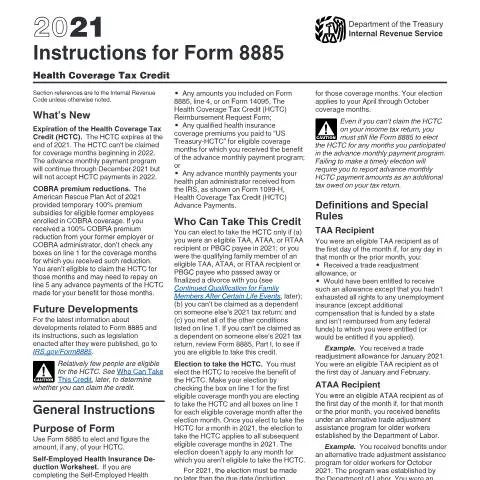
Navigating the Complexities of Health Coverage Tax Credit Instructions (IRS Form 8885)
In the realm of tax credits, the Health Coverage Tax Credit (HCTC) stands out as a vital piece of legislation aimed primarily at assisting specific groups of individuals, particularly those affected by trade-related job losses. The IRS Instructions for Form 8885 serve as a critical guide for taxpayers looking to claim this credit. Understanding this document is essential for those eligible, as it ensures that individuals do not leave money on the table or inadvertently make errors that could result in penalties or missed opportunities.
Identifying the Target Audience for Form 8885
The primary users of Form 8885 are individuals who qualify as recipients of Trade Adjustment Assistance (TAA), Alternative Trade Adjustment Assistance (ATAA), or Reemployment Trade Adjustment Assistance (RTAA). Additionally, qualifying family members of these recipients might also benefit from the HCTC under certain circumstances.
Who Qualifies for the HCTC?
- Eligible TAA, ATAA, or RTAA recipients who have experienced job losses due to foreign competition.
- Family members of qualifying TAA recipients who have passed away or divorced from them.
- Individuals who cannot be claimed as dependents on another person's tax return.
The IRS Instructions for Form 8885 explicitly outline the requirements that must be met in order to qualify for this credit, emphasizing the importance of understanding one's eligibility status before proceeding.
Common Misinterpretations and Missteps
Misinterpretation of the IRS Instructions for Form 8885 can lead to significant errors in claiming the HCTC. Here are a few common pitfalls taxpayers should avoid:
Misunderstanding the Election Process
One of the most critical aspects of claiming the HCTC is the election process. Taxpayers must elect the HCTC by checking a specific box on the form for the first month they wish to claim the credit. This election must be made by the tax return due date, including any extensions.
Example Insight: If a taxpayer was eligible for the HCTC starting in April 2021, they must check the box for April and for all subsequent eligible months through October 2021 to ensure proper claim of the credit.
Improper Use of Advance Payments
Eligible individuals who received advance payments under the HCTC program must carefully review their eligibility for each month. If they received 100% COBRA premium reductions, they should refrain from checking boxes that pertain to those months, as it may lead to an obligation to repay those advance payments.
Understanding the Interrelationship with Other IRS Documents
The HCTC does not exist in isolation; it is intertwined with various other IRS forms and guidelines. Familiarity with these documents is crucial for a comprehensive understanding of the tax landscape for eligible recipients.
Key Related Forms
- Form 1040: The standard individual income tax return where the HCTC will be reported.
- Form 14095: The HCTC Reimbursement Request Form, used for seeking reimbursement for paid premiums.
- Form 1099-H: A document showing advance payments made by the health plan administrator, which is crucial for accurate reporting.
Each of these forms has its own set of rules and requirements, and understanding how they relate to Form 8885 can help taxpayers to maintain compliance and maximize their benefits.
What the IRS Instructions for Form 8885 Cover
The IRS Instructions for Form 8885 provide detailed guidance on various aspects of claiming the HCTC. Here are some key components included in the document:
Definitions and Special Rules
Understanding significant definitions such as "eligible TAA recipient" or "PBGC payee" is essential for accurately determining eligibility. Detailed explanations of these terms help clarify who can partake in the HCTC.
Election to Claim the Credit
The document lays out a step-by-step process for making the HCTC election, including necessary forms to complete and deadlines to meet. This information is essential for ensuring that taxpayers do not miss out on claiming the credit due to inaction.
Key Considerations for a Smooth Filing Experience
When approaching the claiming of the HCTC through Form 8885, it is essential to keep in mind several key considerations to ensure a smooth filing experience:
Consulting Official Resources
Taxpayers are encouraged to consult IRS.gov/Form8885 for the latest information regarding any legislative changes or developments related to the HCTC. Keeping abreast of updates can prevent misunderstandings and ensure compliance.
Documenting Eligibility
Taxpayers should keep thorough documentation of their eligibility status, including records of TAA, ATAA, or RTAA benefits. Having this information readily available can streamline the process and affirm a taxpayer's right to claim the HCTC.
Moving from Theory to Practice: Step-by-Step Usage
To utilize the information in the IRS Instructions for Form 8885 effectively, taxpayers should follow a structured approach to claiming the HCTC:
Step 1: Confirm Eligibility
- Review the eligibility criteria outlined in the instructions.
- Determine if you are a TAA, ATAA, or RTAA recipient or a qualifying family member.
Step 2: Gather Necessary Documentation
- Collect supporting documents related to your eligibility and health coverage.
- Ensure you have available Form 1099-H, if applicable.
Step 3: Complete Form 8885
- Fill out the form accurately, following the instructions provided.
- Make sure to check the appropriate boxes to elect the HCTC for the eligible months.
Step 4: File Form 8885 with Your Tax Return
Include the completed Form 8885 with your Form 1040 when filing your taxes. Ensure that you meet all deadlines for the submission of your tax return, including extensions if applicable.
Final Thoughts on Navigating the HCTC Landscape
Understanding and utilizing the IRS Instructions for Form 8885 is crucial for those eligible individuals seeking to benefit from the Health Coverage Tax Credit. By familiarizing oneself with the eligibility criteria, election process, and related documentation, taxpayers can navigate this complex administrative landscape effectively. Keeping abreast of updates and maintaining thorough records will further ensure that claiming the HCTC is a smooth and beneficial experience, ultimately contributing to financial relief for those who have faced job losses due to trade-induced circumstances.
Understanding IRS Form i8885: Who Needs It?
The IRS Form i8885 is primarily designed for taxpayers who are looking to claim certain tax benefits. It's essential to determine your eligibility before diving into the details of this form. Generally, Form i8885 applies to individuals who have made specific investments, incurred qualifying expenses, or engaged in eligible activities outlined in the accompanying IRS instructions.
For instance, if you're involved in renewable energy projects or have made improvements to your residential energy systems, you may be required to file this form to substantiate your claims. It's important to carefully review the conditions under which the form applies, as different criteria may be relevant depending on your unique situation. Taxpayers should consult the instructions or seek professional assistance to understand whether they meet the necessary criteria for filing this form.
Additionally, some taxpayers might overlook the importance of timely submission of this form. Ensure that you are aware of the deadlines associated with Form i8885 to avoid potential penalties. For most individuals, this would align with the standard tax filing season, typically ending on April 15. If you anticipate needing an extension, make sure to consider how that affects your submission of Form i8885 and any associated documentation.
Step-by-Step Guide to Completing IRS Form i8885
Filling out IRS Form i8885 can be straightforward if you follow a structured approach. Here’s a step-by-step guide to assist you in completing the form accurately:
- Gather Necessary Documents: Before you start filling out the form, compile all relevant documents that validate your claims. This may include receipts, invoices, and any other proof of expenditures related to the qualifying activity.
- Review the Form Instructions: Carefully read through the IRS instructions specific to Form i8885, as they provide critical information on how to fill out each section properly.
- Fill Out Basic Information: Start with your name, address, and Social Security Number (SSN). Ensure that the details match what is on your tax return to avoid any discrepancies.
- Detail Your Claims: On the appropriate sections of the form, provide specifics about the claims you are making. Clearly outline the nature of the expenses or investments, including dates and amounts.
- Calculate Benefits: If applicable, carefully calculate any benefits you are eligible for based on your claims. Double-check your math to prevent errors that could delay processing.
- Review and Sign: Once you’ve completed the form, review it thoroughly for accuracy. Don’t forget to sign and date the form before submitting it.
It’s wise to keep a copy of the completed Form i8885 for your records. In case of any inquiries from the IRS or if additional documentation is requested, having a copy will facilitate the process.
Common Mistakes to Avoid When Filing Form i8885
Filing IRS Form i8885 may seem simple, but there are several common pitfalls taxpayers should watch out for to ensure a smooth submission process:
- Inaccurate Information: One of the biggest mistakes is providing incorrect personal information. Make sure your name, address, and SSN are accurate and match your tax filings.
- Omitting Required Documentation: Failing to include necessary supporting documents can lead to delays or rejections of your claims. Always refer to the checklist provided in the IRS instructions to ensure you include everything required.
- Missing Deadlines: Taxpayers often overlook the deadline for submitting Form i8885. Mark your calendar and set reminders to ensure compliance with IRS deadlines.
- Not Seeking Help: If you're uncertain about any aspect of the form, don’t hesitate to seek assistance. Tax professionals can provide valuable insights and help you avoid costly mistakes.
- Overlooking State Requirements: Depending on your state of residence, additional requirements may apply. Be aware of local regulations that might impact your filing.
By being aware of these common errors, you can enhance the accuracy and efficiency of your filing process. Always double-check your work and consider utilizing available resources to get the assistance you need.