Understanding the Essentials of IRS Instructions i7211
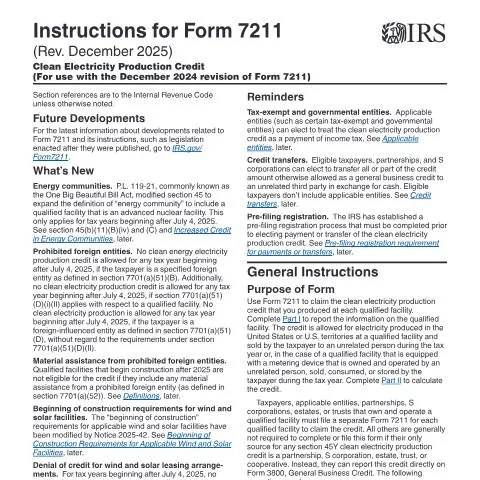
The IRS Instructions i7211, recently updated in December 2025, serves as a crucial guide for taxpayers aiming to claim the Clean Electricity Production Credit. This document outlines the specific criteria and procedural steps necessary to ensure compliance with federal tax regulations under Internal Revenue Code Section 45. The essence of these instructions lies not just in the details of tax benefits but also in the broader implications for energy production and compliance.
Navigating the Complexities of Clean Electricity Production Credit
The Clean Electricity Production Credit is aimed at promoting renewable energy sources in the United States. Understanding its provisions can be vital for various stakeholders, including individual taxpayers, partnerships, S corporations, estates, and trusts that operate qualified facilities. Here, we will delve into the operational intricacies of this document and how it affects different entities.
Who Needs to Refer to the Instructions i7211?
- Taxpayers: individuals or entities producing electricity at qualified facilities.
- Partnerships and S Corporations: those seeking to allocate the credit among partners or shareholders.
- Estates and Trusts: beneficiaries allocated credits will find relevant guidance in this document.
- Cooperatives: entities that may need to allocate credits to patrons.
Key Features of the Instructions i7211
The IRS Instructions i7211 provides detailed guidelines that address various aspects of the Clean Electricity Production Credit. Some of the notable features include:
- Eligibility Criteria: Defined parameters for what constitutes a qualified facility, including the production and sale of clean electricity.
- Specific Deadlines: Reference to critical dates, such as the tax year and submission timelines that affect credit eligibility.
- Reporting Requirements: Clear instructions on what information must be reported on Form 7211 to claim the credit effectively.
- Cautionary Notes: Guidance on potential disqualifications, including scenarios involving foreign entities.
Critical Definitions and Concepts to Grasp
To navigate the instructions effectively, understanding key terminology is essential. Below are some important definitions:
| Term | Description |
|---|---|
| Qualified Facility | A facility that produces clean electricity in compliance with IRS regulations. |
| Energy Community | A designation expanded under P.L. 119-21, now including advanced nuclear facilities. |
| Specified Foreign Entity | An entity that is not eligible for the credit due to foreign influence or ownership. |
Leveraging the Instructions for Practical Application
For taxpayers looking to claim the Clean Electricity Production Credit, utilizing the instructions effectively is key. Here’s a structured approach:
- Review the Criteria: Start by thoroughly understanding the eligibility requirements outlined in the instructions.
- Gather Necessary Documentation: Collect all relevant information about the qualified facility, including production data and sales records.
- Complete Part I of Form 7211: Accurately report the qualified facility information as per the guidelines.
- Fill Out Part II: Calculate the credit based on the reported data, ensuring all calculations align with the provided guidance.
- Submit Before Deadline: File the form in accordance with the specified deadlines to ensure eligibility for the credit.
Common Misinterpretations and How to Avoid Them
Misunderstandings surrounding the instructions can lead to non-compliance. Here are some pitfalls to avoid:
- Overlooking Updates: Always check for the latest revision of the instructions—tax laws can change significantly.
- Neglecting Definitions: Not familiarizing oneself with terms like "qualified facility" and "energy community" may result in misapplication of the credit.
- Assuming Automatic Eligibility: Just because a facility produces clean electricity does not guarantee eligibility; all defined criteria must be met.
Interconnections with Other IRS Documents and Forms
Understanding how the i7211 instructions relate to other IRS forms is vital for comprehensive tax compliance. Notably:
- Form 3800: Taxpayers wishing to report credits from partnerships or S corporations may need to reference this form instead.
- Form 7220: This form is required for those claiming increased credit amounts based on prevailing wage and apprenticeship standards.
Referencing other documents ensures that you are not missing out on various credits or misreporting information that could affect your tax filings.
Potential for Future Developments
Tax guidelines are subject to continuous evolution. As indicated in the i7211 instructions, updates may come from new legislation or IRS announcements impacting the Clean Electricity Production Credit. Staying informed about such developments is critical, especially regarding:
- Changes in eligibility, particularly concerning foreign entities.
- Expanded definitions that may alter the landscape of eligible facilities.
- The establishment of new deadlines or compliance requirements that could affect the way credits are claimed.
Final Thoughts on the IRS Instructions i7211
Engagement with IRS Instructions i7211 is not merely about filling out a form; it’s about understanding a broader commitment to promoting clean energy and ensuring compliance with evolving regulations. By carefully considering the guidance provided, taxpayers can not only maximize their credits but also contribute to a sustainable energy future.
Understanding Form i7211: A Deep Dive into Eligibility Criteria
The IRS Form i7211 is a specialized form designed for a specific category of taxpayers. To ensure you can successfully navigate the filing process, it’s vital to understand eligibility criteria in detail. The usage of Form i7211 is typically associated with special groups such as certain expatriates, individuals with unique tax situations, or those who have specific claims. Understanding the eligibility is crucial, as incorrect filings can lead to delays or rejections.
Eligibility for Form i7211 might include:
- Expatriates: Individuals who have renounced their U.S. citizenship or terminated their long-term residency status may qualify. It's important to know the timelines and the implications of such decisions, including any exit tax liabilities.
- Special Tax Situations: Taxpayers who have received unusual distributions or have foreign income not subject to U.S. taxation may also be required to use this form. Familiarize yourself with IRS guidelines on foreign income reporting to determine your obligation.
- Dependents and Minors: In certain cases, dependents or minors may need to submit Form i7211 if they have income that necessitates reporting, which can often confuse parents or guardians.
Before proceeding with the completion of Form i7211, make sure that you gather all necessary documents, such as W-2s, 1099s, and any relevant foreign tax documents, to establish your eligibility accurately. All supporting documents must be securely attached when submitting your application, as missing information can lead to processing delays.
Common Pitfalls and Mistakes to Avoid When Filing Form i7211
Filing Form i7211 can be daunting, especially for those who may not be familiar with the intricacies of tax forms and data requirements. Awareness of common mistakes can help streamline the process and ensure compliance with IRS requirements.
Here are several pitfalls to watch out for:
- Incorrect Social Security Number (SSN): Providing an incorrect SSN can lead to major delays. Always double-check the number, as it’s your primary identifier in the IRS system.
- Inadequate Documentation: Not including required documentation, such as supporting forms or necessary schedules, can cause the IRS to reject your application. Ensure all attachments are in order before submission.
- Failure to Review Instructions: The IRS provides detailed instructions for filling out Form i7211, including item-by-item guidance. Skipping the review process could lead to oversight errors. Always refer to the most current instructions from the IRS website to verify you’re following the latest guidelines.
- Missing Deadlines: Be mindful of filing deadlines. Depending on your specific situation, there may be different deadlines for submitting Form i7211. Missing these deadlines could result in penalties or interest being applied to your tax liabilities.
Consider consulting with a tax professional who specializes in international tax law if you find the process overwhelming. They can provide tailored guidance and help you avoid potential pitfalls.
The Importance of Keeping Records Post-Filing Form i7211
Once you have successfully filed Form i7211, it is crucial to understand the importance of record-keeping. According to IRS guidelines, taxpayers should retain copies of their tax returns and any supporting documentation for at least three years. However, if you have special circumstances, such as overseas income or significant changes in your residency status, you might need to keep records for longer.
Here are some essential practices for maintaining your records:
- Create a Dedicated Filing System: Utilize both physical and digital filing systems to organize all documents related to Form i7211 and other tax filings. It can help to categorize documents by year and type to ensure you can easily access them when needed.
- Keep Track of Communication with the IRS: Document any correspondence with the IRS, including confirmation receipts and notices from the agency. This can provide invaluable context in case of future inquiries or audits.
- Secure Your Information: Ensure that your records are stored securely, especially if they contain sensitive information like SSNs or financial data. Consider using encrypted digital storage solutions or secure physical storage options.
By being diligent in your record-keeping practices, you safeguard yourself against potential disputes with the IRS and simplify future tax filings, including any amendments or additional forms you may need to submit.