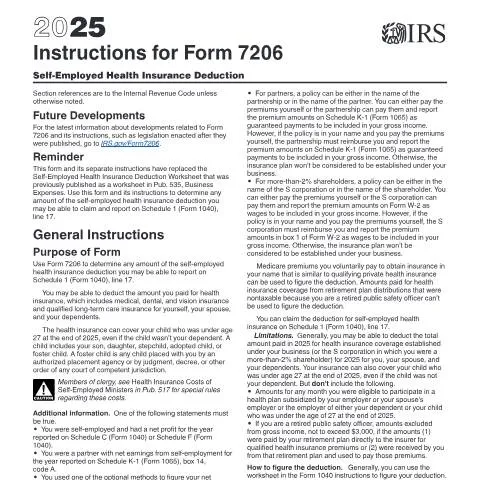
Navigating the IRS Instructions for Form 7206: A Comprehensive Guide
For self-employed individuals, understanding the intricacies of tax deductions can significantly impact financial planning and overall tax liability. The IRS Instructions for Form 7206 serves as an indispensable tool for those looking to claim a deduction for self-employed health insurance. This guide goes beyond mere explanations to highlight practical applications and necessary insights into using Form 7206 effectively.
Understanding the Scope of Form 7206
The primary purpose of Form 7206 is to assist self-employed individuals in determining their eligibility and the amount of health insurance deduction they may claim. Unlike previous worksheets, this form consolidates crucial information and processes into a structured format that facilitates clarity.
Who Benefits from Form 7206?
- Self-employed individuals filing Schedule C or Schedule F.
- Partners receiving net earnings reported on Schedule K-1.
- More-than-2% shareholders in S corporations.
Whether you're a freelancer, a small business owner, or a partner in a business, understanding if and how you can leverage this deduction is vital for optimizing your tax returns.
Step-by-Step Process for Utilizing Form 7206
To effectively use Form 7206, it's crucial to follow a structured approach. Here’s a breakdown of the process:
- Establish Your Eligibility: Ensure you meet the criteria mentioned in the instructions, such as having a net profit reported on Schedule C or Schedule F.
- Gather Required Information: Collect all necessary details, including insurance premiums paid for yourself, your spouse, and qualifying dependents.
- Review Health Insurance Policies: Confirm that the health insurance plans are either under the business name or in your name to ensure they qualify for the deduction.
- Calculate Your Deduction: Use the guidelines provided to ascertain the total amount eligible for deduction on Schedule 1 (Form 1040), line 17.
- Complete the Form: Fill out Form 7206 accurately, adhering to the instructions detail by detail.
A Closer Look at Eligibility Criteria
Understanding the eligibility requirements is critical to avoid unnecessary complications. The IRS specifies several situations under which one can claim the self-employed health insurance deduction:
Key Conditions to Note
- You must have been self-employed and reported net profits for the year.
- The policy must be considered established under your business, which is assessed based on how the premiums were paid.
- Medicare premiums can count if they meet specified criteria.
- Do not deduct expenses for months in which you qualified for an employer-subsidized health plan.
These conditions are essential to grasp, as they outline the boundaries within which you must operate to qualify for the deduction.
Common Misinterpretations of Form 7206
Clarifying Misunderstandings
- Assuming All Health Insurance Premiums Are Deductible: Only premiums paid in specific situations qualify.
- Neglecting the Established Policy Requirement: If the health insurance is not considered established under your business, you cannot claim the deduction.
- Confusing Self-Employed Health Insurance with Other Deductions: This deduction is specifically for health insurance and cannot be conflated with other business expenses.
Articulation with Other IRS Documents
While Form 7206 is a standalone document, its implications and requirements often intersect with other IRS forms and guidelines. Understanding these interactions may yield additional advantages when filing taxes.
Relevant Documents to Consider
- Schedule C (Form 1040): Essential for reporting income as a self-employed individual.
- Schedule F (Form 1040): Relevant for those engaged in farming operations.
- Schedule K-1 (Form 1065): Important for partners who receive earnings through partnerships.
- Form 2555: For expatriates or those claiming foreign income exclusion.
Each of these forms plays a pivotal role in the context of self-employed health insurance deductions and influences how you report your income and expenses.
Important Considerations for Deduction Calculation
Calculating the amount of deduction accurately is vital to ensure compliance and maximize financial benefit. Below are some guidelines and considerations to keep in mind:
Working with Maximum Limits and Qualifying Expenses
- Your deduction is generally limited to the amount you paid for health insurance premiums during the tax year.
- You may claim the amount for health insurance for your spouse and dependents, including children under 27.
- Retired public safety officers have specific provisions for amounts not exceeding $3,000.
| Condition | Deductible? |
|---|---|
| Eligible months without employer-sponsored coverage | Yes |
| Premiums paid for a dependent child under 27 | Yes |
| Amounts from retirement plans for health premiums | Conditional |
Understanding these limits and the types of expenses that qualify can help prevent any miscalculations and ensure a smoother filing process.
Frequently Overlooked Aspects of Self-Employed Health Insurance Deductions
Many eligible taxpayers miss out on possible deductions due to a lack of awareness regarding specific provisions applicable to their situations.
Items Worth Noting
- The health insurance policy must be recognized as part of your business operations.
- Ensure that premiums for months you were eligible for employer-sponsored health plans are not included in your calculations.
- Be vigilant regarding any state-specific nuances that may affect health insurance deductions.
By being aware of these often-overlooked details, taxpayers can ensure they are not leaving money on the table.
Final Thoughts on Utilizing IRS Instructions for Form 7206
The IRS Instructions for Form 7206 is not merely a guideline but a crucial document that can enable self-employed individuals to navigate health insurance deductions successfully. By understanding eligibility, gathering necessary information, and being mindful of common pitfalls, taxpayers can make informed decisions that optimize their financial outcomes.
As tax laws evolve and new provisions emerge, staying updated through the IRS website and consulting with tax professionals will be essential for maximizing your deduction benefits.
Understanding IRS Form I-7206: What It Means for You
IRS Form I-7206, officially titled "Request for IRS Individual Taxpayer Identification Number (ITIN)", is essential for those who need an ITIN but do not meet the criteria for obtaining a Social Security Number (SSN). This form is primarily intended for non-resident aliens and their dependents who need to file tax returns or be claimed as dependents on U.S. tax returns.
Filing Form I-7206 can seem daunting, but understanding its purpose is critical. If you do not qualify for a Social Security Number, you are required to apply for an ITIN using this form to ensure you comply with U.S. tax laws and to facilitate reporting of income to the IRS.
While the form itself appears straightforward, the nuances surrounding eligibility and documentation can make the process complex. For instance, applicants must provide a valid federal income tax return alongside their I-7206 application unless they qualify for an exception outlined by the IRS. Understanding these exceptions can save time and prevent unnecessary delays.
Document Requirements for Form I-7206
Completing Form I-7206 involves gathering specific documentation to support your application. The IRS mandates that you submit valid documents that prove both your identity and foreign status. Commonly accepted documents include:
- Passport: A passport is a primary document that serves both as proof of identity and foreign status. If you have a passport, it will generally suffice for an ITIN application.
- National ID card: Government-issued national ID cards may also be acceptable, provided they include your photograph, your name, and the date of birth.
- Birth certificate: This can be used in conjunction with other documents to establish identity, especially for dependents.
- Other identification: Additional identification may be required in some cases, such as a driver's license or state-issued ID.
It’s important to ensure that the documents you submit are current and legible. Additionally, if your documents are not in English, you should include certified translations. The IRS is strict about documentation, and any discrepancies can result in delays or denials of your ITIN application.
Common Pitfalls When Filing Form I-7206
While applying for an ITIN via Form I-7206 is a necessary step for many individuals, there are common pitfalls that applicants should be aware of to avoid unnecessary complications:
- Incomplete Applications: One of the most frequent issues arises from incomplete forms. Ensure that you fill out every required section and double-check for accuracy.
- Incorrect Supporting Documents: As previously mentioned, failing to provide valid identification or submitting incorrect documents can lead to issues. Make sure the documents align with IRS requirements.
- Missing Tax Return: If you are required to submit a federal income tax return with your application, ensure that it's included and accurately completed. The IRS does not accept applications without this document unless an exception applies.
- Failure to Sign and Date: It may seem minor, but failing to sign and date your application can result in immediate rejection. Always remember to review your form before submission.
Avoiding these pitfalls may streamline the process and help you receive your ITIN in a timely manner, enabling you to fulfill tax obligations efficiently.