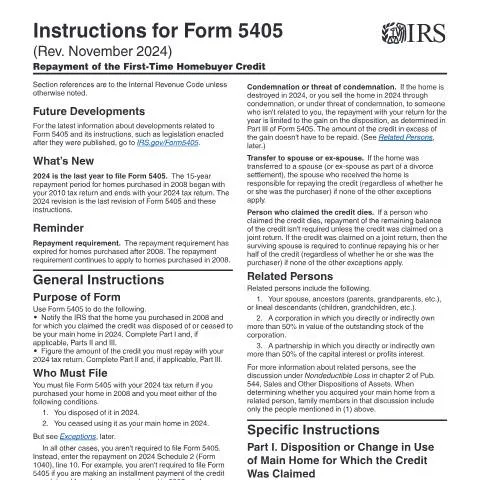
Understanding the IRS Instructions for Form 5405: A Crucial Guide
Navigating the complexities of tax obligations can be daunting, especially when it involves significant financial decisions, such as homeownership. Form 5405 is a critical document for individuals who claimed the First-Time Homebuyer Credit, particularly those who acquired a home in 2008. The IRS Instructions for Form 5405 provides essential details for taxpayers regarding the repayment of this credit. This guide is tailored to help you understand the nuances of the document, ensuring you are well-prepared for your tax return and any potential repayment obligations in 2024.
Scope and Limitations of Form 5405 Instructions
The Instructions for Form 5405 outline crucial information regarding the repayment of the First-Time Homebuyer Credit and detail the circumstances under which it must be repaid. Key points to consider include:
- The form is only applicable to homes purchased in 2008.
- It addresses situations where the home has been disposed of or has ceased to be your primary residence in 2024.
- The repayment obligation exists only if the property in question meets specific criteria set by the IRS.
Understanding the limits of Form 5405 is essential, as the repayment requirement has expired for homes purchased after 2008. This guide serves to clarify how to navigate potential pitfalls and ensure compliance with IRS regulations.
Who Needs to Consult the Instructions for Form 5405?
While Form 5405 primarily targets a specific audience, it's crucial to recognize the varied situations that may prompt an individual to seek its guidance. The following scenarios illustrate when consulting the IRS Instructions for Form 5405 becomes indispensable:
- Homeowners who purchased their residence in 2008 and sold or stopped using it as their primary home in 2024.
- Taxpayers who transferred the property to a spouse or ex-spouse as part of a divorce agreement.
- Individuals facing property condemnation or those whose homes were destroyed in 2024.
Moreover, if you filed a joint tax return with your spouse, both parties need to be cognizant of their repayment obligations under the guidance provided in these instructions.
Step-by-Step Utilization of Form 5405 Instructions
To effectively use the IRS Instructions for Form 5405, understanding each section's purpose is paramount. Here’s a breakdown of how to approach it step by step:
1. Assess Requirements
Begin by determining if you are required to file the form. You must file Form 5405 if:
- You disposed of the home in 2024.
- You ceased using it as your main home in 2024.
2. Preparing Relevant Information
Gather necessary details before starting the filing process. This includes:
- Your name and Social Security Number (SSN).
- The address of the home that qualified for the credit.
- The date you purchased the home.
3. Completing Part I: Disposition or Change in Use
Part I of Form 5405 is crucial for detailing the status of your home. This section asks for information regarding:
- Sale or foreclosure of the property.
- Conversion of the property to rental or business use.
- Abandonment of the property.
Understanding these subtleties will guide you in accurately reporting your situation to the IRS.
4. Navigating Parts II and III: Calculating Repayments
If applicable, Parts II and III help figure out the amount you must repay. Key considerations include:
- Determining the gain from the disposition of your home.
- Identifying any exceptions that may reduce your repayment requirement.
Utilizing these parts effectively can significantly influence the financial outcomes associated with your tax return.
Critical Concepts to Grasp
To maneuver your way through the IRS Instructions for Form 5405, several key concepts are indispensable:
- First-Time Homebuyer Credit: This federal tax credit was available for eligible individuals who purchased a home for the first time. Understanding its implications is essential when reporting changes.
- Main Home Designation: The IRS distinguishes between primary residences and other property types. Clarity on this concept helps determine your eligibility for repayment exemptions.
- Repayment Obligation: Not all dispositions require full repayment. Familiarizing yourself with various scenarios, such as transfers to relatives or property destruction, is vital.
Common Misinterpretations and Their Implications
Misunderstanding the directives in the IRS Instructions for Form 5405 can lead to costly errors. Here are some common misinterpretations to be wary of:
- Believing All Home Sales Require Repayment: Only sales or disposals of homes purchased in 2008 warrant the repayment obligation.
- Ignoring Exceptions: Certain situations, like property condemnation, limit the amount that must be repaid. Failing to recognize these exceptions could result in overpayment.
- Joint Filings Confusion: Couples who filed jointly must understand that each spouse has a separate obligation to report on Form 5405. Miscommunication can lead to discrepancies in reporting.
Examples of Situations Covered by the Instructions
Understanding practical applications of the IRS Instructions for Form 5405 can enhance your comprehension of the document. Below are situations illustrating how different scenarios affect repayment obligations:
Example 1: Home Sale
Suppose you purchased a home in 2008 and sold it in 2024. Under the regulations, you would need to file Form 5405 and determine the gain from the sale. Your repayment obligation would typically involve paying back the entire credit unless exceptions apply.
Example 2: Property Conversion
If you decided to convert the home into a rental property in 2024, the IRS would require you to file Form 5405, reporting the change in use. Your repayment may be adjusted based on the gain from the rental, depending on specific calculations outlined in Parts II and III.
Example 3: Family Transfers
In the case where a home is transferred to an ex-spouse, the receiver of the home takes on the repayment responsibility. It's critical to file a separate Form 5405 to accurately reflect the situation.
Practical Tips for Completing Form 5405
To ensure a smooth filing process, consider the following practical tips:
- Double-check your personal information: Ensure accuracy in your name and Social Security Number to prevent delays.
- Consult IRS guidelines often: IRS.gov is a valuable resource for updates and additional information regarding Form 5405 and related obligations.
- Document everything: Keep records of any transactions related to your home, as they could aid in accurately completing the form and justifying your claims.
Looking Ahead: Future Developments
As the IRS continues to evolve alongside tax regulations, staying informed about future developments regarding Form 5405 is crucial. With the 2024 revision marking the last year to file, understanding the implications of these changes can help protect your financial interests. Regular visits to the IRS website will keep you updated on any legislative alterations that might impact your obligations.
In conclusion, navigating the IRS Instructions for Form 5405 requires attention to detail and an understanding of specific housing scenarios. By comprehending your repayment obligations and potential exceptions, you can approach tax season with confidence, ensuring compliance with IRS regulations while minimizing any financial repercussions.
Understanding the Purpose and Use of Form I-5405
Form I-5405, known as "Request for a Payment Plan," serves as an essential tool for taxpayers who find themselves unable to pay their tax liabilities in full by the due date. This form is particularly useful for individuals who owe back taxes or are facing financial hardship. By submitting this form, taxpayers can request a structured payment plan, allowing them to pay off their tax debts over time.
The IRS acknowledges that circumstances, such as unemployment or medical expenses, may inhibit a taxpayer's ability to settle their liabilities promptly. As such, Form I-5405 provides an avenue for qualified individuals to seek relief through manageable monthly payments instead of facing penalties and interest associated with unpaid taxes. It’s crucial for users to clearly document their financial situation, providing accurate information about income, expenses, and existing debt to support their request.
Additionally, it’s important to understand that a payment plan is not automatic upon submission of Form I-5405. The IRS will review the application and may request additional documentation to verify the taxpayer’s financial circumstances. Be prepared to provide complete and truthful information to enhance the likelihood of receiving approval for the payment plan.
Common Challenges in Completing Form I-5405
While Form I-5405 is designed to assist taxpayers, there are several challenges that individuals may encounter during the completion process. One of the most frequent issues is the calculation of the taxpayer's monthly payment amount. Taxpayers must accurately account for their financial situation, ensuring that the proposed payment is realistic and attainable based on their income and expenses.
Another challenge lies in understanding the specific instructions associated with the form. The IRS provides guidance on various aspects of completing I-5405, including reporting income from multiple sources or navigating complex tax situations such as self-employment income. Taxpayers should pay close attention to the details and requirements outlined in the instructions to avoid potential errors that could delay the processing of their request.
Additionally, some taxpayers may become overwhelmed by the documentation requirements. The IRS often requires supporting documents to substantiate the financial claims made on the form, such as pay stubs, bank statements, and tax returns. Gathering these documents can be time-consuming, and taxpayers may need to seek help from financial professionals or tax advisors to ensure accuracy and completeness.
Exploring Alternatives to Form I-5405
For those who do not meet the requirements or prefer not to use Form I-5405, it's vital to know that there are alternative options available for managing tax debts. One such alternative is an "Offer in Compromise" (OIC), which allows taxpayers to settle their tax liabilities for less than the full amount owed. The OIC is an appealing choice for individuals facing significant financial difficulties, but it comes with its own set of eligibility criteria and requires thorough documentation to demonstrate that paying the full tax debt would cause undue financial hardship.
Another option is a temporary delay of the collection process, known as "Currently Not Collectible" (CNC) status. Taxpayers who qualify for CNC status can temporarily halt collection activities, allowing them to regroup financially. However, it is essential to note that interest and penalties will continue to accrue during this period, and taxpayers must provide sufficient evidence of their financial situation to the IRS to qualify.
Lastly, some taxpayers may explore the possibility of filing for bankruptcy as a method of addressing overwhelming tax debts. While filing for bankruptcy can provide relief from collection actions, it's important to understand that not all tax debts are dischargeable in bankruptcy. Taxpayers should consult with a legal professional specializing in tax law to evaluate whether this can effectively resolve their tax issues.