Navigating the Landscape of IRS Form 8885: Essential Insights
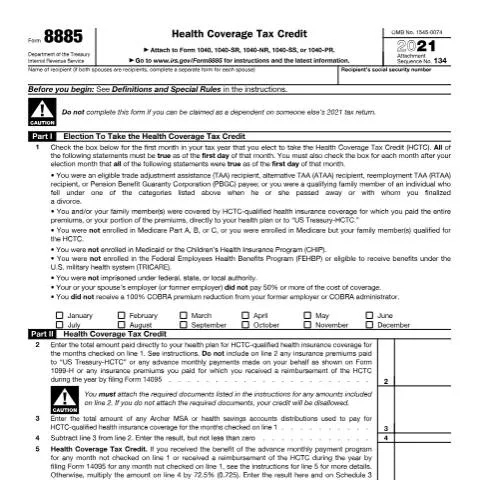
The IRS Form 8885, officially known as the Health Coverage Tax Credit (HCTC) form, serves a specific purpose within the complex realm of tax credits related to health insurance coverage. Understanding this form is crucial for eligible individuals who have endured economic hardships, particularly in the wake of job loss or changes in employment status that entitle them to certain benefits. This detailed exploration breaks down the intricacies of Form 8885, guiding potential filers through each step of the process.
A Distinctive Tool in the Tax Credit Arsenal
Unlike many other tax forms, Form 8885 is singularly focused on the Health Coverage Tax Credit, which is available for individuals who are recipients of specific government assistance programs, such as the Trade Adjustment Assistance (TAA) program. Many taxpayers often confuse this form with others that pertain to standard health insurance reporting, like Form 1095-A, which is used for reporting health coverage obtained through the Health Insurance Marketplace.
- Form 1095-A: Used for reporting health insurance obtained through the Marketplace.
- Form 8885: Specifically for claiming the HCTC, which is designed to assist eligible individuals in covering their health insurance premiums.
Understanding this distinction is imperative as it shapes how taxpayers approach their filing processes and eligibility assessments.
Who Should Fill Out Form 8885?
Eligibility for the HCTC hinges on the individual's status. Primarily, it applies to:
- Eligible Trade Adjustment Assistance (TAA) recipients.
- Alternative TAA (ATAA) recipients.
- Reemployment TAA (RTAA) recipients.
- Pension Benefit Guaranty Corporation (PBGC) payees.
- Qualifying family members of deceased individuals fitting the above categories.
It’s crucial to note that if you are listed as a dependent on another individual’s tax return, you cannot claim the HCTC, emphasizing the need for thorough consideration of your status before initiating the filing process.
Special Cases and Exceptions
Within the broader eligibility brackets, various *special situations* exist that can affect your ability to utilize Form 8885:
- Medicare Enrollment: If you are enrolled in Medicare, you must ensure that your family members qualify for the HCTC to be eligible.
- Health Coverage Payment: You must have paid the entire premiums for HCTC-qualified health insurance coverage directly.
- COBRA Benefits: Individuals who receive a 100% COBRA premium reduction are not eligible to claim the HCTC.
Each of these exceptions demands careful scrutiny to confirm both eligibility and compliance with the regulations tied to this tax credit.
Completing the Form: Step by Step
Filling out the IRS Form 8885 involves several key steps that require attention to detail and accuracy. Below is a breakdown of the necessary information and how to navigate the form effectively.
Part I: Election to Take the Health Coverage Tax Credit
This section of the form requires you to indicate the first month in your tax year for which you elect the HCTC. You must verify the following conditions:
- You meet the eligibility criteria as outlined earlier.
- You and your family were covered by HCTC-qualified health insurance.
- You were not enrolled in other federal health benefits programs.
Mark the box corresponding to the first month of eligibility in your tax year, and continue marking the boxes for each subsequent month for which all conditions remain valid.
Part II: Determining the Health Coverage Tax Credit Amount
In this segment, taxpayers will need to calculate the total amount paid directly to their health plan for HCTC-qualified insurance coverage. An important note is that both advance payments and reimbursements must be carefully excluded from this total. Here’s how to proceed:
- Enter the total premiums paid for the relevant months.
- Deduct any amounts received through Archer MSA or health savings account distributions.
- The resulting figure will represent your eligible credit amount, which is calculated by multiplying your net amount by 72.5%.
Creating an accurate calculation is vital as this figure directly impacts the credit applied to your tax return.
Submission Pathways: How and Where to File
When ready to submit Form 8885, you have several options based on your filing preferences and circumstances:
- Electronically: If you are filing your tax return electronically, you can include Form 8885 as part of your submission through authorized e-filing systems.
- By Mail: For those who prefer traditional methods, you can print and submit the form via mail, attaching it to your main tax return form (1040, 1040-SR, etc.). Ensure you send it to the correct address based on your location.
- In-person: While less common, certain local IRS offices may accept forms directly. However, confirm availability and procedures beforehand.
Regardless of the method, ensuring that the form is complete and accurate is crucial to avoid unnecessary delays in processing.
Post-Submission: Tracking Your Claim
Once Form 8885 is filed, taxpayers should take steps to monitor the status of their submission. Here’s how to effectively track your claim:
- Utilize the IRS’s online tracking tools available for e-filed returns.
- For mailed submissions, keep your mailing receipt for reference, allowing you to confirm delivery.
- Contact the IRS directly if there is an extensive delay or you suspect issues with your submission.
Being proactive in tracking your claim can alleviate stress and facilitate a smoother resolution of any potential issues.
What if the Dreaded Denial Occurs?
Receiving a denial of your health coverage tax credit can be disheartening, but understanding the appeals process is key to addressing it effectively. Common reasons for denial include:
- Ineligibility due to failure to meet the outlined criteria.
- Missing documentation, which is critical for substantiating your claims.
In such instances, consider the following actions:
- Review your submitted documentation against the IRS requirements outlined in the Form 8885 instructions.
- If you believe a mistake was made, prepare to provide additional evidence and request a review.
- File an amended return if necessary, ensuring you adhere to all prescribed timelines.
Understanding these steps can help reclaim your benefits efficiently and effectively.
Timelines to Keep in Mind
Filing deadlines are critical to ensure that you do not miss out on potential benefits. Here are key dates that every taxpayer should mark:
| Action | Deadline |
|---|---|
| Filing Form 8885 with your tax return | April 15 of the following tax year |
| Requesting an extension for tax filing | April 15 (file Form 4868) |
| Amending your return for credit claims | Within three years from the original filing date |
Staying compliant with these dates ensures that you maximize your potential benefits while minimizing the risk of penalties or missed opportunities.
Special Considerations for Unique Situations
Individuals in specific circumstances, such as non-resident aliens or those with complex family situations, may need to navigate additional layers of bureaucracy when filing Form 8885. Here are some additional factors to consider:
- Non-resident Aliens: Different tax rules apply, so seek guidance on how the HCTC might impact your obligations.
- Minors: If claiming credit on behalf of a minor, be prepared to provide proof of relationship and eligibility.
- Urgent Situations: If you face an unexpected change in financial status, reach out to IRS customer service for expedited solutions.
Every situation is unique, and understanding the nuances of the application process can greatly influence the outcome.
Conclusion: The Value of Preparedness
Successfully navigating the intricacies of IRS Form 8885 is paramount for eligible taxpayers seeking to leverage the Health Coverage Tax Credit. With diligent preparation and a clear understanding of the form’s requirements, individuals can ensure that they maximize their benefits, comply with IRS regulations, and contribute to their overall financial health. Whether through electronic submission or traditional methods, being informed will be your strongest ally in this administrative journey.
Understanding IRS Form 8885: Key Definitions and Purpose
IRS Form 8885, officially titled "Credit for Federal Tax on Fuels," is a pivotal document for taxpayers who have incurred expenses on certain types of fuels. This form is crucial for individuals or businesses that have made purchases of alternative fuels, special fuels, and other relevant categories. The primary goal of this form is to claim credits for those who have paid federal excise taxes on fuels used in their vehicles or machinery, which can serve to offset some of the costs associated with energy expenses.
To effectively navigate this form, it’s essential to grasp some key definitions:
- Alternative Fuels: These include fuels such as biodiesel, ethanol, and compressed natural gas that are alternatives to conventional gasoline or diesel.
- Special Fuels: This term refers to fuels other than gasoline sold for use in motor vehicles, like aviation fuel or fuels for certain off-road applications.
- Qualified Uses: It is important to note that not all fuel uses qualify for the credit. Understanding the specific criteria under which the fuel was used is paramount.
The credit claimed on Form 8885 is designed to incentivize the use of alternative and more environmentally-friendly fuel options, aligning with broader governmental goals of reducing dependency on fossil fuels and promoting cleaner energy solutions. Taxpayers are encouraged to familiarize themselves with the definitions and rules surrounding qualified fuels to maximize their benefits under this program.
Completing IRS Form 8885: Step-by-Step Guidance
Filing IRS Form 8885 can seem intimidating at first glance, but breaking it down into manageable sections can simplify the process. Here’s a step-by-step guide to help you through the completion of this form.
Step 1: Gather Required Documentation
Before you start filling out the form, gather all necessary documentation. This includes receipts for fuel purchases, invoices from suppliers, and any relevant records that detail the fuel's use. Accurate records are crucial to substantiate your claims.
Step 2: Fill Out Personal Information
The top section of Form 8885 requires your name, address, and Social Security Number (SSN). Make sure these details match those on your most recent tax return to avoid any complications.
Step 3: Detail Fuel Usage
In the subsequent sections, you must report the quantities and types of fuel purchased. Pay close attention – only specific fuels qualify for the credit, and you may need to categorize them appropriately. Be prepared to enter the gallons purchased and the corresponding credit amounts for each fuel type.
Step 4: Calculate Your Credit
Carefully follow the instructions to determine your credit based on the calculations provided in the form. IRS guidelines frequently update these calculations, so reference the latest instructions available on the IRS website to ensure accuracy.
Step 5: Review and Submit
Double-check all entries for accuracy. Errors can lead to delays in processing your tax return or may result in claims being rejected. Once you confirm that everything is correct, attach Form 8885 to your Form 1040, 1040-SR, or whichever tax return you are filing, and submit by the deadline.
By following these detailed steps, you can effectively navigate IRS Form 8885, ensuring you maximize your potential credits while remaining compliant with IRS regulations.
Common Pitfalls and Frequently Asked Questions about IRS Form 8885
While IRS Form 8885 is designed to streamline the credit claiming process, many taxpayers encounter specific issues that can complicate their filings. Understanding these common pitfalls can significantly enhance your filing experience.
1. Incorrect Fuel Type Reporting
A frequent mistake involves misclassifying fuel types. It’s vital to ensure that the fuel you are claiming credits for is indeed on the IRS’s list of eligible fuels. For instance, many taxpayers mistakenly assume that all types of biodiesel qualify when, in fact, only certain grades or blends may be applicable.
2. Inadequate Record-Keeping
Many taxpayers do not maintain sufficient documentation of their fuel purchases. The IRS requires solid evidence to support your claims. Inadequate records may not only jeopardize your claims but also lead to penalties if audited.
3. Missing Deadlines
Understanding the deadlines for filing Form 8885 is crucial. This form should be submitted alongside your annual tax return, typically due by April 15. However, if you're filing for an extension, be sure to include Form 8885 in your extended return as well.
4. Can I claim this credit if I didn't purchase the fuel directly?
Yes, if you are in a partnership or an entity that purchased fuel on your behalf, you may still be eligible to claim the credit, provided that the fuel is used for qualifying purposes. Ensure to acquire the relevant documentation from the purchasing entity to claim your share.
5. What if I file my taxes before I receive my fuel receipts?
In such cases, you may consider filing your tax return without the claim for the credit and then filing an amended return (Form 1040-X) to claim the credit once you have received your receipts and verified your fuel purchases. Be mindful that amended returns can take longer to process.
By addressing these common pitfalls and frequently asked questions, you can better prepare yourself for a successful filing experience with IRS Form 8885, ensuring that you take full advantage of available credits.