Navigating the Nuances of IRS Form 8849 Schedule 6 for Tax Refund Claims
When you find yourself in the realm of tax refunds, the intricacies of IRS Form 8849 Schedule 6 can feel daunting. This form is pivotal for individuals and businesses seeking to recover overpaid taxes, particularly in specific scenarios outlined under the tax code. Understanding its role, the completion process, and potential pitfalls is essential for ensuring a smooth filing experience and maximizing your refund potential.
A Closer Look at Who Should File Schedule 6
Form 8849 Schedule 6 is tailored for a specific group of taxpayers. Primarily, you’ll encounter this form if you are claiming refunds related to certain excise taxes on specific goods. Here are the key demographics that often utilize this form:
- Manufacturers and Retailers: Businesses that pay taxes on goods subject to excise taxes may benefit from this form especially if they have sold products at a tax-excluded price.
- Claimants Under Section 6416(b)(2): If you have repaid the amount of tax to the ultimate vendor or secured written consent from them to make a claim, you are eligible to utilize this form.
- Individuals and Entities Experiencing Tax Overpayments: If you’ve overpaid taxes on specific articles and wish to recover those funds, this form is your pathway.
The Essential Steps to Completing Schedule 6
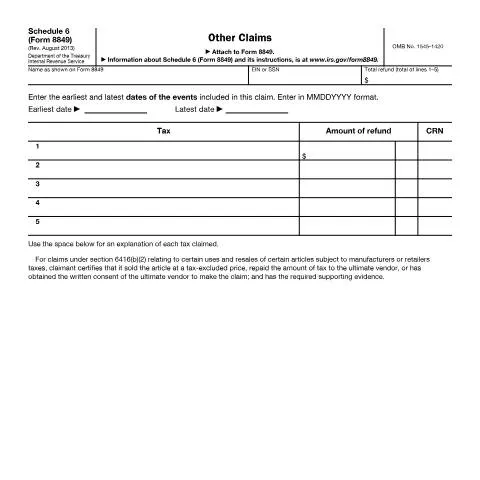
Completing IRS Form 8849 Schedule 6 requires careful attention to detail. Here's a breakdown of the vital components of the form:
- Name and Identification: Ensure your name as shown on Form 8849 is precise, along with your Employer Identification Number (EIN) or Social Security Number (SSN).
- Total Refund Calculation: Sum your claims from lines 1 to 5 to show the total refund amount accurately.
- Date Range Submission: Provide the earliest and latest dates relevant to your claims in the MMDDYYYY format to avoid confusion.
- Tax Amounts: For each line item, specify the amount you are claiming as a refund, ensuring accuracy to facilitate a smoother review process.
- Explanatory Notes: Make use of the space provided to explain each tax claimed, particularly under Section 6416(b)(2). This helps clarify your claim and supports your case.
Common Pitfalls to Avoid When Filing
While navigating the filing process, being cognizant of potential pitfalls is crucial. Here are a few common errors that can lead to delays or denials:
- Incorrect Dates: Not adhering to the required MMDDYYYY date format can lead to confusion and potential rejection of your claim.
- Missing Signatures: Ensure that you, or an authorized representative, sign the form. Omitting this step can render the form invalid.
- Insufficient Explanation: Failing to provide a comprehensive explanation of your claims can lead to requests for additional information, delaying the processing of your refund.
Following Up on Your Submission
After filing Form 8849 Schedule 6, it is crucial to monitor the status of your claim. Here’s how you can keep track:
- IRS Processing Times: Generally, the IRS can take several weeks to process claims. Familiarize yourself with typical processing times for refund claims to set proper expectations.
- Case Status Tools: Utilize the IRS “Where’s My Refund?” tool to track the status of your refund claim online, ensuring you have the most current information.
- Contacting the IRS: If you anticipate a delay or have concerns regarding your claim, don't hesitate to contact the IRS directly. Have your identifying information readily available to facilitate the inquiry.
Documentation: Preparing Your Supporting Evidence
Submitting IRS Form 8849 Schedule 6 requires thorough documentation to support your claims. Preparation is key, especially when gathering evidence. Consider these essential categories of documentation:
| Type of Documentation | Details |
|---|---|
| Sales Invoices | Proof of sales transactions where taxes were overpaid. |
| Tax Payment Receipts | Documentation showing the amount of tax originally paid. |
| Vendor Agreements | Written consent from vendors if applicable under Section 6416(b)(2). |
| Claim Explanations | Detailed explanations of each claim made on the form. |
Having this documentation ready can significantly improve your chances of a successful claim and expedite the review process.
What Happens If Your Claim is Denied?
Facing a denial can be disheartening, but understanding your next steps can make a significant difference. Here’s what to do:
- Review the Denial Letter: The IRS will provide a reason for the denial; understanding this reason is vital to addressing it effectively.
- Gather Additional Evidence: Sometimes, a denial is simply due to insufficient evidence. Gather any additional documentation that supports your claim.
- Request a Reconsideration: You can request the IRS to review your claim again. Be sure to outline why you believe the denial was in error, backed by your supporting documentation.
The Broader Context of IRS Form 8849 Schedule 6
It's essential to recognize how Form 8849 Schedule 6 fits within the broader landscape of tax administration and claims processing. This form is part of a more extensive framework designed for refund claims, which includes the primary Form 8849. Understanding this ecosystem helps taxpayers navigate the complexities of tax law:
- Types of Claims: The IRS categorizes tax refund claims into different types based on the nature of the taxes involved. Familiarizing yourself with these categories can streamline your filing process.
- Related Forms: In addition to Schedule 6, there are additional schedules and forms that may be relevant depending on your specific circumstances; understanding these can help you file correctly.
- Legal Framework: The handling of tax refunds is governed by the Internal Revenue Code and regulations established by the IRS. Knowing the legal context can empower you as a taxpayer.
By keeping these insights in mind, you can enhance your understanding of the IRS processes and better navigate your refund claims.
Understanding the Different Types of Claims on IRS Form 8849
IRS Form 8849, also known as the "Claim for Refund of Excise Taxes," is pivotal for those seeking to reclaim excise taxes paid on certain goods and services. However, not all claims on this form are created equal. It's essential to understand the different types of claims you can file under this form to ensure you're correctly completing it and maximizing your refund potential.
Form 8849 is divided into several schedules, each dedicated to specific types of excise tax claims. Schedule 1 addresses claims related to the tax on gasoline, while Schedule 2 focuses on the tax imposed on certain use of fuel. Schedule 3 is pertinent for the tax on the removal or sale of certain products like tires or luxury items. Schedule 4 deals with claims for the tax on retail sale of heavy trucks and trailers.
Furthermore, if your claim involves a specific type of fuel tax refund, you will need to ensure that you complete the appropriate schedule accurately. Each schedule has different requirements and documentation that must accompany your request. For instance, claims related to gasoline may require you to provide invoices and proof of payment. It's crucial to maintain thorough records to support your claims, as IRS audits can be stringent.
Common Mistakes to Avoid When Filing IRS Form 8849
Filing Form 8849 may seem straightforward, but there are common pitfalls that taxpayers often encounter. Understanding these can save you time and potential rejections of your claim. One of the most frequent mistakes is failing to provide adequate supporting documentation. The IRS requires specific evidence to process your claim, and missing documents can lead to delays or outright denial.
Another common error is miscalculating the amount of excise tax to be claimed. Ensure that you have accurate records that reflect the taxes you paid. Double-check your math and consult the IRS guidelines to determine if you are eligible for the refund amount you are claiming. A discrepancy can lead to inquiries or a reduction in your refund.
Additionally, ensure you are using the most current version of the form. The IRS may revise forms periodically, and using an outdated version can cause significant issues. Always download the latest form from the official IRS website (irs.gov) to avoid complications. Furthermore, be mindful of submission deadlines. Claims filed after the statute of limitations for refund claims (generally three years from the date of payment) may be rejected.
The Importance of Timely Filing and Proper Follow-Up
Timeliness is critical when it comes to filing IRS Form 8849. Taxpayers must submit their claims within a specified period to avoid losing eligibility. The standard filing period for claiming a refund is typically three years from the date of the tax payment. This means that if you paid an excise tax on a specific product, you have a three-year window to file your claim for refund, after which the right to claim is forfeited.
After submission, it’s advisable to follow up on the status of your claim. The IRS provides several methods for checking the status of your refund claim. You can call their toll-free number or check the status online through the IRS website. This proactive approach can help you identify any issues early on and ensure that your claim is processed expeditiously.
Moreover, if there are any discrepancies or additional information needed, the IRS will contact you. Being responsive to these inquiries can prevent further delays. Keeping a copy of your submitted Form 8849 along with all supporting documents is essential for reference during follow-up communications.
In the end, understanding the nuances of Form 8849, avoiding common mistakes, and adhering to filing timelines will significantly enhance your chances of successfully reclaiming excise taxes owed to you.