Navigating the Complexities of IRS Form 7206
Filing taxes can often feel overwhelming, especially for self-employed individuals who need to navigate various forms and deductions. Among these, IRS Form 7206 stands out as a crucial document for those claiming a self-employed health insurance deduction. This form plays a significant role in reducing taxable income for self-employed individuals, and understanding its intricacies can lead to substantial financial benefits. In this guide, we will delve into the specifics of Form 7206, illuminating its purpose, the population it serves, and the nuances of its completion and submission.
Understanding the Role of Form 7206 Within the Tax Landscape
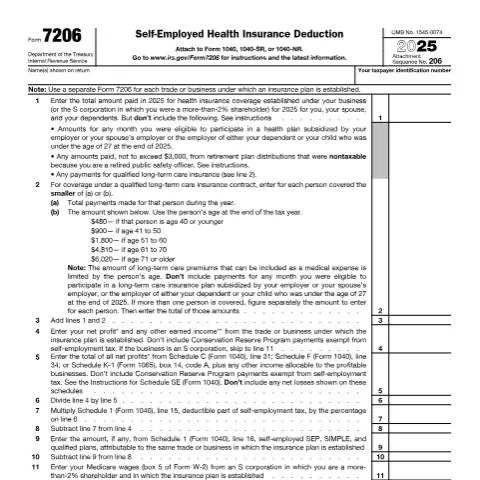
IRS Form 7206, officially titled the Self-Employed Health Insurance Deduction, is pivotal for self-employed individuals who wish to deduct their health insurance premiums. This form is attached to the primary tax return forms, including Form 1040, 1040-SR, or 1040-NR, and it serves to report the total amount paid for health insurance coverage for the individual, their spouse, and dependents.
One might wonder about the qualifications required to submit this form. Essentially, it is designed for self-employed taxpayers, including sole proprietors, partners in partnerships, and certain S corporation shareholders. The requirement to attach Form 7206 to a personal tax return underlines its importance in the broader context of tax filings, particularly for those running their own businesses.
Who Needs to File?
- Self-employed individuals seeking to claim health insurance premiums as tax deductions.
- More-than-2% shareholders in S corporations who maintain a health insurance plan through their business.
- Individuals who do not qualify for employer-subsidized health plans.
Understanding who qualifies for this deduction is key. The eligibility criteria can vary, particularly for individuals with dual-income households or those who have other health coverage options. If any member of the household has access to employer-subsidized health insurance, it may affect the ability to claim the deduction, emphasizing the need for careful consideration when filing.
Breaking Down the Completion of Form 7206
Completing Form 7206 can seem daunting, but by following a systematic approach, individuals can ensure accurate reporting. The form consists of several lines, each requiring specific information about health insurance premiums and income. Attention to detail is paramount, as mistakes can lead to processing delays or incorrect deductions.
Step-by-Step Completion Guide
- Part I: Health Insurance Premiums: Enter the total amount paid for health insurance coverage for yourself, your spouse, and any dependents. Ensure to exclude any months of coverage where you were eligible for employer-sponsored plans.
- Part II: Long-Term Care Insurance: If your plan includes long-term care coverage, report the premiums accordingly. Note the age-related limits outlined in the form, which dictate the maximum allowable deduction based on the insured's age.
- Part III: Net Earnings Calculation: Accurately report your net profit from self-employment, as this figure will influence your allowable deduction. Ensure that you do not include any net losses from your business operations.
Following these steps diligently will lead to a more straightforward filing experience and ensure compliance with IRS requirements.
Where to Submit Form 7206: Channels of Filing
Once Form 7206 is completed, the next step is submission. Understanding the various channels for filing can help expedite the process and ensure that the form reaches the IRS without unnecessary delays.
File Electronically or via Mail?
| Filing Method | Advantages | Considerations |
|---|---|---|
| Electronic Filing | Faster processing and confirmation of receipt. | Requires access to tax software. |
| Paper Submission | Superior for individuals wanting to include additional documentation. | Longer processing times and potential for mail delays. |
Filing electronically through a certified tax software can streamline the process, allowing for quicker refunds and confirmations. However, individuals who prefer to attach additional documentation or who are less comfortable with technology may opt for mailing their documents.
What Happens After Submission?
The aftermath of submitting Form 7206 involves a waiting period, where the IRS processes the form in conjunction with your main tax return. Being proactive during this phase can ensure that any issues are addressed quickly.
Monitoring Submission Status
- Utilize the IRS online tools to track the status of your tax return.
- Maintain records of your submission confirmation, whether electronic or paper.
- Be prepared to respond to any requests for additional information from the IRS.
For those who experience delays or receive communication from the IRS regarding discrepancies, swift action is crucial. Being organized and responsive can mitigate potential penalties and ensure that the deductions are applied correctly.
The Importance of Accuracy: Avoiding Common Pitfalls
Even minor mistakes on Form 7206 can lead to substantial issues, including denial of the health insurance deduction or IRS inquiries. A few common pitfalls to watch for include:
Key Areas for Accuracy
- Health Coverage Dates: Ensure that the months you are claiming for health insurance align with your self-employment status.
- Income Reporting: Verify that your reported net earnings accurately reflect your business income without including losses or non-qualifying income.
- Documentation: Keep detailed records of your health insurance payments and any correspondence with the IRS.
Thoroughness in reporting can significantly reduce the likelihood of issues arising after submission. It is advisable to consult the IRS instructions for Form 7206 to ensure adherence to all guidelines.
Comparing Form 7206 to Similar IRS Forms
Form 7206 may often be confused with other IRS forms related to health care or self-employment. Understanding the distinctions between these forms can clarify their specific purposes and ensure that self-employed taxpayers file correctly.
Forms Often Confused with Form 7206
| Form Name | Purpose | Key Differences |
|---|---|---|
| Form 1040 | Individual income tax return. | Form 7206 is filed as an attachment for health insurance deductions. |
| Form 8941 | Credit for small employer health insurance premiums. | Form 8941 applies to employers, while Form 7206 targets self-employed individuals. |
| Schedule C | Profit or loss from business. | Schedule C reports income; Form 7206 claims deductions related to that income. |
Recognizing these differences is essential for effective tax planning and ensuring that individuals make the most of available deductions and credits.
Final Thoughts: Elevating Your Understanding of Form 7206
IRS Form 7206 serves as a vital tool for self-employed individuals in claiming health insurance deductions. By comprehending the form's purpose, accurately completing it, and diligently following up on submissions, taxpayers can navigate the complexities of the tax system with confidence.
In an ever-evolving tax landscape, staying informed about changes to regulations and guidelines is crucial. Regularly consulting the IRS website and official resources will empower self-employed individuals to maximize their tax benefits while ensuring compliance with federal regulations. This proactive approach can turn tax season from a stressful experience into a manageable, even beneficial, aspect of financial planning.
Understanding IRS Form 7206: A Comprehensive Guide
IRS Form 7206, officially titled "Election to Use Modified Accelerated Cost Recovery System (MACRS) for Certain Property Used in a Trade or Business," serves a unique niche within the federal tax framework. It allows taxpayers to opt for a modified approach to depreciation for certain business assets. Understanding who can utilize this form and under what conditions is imperative for maximizing tax benefits and ensuring compliance.
Who Should File Form 7206?
Form 7206 is specifically designed for small businesses or taxpayers looking to take advantage of the Modified Accelerated Cost Recovery System (MACRS). If you are a business owner with qualifying property, you may consider filing this form. However, there are specific eligibility criteria that must be met:
Property Types: The form is primarily applicable to personal property used in a trade or business, which includes machinery, equipment, and certain improvements made to nonresidential real property.
Business Structure: Both sole proprietors and corporations can utilize Form 7206, but they must adhere to business-specific regulations. For example, a pass-through entity like an S Corporation may have different implications for depreciation compared to a C Corporation.
Election Process: A crucial aspect of Form 7206 is the election process. It’s essential to understand that once you elect to use MACRS for your property, you cannot revert to another method without IRS consent.
Timing: The election must be made in the tax year you place the property in service. Missing this deadline can result in losing potential tax advantages.
Completing Form 7206: Step-by-Step Instructions
Filing IRS Form 7206 requires careful attention to detail. Here’s a breakdown of the steps you'll need to take to complete the form accurately:
Identification Information: Start by filling out your name, address, and taxpayer identification number (TIN). If you're filing as a business, include your employer identification number (EIN).
Property Description: In the section dedicated to property information, provide a detailed description of the property for which you are making the election. Include the date the property was placed in service, as well as its cost basis.
Depreciation Method: Indicate the method of depreciation you are electing. You will generally select MACRS, but be prepared to justify your choice based on the use of the property.
Sign and Date: Once you’ve filled out the required sections, don’t forget to sign and date the form. An unsigned form can lead to processing delays or rejections.
Submission: Mail the completed form to the appropriate address listed in the form instructions. Keep a copy of the submitted form for your records, as it will be essential for future tax filings.
Navigating Common Errors When Filing Form 7206
Filing errors can significantly impact the benefits gained from IRS Form 7206. Understanding common pitfalls and how to avoid them is essential for taxpayers aiming to optimize their tax positions. Here’s a closer look at some frequent mistakes and how to address them:
Common Mistakes to Avoid
Incorrect Property Classification: One of the most common errors is misclassifying the property for which Form 7206 is filed. Ensure that your property qualifies as personal property used in a trade or business, as misclassification can lead to denied deductions.
Missing Election Statement: Failing to include the election statement can result in the form being considered incomplete. Remember, this statement is crucial for IRS record-keeping and your tax position.
Incomplete or Incorrect Information: Double-check all the information provided, including your TIN and property details. Inaccuracies can cause significant delays and potentially trigger audits.
Ignoring Instructions: Each year, the IRS may update the instructions for Form 7206. Be sure to use the latest version of the instructions and adhere to any new requirements or changes in tax law.
Not Retaining Documentation: Keeping accurate records of your property’s cost, acquisition date, and business use is essential. The IRS may request these records if they select your return for verification.
Resolving Errors
If you discover an error after submitting Form 7206, you can amend your tax return using Form 1040-X for individuals or the appropriate corporate tax return amendment form. It's crucial to act promptly; the IRS allows corrections, but you must submit the amended form as soon as you realize the mistake.
Impact of Form 7206 on Future Tax Filings
Understanding how Form 7206 intersects with future tax filings is essential for small business owners. The election to use MACRS for depreciation can have lasting financial implications that extend beyond just one tax year.
Long-Term Financial Planning
Tax Liability Management: By electing MACRS, you may significantly reduce your taxable income in the year the property is placed in service, which can be advantageous for cash flow management. However, this may lead to higher tax liabilities in subsequent years due to reduced depreciation deductions.
Asset Disposition Implications: If you decide to sell or otherwise dispose of the asset, you will need to consider the implications of depreciation recapture. This means you could be liable for taxes on the depreciation deductions previously claimed, impacting overall profitability.
Strategic Planning for New Purchases: Knowing how Form 7206 affects your tax situation can inform future business decisions. If you’re planning to purchase additional property, take into account how those purchases will interact with your current asset base and tax obligations.
Tax Credits and Deductions: Ensure you’re aware of any potential tax credits or deductions that could be available to you as a result of your election. The interplay between different tax forms can create opportunities for optimizing your overall tax strategy.
Consultation with Tax Professionals: It is often prudent to consult with a tax professional who can offer specific advice tailored to your business and financial situation. They can help navigate the complexities of Form 7206 and its implications on your financial landscape.
By considering these factors when filing Form 7206, taxpayers can create a more strategic approach to their long-term tax planning, ultimately leading to better financial outcomes.