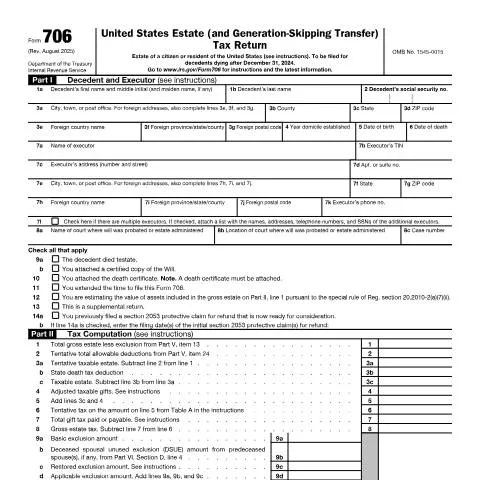
Navigating the Intricacies of IRS Form 706
When it comes to the complexities of estate taxation, IRS Form 706 stands as a pivotal element in the tax filing process for estates of decedents who were citizens or residents of the United States. Particularly relevant for individuals who have inherited or are managing the affairs of a decedent who passed away after December 31, 2024, understanding this form is essential to ensuring compliance and avoiding potential issues with the IRS.
The Integral Role of Form 706 in Estate Settlements
Form 706, also known as the United States Estate (and Generation-Skipping Transfer) Tax Return, is a vital document that must be filed when the gross estate exceeds a certain threshold, which is subject to change legislation. Specifically, this form is designed to assess the value of the decedent's estate and compute the estate tax owed. It plays a crucial role in the overall estate settlement process, which involves paying debts, distributing assets, and addressing any tax obligations.
The executor—appointed by the will or by the court—bears the primary responsibility for filing this form. Executors must navigate through the various sections of the form, providing detailed information about the decedent, the estate's assets, and any deductions that may apply. This thorough documentation is essential for determining the correct tax liability and fulfilling legal obligations.
Understanding Who Must File Form 706
The obligation to file Form 706 hinges on the total value of the gross estate. For estates exceeding the exemption limit set by federal law, this form becomes necessary. Additionally, the filing requirement applies regardless of whether the estate will owe any taxes, as it serves as a formal declaration of the estate's value.
- If the decedent had a gross estate valued above the current estate tax exemption threshold, Form 706 must be filed.
- Even smaller estates may need to file if they are involved in generation-skipping transfers or if the decedent has made taxable gifts in recent years.
Breaking Down the Filing Process
Filing Form 706 can be a daunting process, given its complexity and the amount of information required. It is imperative to take a structured approach to ensure that all necessary data is collected and accurately reported.
Gathering Essential Information
Before filling out Form 706, it's essential to collect specific information and documents:
- Death certificate of the decedent.
- A certified copy of the will, if applicable.
- List of all assets owned by the decedent at the time of death.
- Information on any debts or liabilities of the estate.
- Records of any lifetime gifts made by the decedent.
Sections of Form 706 Explained
Form 706 consists of several parts, each requiring detailed information:
| Part | Description |
|---|---|
| Part I | Details about the decedent and the executor. |
| Part II | Tax computation based on the gross estate value. |
| Part III | Elections made by the executor, which can impact tax liabilities. |
Each section requires careful attention to detail, especially when reporting the decedent's information and the estate's value. Mistakes or omissions can lead to delays or potential legal issues.
Filing Channels: Paper vs. Electronic Submission
Choosing the appropriate method for submitting Form 706 can significantly impact the efficiency of the filing process. Executors have the option to file either by mail or electronically, each of which has its advantages and disadvantages.
Mail Submission
Mailing the completed Form 706 requires the executor to print the document, sign it, and send it to the IRS at the designated address for estate tax returns. This method is straightforward but can lead to delays, especially if there are postal issues. Executors should ensure they obtain proof of mailing, such as a certificate of mailing or tracking number.
Electronic Filing
For those opting for electronic submission, utilizing IRS-approved tax software can streamline the process. Electronic filing generally results in quicker processing times and immediate confirmation of receipt by the IRS, mitigating concerns about lost mail. However, it’s crucial to verify that the software is compatible with Form 706 and is up-to-date with the latest IRS regulations.
Managing Unique Situations When Filing Form 706
Various unique scenarios can complicate the filing of Form 706, necessitating additional considerations for executors.
Filing for Non-resident Decedents
In cases where the decedent was not a U.S. citizen but owned U.S. assets, Form 706 may still need to be filed. The tax obligations differ for non-residents, and accurately reporting the estate's U.S.-based assets becomes paramount.
Dealing with Minors and Incompetent Executors
When the executor is a minor or otherwise unable to manage the estate, a court may appoint a guardian or a representative to handle the filing. This situation adds a layer of complexity, as it requires adherence to court protocols alongside IRS requirements.
Understanding the Timeline for Form 706
Timing is critical when it comes to filing Form 706, as the deadlines are strictly enforced by the IRS.
Key Dates to Remember
The filing deadline for Form 706 is typically nine months after the date of death. However, executors may apply for an extension, which can provide additional time to prepare the return. It is essential to file the extension request on Form 7004 before the original deadline to avoid penalties.
If the extension is granted, the executor may have up to six additional months to file Form 706. However, it’s important to note that any taxes owed must still be paid by the original deadline to avoid interest and penalties.
Following Up on Your Submission
After submitting Form 706, it's vital for executors to stay informed about the status of their filing.
IRS Processing Time
Typically, the IRS takes several months to process estate tax returns. Executors can monitor the status of their return by contacting the IRS directly or by checking online resources for updates. It is prudent to keep all records and correspondence related to the filing, as this may be necessary for future reference or if any inquiries arise.
Common Misunderstandings and Clarifications
In navigating the complexities of IRS Form 706, several misconceptions often arise that can lead to confusion among filers.
Distinguishing Form 706 from Similar Returns
Form 706 is often confused with other IRS forms dealing with estate and gift tax, such as Form 709, which is used for reporting gifts. It is important to recognize the distinct purposes of these forms to avoid filing errors:
| Form | Purpose |
|---|---|
| Form 706 | Estate and generation-skipping transfer tax return. |
| Form 709 | Gift tax return for reporting taxable gifts made during the lifetime. |
Tax Credits and Deductions
Many executors are unaware of the potential credits and deductions available when filing Form 706, which can significantly reduce the tax liability. Understanding the nuances of applicable credits for foreign death taxes, prior transfer taxes, and marital deductions is essential for accurate reporting.
Final Steps: Paying Taxes Owed and Managing Refunds
Once Form 706 has been processed, the IRS will send a notice indicating the estate tax due, if any. Executors need to be prepared for payment in a timely manner to avoid accruing interest and penalties.
Payment Options Available
The IRS provides several options for paying any taxes owed, including:
- Direct bank transfer via the IRS website.
- Mailing a check or money order with a payment voucher.
- Setting up a payment plan for larger amounts owed.
For refunds, if the estate has overpaid, the executor should ensure that the IRS has the correct banking information for the refund to be processed efficiently.
Utilizing Resources for Assistance
Given the intricacies involved in completing and filing Form 706, seeking help from professionals may be beneficial. Estate tax attorneys and certified public accountants (CPAs) with expertise in tax law can provide invaluable guidance. Additionally, the IRS offers resources and instruction manuals on its official website, www.irs.gov/Form706, which serves as a comprehensive guide for filers navigating this complicated process.
Understanding the Filing Requirements for IRS Form 706
Filing IRS Form 706, also known as the United States Estate (and Generation-Skipping Transfer) Tax Return, is a critical step for executors of estates that meet certain thresholds. Understanding the filing requirements is essential to ensure compliance with federal tax regulations. The IRS mandates that Form 706 must be filed if the gross estate exceeds the federal estate tax exclusion limit, which is adjusted periodically for inflation. As of 2023, this threshold is $12.92 million for individuals. Executors should carefully assess the total value of the estate, including real estate, financial accounts, and other assets, to determine if filing is necessary.
Moreover, the filing deadline for Form 706 is typically nine months after the date of the decedent's death. However, it is possible to request a six-month extension to file, which is done by submitting Form 4768. It's crucial to note that this extension only applies to the filing of the form itself, not to any estate taxes that may be due. If taxes are owed, they must be paid by the original due date to avoid penalties and interest.
Additionally, certain estates that are under the exclusion limit may still benefit from filing Form 706. For instance, filing can allow the estate to elect portability, which permits the surviving spouse to utilize any unused federal estate tax exemption of the deceased spouse. This can be a significant benefit for estate tax planning purposes and should not be overlooked.
Key Considerations When Completing IRS Form 706
Completing IRS Form 706 can be a complex process, requiring meticulous attention to detail. One of the first things to consider is the valuation date for the estate's assets. The IRS allows you to choose the date of death as the valuation date, or you may elect to use an alternate valuation date, which is six months after the date of death. Choosing the alternate valuation date can be beneficial if it results in a decrease in the value of assets due to market conditions.
Furthermore, it is important to accurately report all debts and expenses that can be deducted from the gross estate. These deductions can significantly reduce the taxable estate. Common deductions may include funeral expenses, debts owed by the decedent, and administrative expenses incurred during the estate settlement process. Executors should maintain thorough documentation of these expenses to substantiate claims on the Form 706.
Another critical aspect is understanding the complex nature of various exemptions, exclusions, and deductions that may apply. For example, certain transfers made during the decedent's lifetime may qualify for the annual gift tax exclusion or be exempt from federal estate tax under specific conditions. Knowledge of these provisions can aid executors in addressing the estate's tax liability effectively.
Common Mistakes to Avoid When Filing IRS Form 706
Filing IRS Form 706 can be fraught with pitfalls. One of the most common mistakes is underestimating the value of the estate. Executors may inadvertently omit assets or undervalue property, leading to potential audits and penalties. It is advisable to obtain professional appraisals for high-value assets such as real estate and collectibles to ensure accurate reporting.
Another frequent error is the miscalculation of deductions. Many executors fail to account for all eligible expenses or misunderstand which debts can be deducted. This can result in an inflated taxable estate. Properly documenting and categorizing expenses throughout the estate administration process can mitigate this risk.
Moreover, misunderstanding the portability election process is a typical oversight. Executors may neglect to file Form 706 when it is advantageous to do so, potentially costing the surviving spouse significant tax benefits. It is essential to consult with a tax professional or estate attorney to navigate these complexities effectively.
Lastly, the timing of asset distributions can impact the estate's tax liability. Executors should consult with advisors on timing to ensure that distributions are made judiciously, particularly if the estate is close to the filing threshold. Strategic planning in this area can reduce or eliminate tax burdens for beneficiaries.