Navigating IRS Form 5213: The Path to Postponing Profit Determination
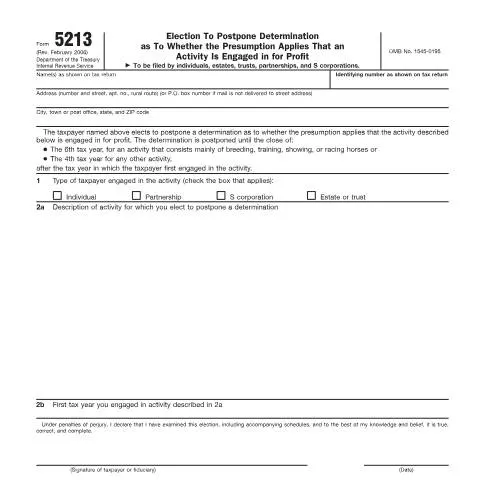
When venturing into the world of business and investment, understanding the nuances of tax obligations is essential. One avenue that taxpayers may pursue is the use of IRS Form 5213, a tool that serves a specific purpose in the realm of profit determination for various activities. This form, officially known as the "Election To Postpone Determination as To Whether the Presumption Applies That an Activity Is Engaged in for Profit," allows individuals and certain entities to delay the IRS's evaluation of whether an activity is indeed profitable. This delay can provide critical breathing room for taxpayers engaged in endeavors that might not immediately yield financial returns.
Who Should Consider Form 5213?
Primarily, IRS Form 5213 is designed for individuals, estates, trusts, partnerships, and S corporations. However, not every scenario warrants the use of this form. Understanding the specific situations in which Form 5213 comes into play is crucial for both compliance and strategic tax planning:
- Individuals: If you're an individual taxpayer engaging in activities such as horse breeding, training, or other enterprises that might not quickly demonstrate profitability, this form could help.
- Estates and Trusts: These entities may also need to navigate the complexities of profit determination, especially when dealing with inherited businesses or properties.
- Partnerships and S Corporations: These business structures may find themselves in situations where profitability is ambiguous, and Form 5213 can provide necessary leeway.
- Special Cases: If your activity has been in existence for less than the predetermined statutory periods (7 years for horse-related activities, and 5 years for others), Form 5213 is applicable.
Understanding the Mechanics: How Form 5213 Works
At its core, Form 5213 provides a mechanism for postponing a determination about whether an activity is engaged in for profit. This is fundamentally important for taxpayers who might be facing potential limitations on their deductions. The IRS typically assumes that an activity is engaged in for profit if the gross income surpasses the deductions attributed to that activity. However, when the IRS decides otherwise, deductions can be significantly limited, creating a financial burden for taxpayers.
Filing Form 5213 effectively allows taxpayers to delay this determination until the end of the presumption period, which varies based on the type of activity:
| Activity Type | Presumption Period |
|---|---|
| Horse Breeding, Training, Showing, or Racing | 6 Tax Years |
| All Other Activities | 4 Tax Years |
Key Steps in Completing Form 5213
Completing Form 5213 requires careful attention to detail, particularly regarding the specific information that must be provided. Below are the essential steps to ensure successful completion:
- Identify Your Status: The first section of the form requires you to indicate your taxpayer type, be it an individual, estate or trust, partnership, or S corporation.
- Describe Your Activity: Clearly and succinctly describe the activity for which you are requesting a postponement. Be specific about what the activity entails.
- Indicate Engagement Start Date: Mark the first tax year you began engaging in the described activity, which is crucial for calculating the appropriate presumption period.
- Certification: Sign and date the form, ensuring that all information provided is accurate and truthful under penalties of perjury.
It is important to note that if you're filing a joint return with a spouse, both parties must elect to postpone the determination, even if only one is involved in the activity.
Timeline and Filing Procedures: What to Expect
Understanding the timeline for filing Form 5213 is essential for maintaining compliance with IRS regulations. The form must be filed within three years of the original return due date, without extensions. This timeline is crucial because failing to submit the form on time could result in a permanent loss of the opportunity to postpone the determination:
- Filing Deadline: Ensure the completed Form 5213 is submitted before the expiration of the three-year window.
- Processing Time: Typically, the IRS can take several weeks to process forms, so timely submission is key to avoiding any lapses in tax obligations.
Consequences of Not Filing Form 5213
Failure to file Form 5213 can lead to significant tax implications. By not postponing the determination, taxpayers may face immediate limitations on deductions related to the activity in question. Here are some specific outcomes that could arise:
- Loss of Deductions: If the IRS deems that the activity is not engaged in for profit, you may be unable to deduct related expenses, increasing your taxable income.
- Audit Risk: Engaging in activities without proper documentation or forms may raise red flags, potentially leading to an audit.
- Extended Limitations Periods: Form 5213 helps in extending the period within which the IRS can audit your tax returns related to the activity, further protecting your interests.
Post-Submission: What Happens Next?
After submitting Form 5213, taxpayers should be aware of what comes next. The IRS does not automatically notify you of the acceptance of this form; thus, maintaining records is vital. Here are some steps to take:
- Record Keeping: Keep a copy of the submitted form and any accompanying documentation. This is crucial for future reference and potential audits.
- Monitor IRS Correspondence: Stay vigilant about any communication from the IRS regarding the status of your form. They may request additional information.
- Consult a Tax Professional: If unsure of the next steps or the implications of your submission, engaging a tax professional can provide clarity and ensure compliance.
Special Considerations: Navigating Unique Circumstances
Tax situations can vary significantly based on an individual's or entity's specific circumstances. Here are a few scenarios where Form 5213 may present unique challenges:
- Foreign Taxpayers: Non-resident aliens or foreign entities engaged in U.S. tax activities may need to approach Form 5213 with additional caution and often with the help of a tax advisor familiar with international tax laws.
- Complex Partnerships: Partnerships with multiple members need to ensure all partners are in agreement before filing, as the form must represent the collective decision regarding the activity.
- Minors and Trusts: For activities undertaken by minors or within trust structures, guardians or trustees must be well-informed about the implications of the form and the role of the IRS in assessing activities on behalf of minors or beneficiaries.
Each of these scenarios requires tailored advice and potentially different documentation to support the claims made on Form 5213.
Final Thoughts on IRS Form 5213
IRS Form 5213 plays an important role for those in business activities that may not yield immediate profits. By understanding the form’s purpose, the process of completion, and the implications of filing, taxpayers can strategically navigate the often-complex landscape of IRS regulations. Engaging in thorough record-keeping and consultation with tax professionals can further enhance compliance and financial outcomes.
As tax seasons approach, ensuring that you understand the nuances of Form 5213 could be the key to maintaining your financial integrity while pursuing business endeavors. By leveraging this form effectively, you give yourself the best chance to optimize your tax situation and manage your financial responsibilities efficiently.
Understanding IRS Form 5213: Who Needs It and When?
IRS Form 5213, also known as the "Election to Postpone Determination as to Whether the Corporation is a Personal Holding Company," is a critical document for certain corporations in the United States. This form allows corporations that may be classified as personal holding companies to delay their determination by the IRS. Understanding who needs to file this form and the relevant timelines is essential for compliance.
Typically, corporations that meet specific income and asset criteria under Section 542 must consider whether they are personal holding companies. This status can significantly impact tax liability, making it crucial for eligible corporations to file Form 5213 if they wish to postpone their classification.
To ensure compliance, corporations should file Form 5213 within the specified deadline, which is generally the due date of the corporation's income tax return, including extensions. If the corporation files its tax return and does not submit Form 5213, it risks facing the repercussions of being automatically classified as a personal holding company, which entails a higher tax rate on undistributed income.
Furthermore, it is essential for corporations to understand that filing Form 5213 does not exempt them from maintaining records that substantiate their income sources and asset composition. These records are crucial for potential audits by the IRS and can assist in justifying the postponement request.
Common Mistakes to Avoid When Filing Form 5213
Filing IRS Form 5213 can be complex, and many corporations make mistakes that can lead to complications. Being aware of these common pitfalls can help ensure a smoother filing process and avoid potential penalties.
One frequent mistake is failing to attach the necessary documentation that supports the request for postponement. Without this documentation, the IRS may deny the election, leading to immediate classification as a personal holding company.
Another common error is incorrect or missing taxpayer identification numbers. Corporations must ensure that their Employer Identification Number (EIN) is accurate and valid when completing Form 5213. Errors in this section can delay processing and communication with the IRS.
Additionally, some corporations underestimate the importance of timing. Form 5213 must be filed by the due date of the tax return, including extensions. Missing this deadline can result in automatic classification, leading to unintended tax consequences.
It is also important to note that each state may have its own regulations regarding personal holding companies, which can add another layer of complexity. Corporations should consult with a professional to ensure compliance with both federal and state laws.
Post-Filing Considerations for Form 5213
After filing IRS Form 5213, corporations should remain vigilant in monitoring their status and ensuring they conform to the terms of their postponement election. It's crucial to understand that the IRS does not automatically notify corporations if their request is approved or denied; thus, proactive measures are essential.
Corporations should maintain thorough documentation related to their income sources and asset holdings, as the IRS may request this information in the future to verify compliance with the terms of the postponement. This documentation can include financial statements, receipts, and any other relevant financial records that demonstrate adherence to the criteria for avoiding personal holding company classification.
Moreover, corporations must stay informed about any changes in tax laws or IRS regulations that may affect their status or the need for future filings. Regular consultation with a tax professional can provide valuable guidance and help navigate these complexities.
Finally, corporations should assess their financial strategies periodically. If their income or asset structure changes significantly, they might need to reconsider their filing status or even consult the IRS for further clarification on their obligations regarding personal holding company status.