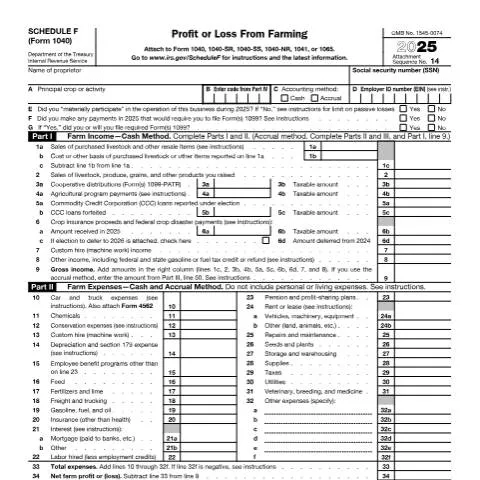
A Comprehensive Dive into IRS Form 1040SF: Your Guide to Filing Successfully
Understanding the nuances of taxes can often feel like navigating through a labyrinth. For many taxpayers, particularly those involved in farming, filling out IRS Form 1040SF is a critical step in reporting income and expenses related to farm operations. In this guide, we'll explore the various aspects of Form 1040SF, from its purpose to detailed instructions on its completion and submission.
The Role of Form 1040SF in Agricultural Tax Reporting
Form 1040SF, officially titled Profit or Loss From Farming, is specifically designed for individuals reporting income and expenses from their farming activities. This form is crucial for farmers, as it enables them to claim deductions for various costs incurred during the farming process, which ultimately affects their taxable income.
Taxpayers who engage in farming activities must file this form in conjunction with their main tax return, typically Form 1040. It captures essential information regarding farm income, expenses, and the net profit or loss from farming operations. This is particularly relevant for farmers who prefer the cash method of accounting, although the form can also accommodate those using the accrual method depending on the circumstances.
Who Needs to File Form 1040SF?
This form is pertinent for:
- Farmers and Ranchers: Individuals engaged in the business of farming who earn income from selling products, livestock, or related services.
- Smallholder Farmers: Those with small farming operations who may not require the complexities of larger corporate tax filings.
- Family Farms: Often run by family members, these farms can also utilize Form 1040SF to simplify tax reporting.
However, it’s essential to understand that while many may qualify, the specifics of their farming operations can lead to different filing requirements based on factors like income levels and business structure.
Chronology of Filing: Step by Step from Trigger to Resolution
The process of filing Form 1040SF begins long before the actual submission. Here's a chronological breakdown:
- Identifying the Need to File: Determine if your farming income exceeds the threshold set by the IRS, requiring the reporting of profits and losses.
- Gathering Necessary Information: Compile all relevant documentation—sales receipts, invoices, expense records, and any form 1099s—that reflect your farming activities throughout the year.
- Completing the Form: Fill out Form 1040SF accurately, ensuring that all income and expenses are accounted for within the specified sections.
- Reviewing for Accuracy: Before submission, double-check all figures and calculations to prevent any filing errors that could lead to audits or penalties.
- Submitting the Form: Choose your filing method—online, by mail, or in person—based on your convenience and the resources available to you.
- Awaiting Processing: After submission, the IRS processes your tax return, a process that can vary in duration based on the method of filing.
- Receiving Your Outcome: Finally, you will receive notification from the IRS regarding the status of your filing, which may include any refunds or amounts owed.
Dissecting the Components: Rubrics of Form 1040SF
Form 1040SF is constructed to capture a breadth of information related to agricultural income and expenses. Understanding each section can help prevent errors and omissions:
Part I: Farm Income
This section focuses on your income derived from farming activities, detailing sources such as:
- Sales of livestock and products: Report any sales of livestock or crops you have raised during the year.
- Cooperative distributions: If applicable, include amounts received from cooperative associations.
- Agricultural program payments: Federal payments related to agriculture can also be included here.
Part II: Farm Expenses
Part II covers various expenses that farmers incur, which can be deducted from gross income:
- Vehicle expenses: Costs associated with using vehicles for farm operations must be documented and categorized accurately.
- Labor costs: Include wages paid to hired help, excluding any employment credits.
- Supplies and utilities: Everyday supplies, utilities, and other operational costs should be thoroughly itemized.
Missing any substantial expenses in this section can significantly inflate your taxable income, so meticulous record-keeping is essential.
Submission Channels: Navigating the Options for Filing
When it comes to submitting your completed Form 1040SF, you have several options:
Online Submission
Filing online is often the most efficient option. Using IRS e-file through an authorized provider can expedite processing times and minimize errors.
Paper Filing
For those who prefer traditional methods, mailing a paper form is still an option. Ensure that you send it to the appropriate address, which varies based on your state and whether you are enclosing a payment.
In-Person Submission
Some taxpayers may opt to submit their forms in person at local IRS offices. This option can provide immediate confirmation of submission but may require an appointment or wait time.
Each method has its pros and cons, so consider factors such as convenience, speed, and your familiarity with the filing process when making your choice.
What Happens After Submission? Understanding IRS Processing
Once you've successfully submitted your Form 1040SF, numerous processes unfold:
- Processing Time: The IRS usually takes several weeks to process returns. Online submissions tend to be quicker than paper forms.
- Potential Audits: If there are discrepancies or unusual patterns in your return, the IRS may flag your submission for further review.
- Refunds or Payments: If you are due a refund, the IRS issues payments either via check or direct deposit. Conversely, if you owe taxes, you’ll be notified and expected to remit payment promptly.
Special Cases: Unique Filers and Circumstances
While Form 1040SF caters primarily to traditional farmers, certain exceptional cases warrant special consideration:
Foreign Farmers
Non-resident aliens engaged in farming in the U.S. may have different filing requirements. If you are a foreign national, you might need to file Form 1040NR instead, and understanding tax treaties is crucial.
Minors in Agriculture
Minors earning income from farming must also file, but the method may depend on their overall income level and dependency status within a family structure.
Complex Situations
Those with atypical farming arrangements—such as partnerships, limited liability corporations, or joint ventures—should consult tax professionals to ensure compliance with all relevant tax laws.
Identifying Errors: Common Pitfalls to Avoid
Even with the best intentions, mistakes can happen during the filing process. Here are key areas to double-check:
- Incorrect Figures: Ensure all income and expense amounts are accurate and properly categorized.
- Missing Documentation: Failing to attach necessary schedules or forms (like 1099s for payments) can lead to processing delays.
- Taxpayer Identification Errors: Confirm that the Social Security Number (SSN) on the form matches your official documentation to avoid mismatches in IRS records.
By understanding each component of Form 1040SF, navigating the complexities of agricultural tax reporting can become less daunting. Whether you are a seasoned farmer or new to the field, proper preparation and attention to detail will facilitate a smoother filing process.
Remember, when in doubt, consulting with a tax professional can provide clarity and ensure that you are taking full advantage of any deductions available to you under federal tax law.
Understanding Form 1040-SF: A Closer Look at Its Purpose and User Eligibility
Form 1040-SF, also known as the "U.S. Individual Income Tax Return - Short Form," is specifically designed for taxpayers who qualify to use a simplified form for their federal income tax filing. This form is particularly useful for individuals with straightforward tax situations, such as single filers or those without dependents and additional complexities in their financial affairs. The primary purpose of Form 1040-SF is to streamline the filing process, making it easier for eligible taxpayers to report their income and claim the standard deduction without the cumbersome requirements that often accompany longer forms like Form 1040.
Eligibility for using Form 1040-SF generally extends to taxpayers who meet specific income thresholds and have no more than $100,000 in adjusted gross income (AGI). It is crucial for filers to understand the definition of AGI, which includes wages, dividends, capital gains, business income, and other income sources minus certain deductions. Additionally, those who wish to claim certain credits or deductions need to consider that Form 1040-SF may not accommodate more complex tax scenarios, such as itemized deductions, which require the use of the standard 1040 form.
Filing Methods and Deadlines Associated with Form 1040-SF
When it comes to filing Form 1040-SF, taxpayers have several options for submission. Filers can choose to submit their forms electronically via an IRS-approved e-file provider or opt for a traditional paper submission by mailing the completed form to the appropriate IRS address. E-filing is often encouraged due to its efficiency, speed, and the immediate acknowledgment of receipt from the IRS, which can significantly reduce processing times compared to paper submissions.
The filing deadline for Form 1040-SF aligns with the general income tax deadline, which is typically April 15 of each year. However, it is essential to remain aware of any changes to this deadline, as they may be influenced by weekends, holidays, or other extraordinary circumstances. Taxpayers who are unable to file by the deadline can request an extension, granting them an additional six months to complete their filings; however, this extension only applies to the filing itself and does not extend the deadline for any tax payments due. Failing to make timely payments can lead to interest and penalties, which can compound quickly if left unaddressed.
Common Mistakes When Filing Form 1040-SF and How to Avoid Them
Even with its streamlined nature, taxpayers can still encounter a variety of pitfalls when completing Form 1040-SF. One of the most common mistakes is failing to double-check personal information such as Social Security Numbers (SSNs), names, and addresses. Errors in this vital information can lead to significant delays in processing, potential audits, or even penalties, so it is crucial to verify all details before submission.
Another frequent error is neglecting to sign and date the form. A signed tax return is a legal document, and without a signature, the IRS may consider the return invalid. Additionally, many taxpayers forget to claim eligible tax credits or deductions that could lower their tax liability. Form 1040-SF does have limitations on the types of credits available, but filers should meticulously review the instructions to ensure they capitalize on any advantageous credits they may qualify for.
Moreover, some individuals misinterpret the deadlines, especially if they are new to the tax system. It's vital to mark the calendar well in advance of the filing date and set reminders for any estimated tax payments or filing extensions if necessary. Taxpayers should also be aware of the IRS's resources, including the IRS website and helplines, which provide valuable information and assistance in navigating the filing process. Ultimately, a thorough understanding of the form's requirements and careful attention to detail can help minimize errors and ensure a smooth filing experience.