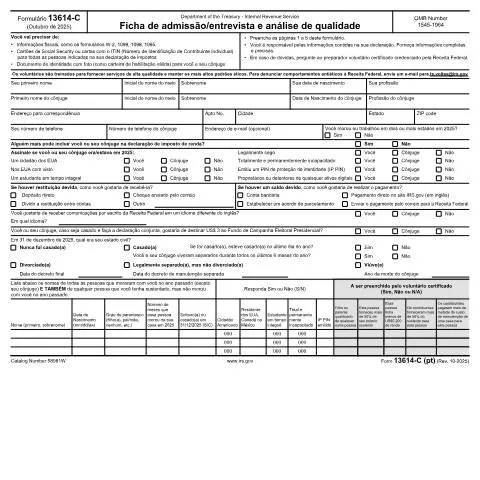
Navigating the IRS Form 13614-C: A Crucial Step for Tax Preparation
When tax season approaches, individuals often find themselves scrambling to gather the necessary documents to file their taxes accurately. Among those documents, IRS Form 13614-C, known as the Quality Review Interview Sheet, holds significant importance. This form plays a vital role in ensuring accurate tax reporting and helps taxpayers, particularly those utilizing volunteer tax assistance programs, to complete their filings with precision and care.
Understanding Who Needs to Engage with Form 13614-C
While Form 13614-C is designed primarily for individuals seeking assistance in preparing their tax returns through certified volunteer tax preparers, it's crucial to understand the various profiles that may find themselves in need of this form. Here’s a breakdown:
General Tax Filers
- Individuals or families who require assistance in filing their taxes
- Those who may be unfamiliar with the tax preparation process
- Taxpayers seeking to maximize credits and deductions
Special Circumstances
Form 13614-C is particularly beneficial for:
- Students: Young filers may face unique tax situations, particularly concerning educational credits.
- Foreign Nationals: Non-residents or expatriates may need assistance navigating tax obligations in the U.S.
- Low-Income Taxpayers: Individuals who qualify for free tax assistance programs may find this form essential for availing of benefits.
What to Expect When Completing Form 13614-C
While it may seem daunting at first, completing Form 13614-C is relatively straightforward. The form comprises several sections that guide the taxpayer through the necessary information required for accurate tax preparation.
Required Information
- Identification Details: Names, dates of birth, and Social Security Numbers (SSNs) for you and your spouse, if applicable.
- Contact Information: Current address, phone number, and email (optional).
- Income Sources: A detailed outline of income, including W-2 forms, 1099s, and any other sources such as unemployment benefits or rental income.
Filing Status and Family Information
Through Form 13614-C, taxpayers will indicate their filing status, which can significantly impact their tax obligations. Options include:
- Single
- Married Filing Jointly
- Head of Household
Furthermore, it requires the inclusion of information about dependents, which can provide access to various tax credits.
Submission Methods: Finding the Right Channel
Once Form 13614-C is completed, the next step involves submitting it. Understanding the different channels for submission can help streamline the process.
In-Person Submissions
If you are working with a volunteer tax preparer, the most common submission method is in-person. This method allows for:
- Immediate clarification of any questions regarding the information provided.
- Direct access to assistance should any discrepancies arise.
Electronic Submissions
For those who prefer a more modern approach, some volunteer tax assistance programs may provide electronic submission options. Benefits of this method include:
- Faster processing times for tax returns.
- Improved accuracy through automated systems.
The Stakes of Accurate Submission
Filing taxes is not just a legal obligation; it comes with rights and responsibilities. Failing to accurately fill out Form 13614-C can have several consequences:
Rights as a Taxpayer
Understanding your rights can empower you during the filing process:
- The right to confidentiality and privacy while filing.
- The right to receive assistance and guidance from IRS-authorized personnel.
- The right to appeal against any decision made by the IRS regarding your tax return.
Responsibilities and Consequences
Accurate reporting is crucial, as errors can lead to:
- Potential audits by the IRS.
- Penalties and interest on unpaid taxes.
- Missed opportunities for credits or refunds.
A Historical Lens: The Evolution of Form 13614-C
Understanding the historical context of Form 13614-C can provide insight into its current significance. Initially developed to streamline the tax assistance process for low-income taxpayers, the form has evolved in response to changing tax laws and the needs of the population. The IRS has continually revised this form to ensure it meets the practical requirements of both taxpayers and volunteer preparers.
Regulatory Framework
The reliance on Form 13614-C is underpinned by the Administrative Procedure Act, which provides the legal foundation for public involvement and transparency in federal agency rulemaking. The IRS utilizes this form to collect the necessary information to ensure compliance with federal tax laws while fostering taxpayer education.
Unique Scenarios: Tailoring Form 13614-C to Specific Needs
In some cases, taxpayers may have unique circumstances that require special attention when using Form 13614-C. These might include:
Non-Resident Aliens
For non-resident aliens, completing Form 13614-C may involve additional complexities. They may need to:
- Provide information on any U.S.-sourced income.
- Indicate any applicable tax treaties that may affect their tax liability.
Minors and Dependents
Minors filing taxes or those being claimed as dependents must ensure that:
- Their parents or guardians complete the necessary sections accurately.
- They understand the implications of their filing status on their guardians' tax returns.
Complex Financial Situations
Taxpayers with complex financial situations, such as business ownership or multiple streams of income, should consider the following:
- Consulting with a tax professional can provide tailored guidance.
- Ensure all income sources are thoroughly documented to avoid discrepancies.
Post-Submission: Understanding What Comes Next
Once Form 13614-C is submitted, the journey does not end. Taxpayers should be aware of the subsequent steps:
Receiving Acknowledgement
Taxpayers will typically receive an acknowledgment from the IRS or their volunteer preparer confirming receipt of their information. This acknowledgment serves as a crucial step in the process.
Follow-Up Requirements
Be prepared for any follow-up requests from the IRS. This might include:
- Requests for additional information or clarification.
- Notices regarding the status of tax returns, especially if further documentation is needed.
Refunds and Payments
Taxpayers can expect their refunds based on the accuracy of the information provided. Options for receiving refunds typically include:
- Direct deposit to a bank account.
- Issuance of a check by mail.
Conversely, if a balance is due, taxpayers will need to address this promptly to avoid penalties. Payment options include:
- Electronic payment through the IRS website.
- Mailing a check or money order directly to the IRS.
Final Thoughts on Engaging with Form 13614-C
Form 13614-C is a vital tool in the tax preparation landscape, particularly for those navigating the complexities of tax filing with assistance. By understanding the intricacies of this form, individuals can enhance their filing experience, ensuring compliance and potentially maximizing their tax benefits.
Whether you are a first-time filer or someone with multiple years of experience, maintaining awareness of the nuances of Form 13614-C will empower you to take control of your tax obligations. In doing so, you position yourself not only to meet your responsibilities but also to safeguard your rights as a taxpayer.
Understanding IRS Form 13614-C: A Comprehensive Guide
Form 13614-C, officially titled the "Intake/Interview Sheet," is a crucial document utilized by tax preparers and volunteers, particularly within the Volunteer Income Tax Assistance (VITA) program. This form is designed to gather essential information from taxpayers, ensuring an efficient and accurate tax preparation process. Its primary purpose is to help preparers identify which tax credits and deductions the taxpayer may qualify for, and to verify their eligibility for various tax benefits.
When filling out Form 13614-C, taxpayers will be asked to provide personal information including their Social Security Number (SSN), income details, filing status (single, married, head of household, etc.), and information about dependents. The form also covers critical aspects such as residency status and prior year tax information, which can significantly affect tax calculations. Understanding the nuances of this form can greatly facilitate smoother interactions with tax preparers and enhance the overall filing experience.
One of the standout features of Form 13614-C is its tailored approach to diverse taxpayer scenarios. For example, there are specific sections dedicated to self-employed individuals, those claiming unemployment benefits, and families with children eligible for the Child Tax Credit. Each of these categories comes with unique questions that help preparers identify potentially beneficial tax credits or deductions, paving the way for optimal tax outcomes.
Common Mistakes when Completing Form 13614-C
While Form 13614-C is designed to simplify the tax preparation process, many taxpayers make common mistakes that can lead to complications down the line. Awareness of these pitfalls is essential for ensuring accurate filings and avoiding unnecessary delays. Below are some frequently encountered errors:
- Incomplete Information: One of the most prevalent mistakes occurs when taxpayers fail to provide all requested information. This can include missing SSNs for dependents or not fully listing all sources of income. Incomplete forms can prompt follow-up requests from preparers and slow down the process.
- Wrong Filing Status: Selecting the incorrect filing status can have significant tax implications. For instance, a taxpayer who qualifies for Head of Household may inadvertently select Single, leading to a higher tax liability.
- Neglecting Documentation: Form 13614-C requests various supporting documents be presented during the interview, such as W-2s, 1099s, and previous tax returns. Failure to bring these documents can hinder the preparer's ability to file accurately and efficiently.
- Misunderstanding Tax Credits: Many taxpayers are unaware of the eligibility criteria for specific credits and deductions. It’s critical to answer related questions thoroughly and honestly, as these can significantly affect the taxpayer's refund.
By taking the time to thoroughly complete Form 13614-C, taxpayers can ensure they provide tax preparers with all necessary information, thus minimizing the risk of delays or inaccuracies in their tax filings.
How to Submit Form 13614-C
While Form 13614-C is primarily an intake tool used during face-to-face interactions with tax preparers, understanding the submission process can help taxpayers prepare for their appointments effectively. Here's a step-by-step breakdown of what to expect:
1. Pre-Appointment Preparation: Before attending your appointment, print out Form 13614-C from the IRS website or obtain a copy from the tax preparation site. Fill out as much of the form as possible, ensuring that you have all the necessary documentation at hand to streamline the process.
2. Appointment with a Tax Preparer: Bring the completed Form 13614-C and all required documents to your scheduled appointment. Your tax preparer will review the information you provided and may ask additional questions to clarify specific details.
3. Reviewing Information: After your information has been reviewed, the preparer will use the data from Form 13614-C to fill out your tax return. It’s essential to confirm that all information is accurate and complete before finalizing your return.
4. Submission of Tax Return: Once your tax return is prepared, it will be electronically submitted to the IRS, or you may receive a paper copy to mail if needed. The details gathered from Form 13614-C play a crucial role in ensuring that your return is filed correctly.
By following this process, taxpayers can make the most out of their tax preparation experience, reducing stress and increasing the chances of maximizing their tax refund.