Understanding the Reaffirmation Agreement Form in U.S. Bankruptcy Proceedings
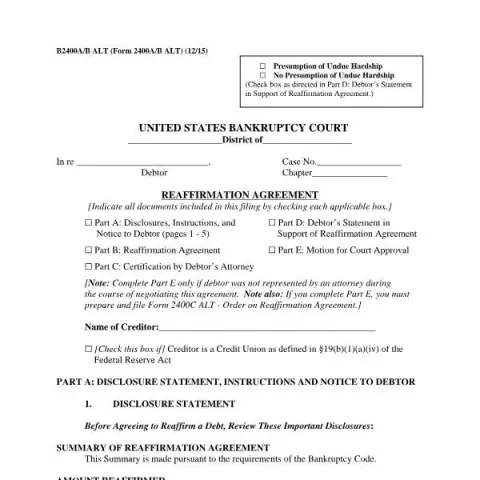
The Reaffirmation Agreement form, officially designated as Form 2400A/B ALT, is an essential document used within the United States Bankruptcy Court system. Its primary purpose is to enable a debtor to legally reaffirm a debt that was discharged during bankruptcy proceedings. This process allows the debtor to continue owing certain debts, such as a car loan or a mortgage, after their bankruptcy case has been completed. Understanding this form is crucial for debtors considering reaffirmation, as it involves legal and financial commitments that can impact their future credit and financial stability.
Who Needs to Fill Out the Reaffirmation Agreement?
This form is typically completed by debtors who wish to reaffirm specific debts with their creditors. It is common in cases where the debtor wants to retain collateral, such as a vehicle or real estate, that is secured by a lien. Debtors should consider reaffirming only debts that they can comfortably manage and that are in their best financial interest. The form must be filled out and filed with the bankruptcy court, often with the assistance of an attorney or creditor’s representative, to ensure compliance with legal requirements.
How to Complete the Reaffirmation Agreement
Step 1: Review the Disclosures and Instructions
The form begins with Part A, which includes disclosures, instructions, and notices to the debtor. It explains the significance of reaffirming a debt and provides details about the specific debt, including the amount to be reaffirmed, interest rates, and repayment terms. Debtors should carefully review these disclosures to understand the implications of reaffirmation.
Step 2: Fill Out the Reaffirmation Details
In Part B, the creditor’s name and details are entered, along with the amount of debt the debtor agrees to reaffirm. The debtor must specify the total amount, including any fees or costs accrued up to the date of signing. Additional information, such as the annual percentage rate (APR), interest rate, and repayment schedule, is also included. This section ensures clarity about the debt’s terms post-reaffirmation.
Step 3: Complete Supporting Statements and Certifications
Part C requires the debtor’s attorney to certify that the reaffirmation agreement complies with legal standards, or the debtor may complete Part E if they were unrepresented by legal counsel during negotiations. This certification helps protect the debtor from entering into agreements that could be considered an undue hardship or otherwise unenforceable.
Step 4: Attach Supporting Documents
Debtors should include all relevant supporting documents, such as disclosures, notices, and the debtor’s statement supporting the agreement. These documents provide transparency and are necessary for court review.
Fill in your form directly online
No printing: type your details into the boxes of the official form, tick, then download the PDF ready to send.
- 1Type into the form boxes
- 2Tick in one click
- 3Save and download the PDF
Where and How to File the Reaffirmation Agreement
The completed form, along with all supporting documents, must be filed with the bankruptcy court handling the case. Filing can typically be done electronically through the court’s electronic filing system or in person at the court clerk’s office. It is advisable to keep copies of all submitted documents for personal records.
Common Errors to Avoid
- Incomplete or inaccurate information: Ensure all sections are filled out correctly, especially the debt amount, interest rates, and repayment terms.
- Failing to review disclosures: Debtors should thoroughly review the disclosures to understand the financial obligations involved.
- Not consulting legal counsel: While not mandatory, legal advice can help prevent agreements that might cause undue hardship or violate legal standards.
- Missing filing deadlines: The reaffirmation agreement must be filed within the timeframe specified by the court, often before the case concludes.
Conclusion
The Reaffirmation Agreement form is a vital tool for debtors wishing to retain certain debts after bankruptcy. Proper completion and filing of this form ensure that the reaffirmation process complies with legal requirements and protects the debtor’s interests. If you are considering reaffirming a debt, it is recommended to carefully review all disclosures, seek legal advice if necessary, and adhere to court procedures to ensure a smooth and legally sound reaffirmation process.