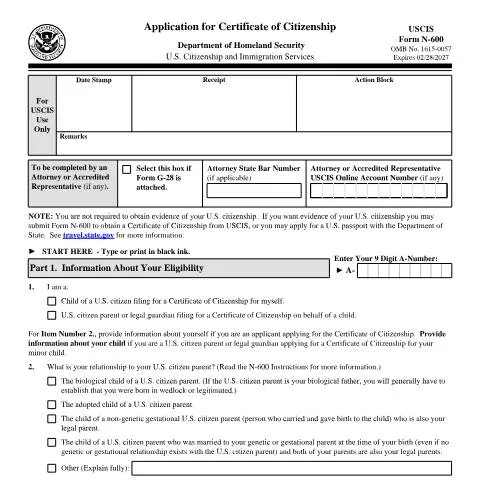
Navigating the N-600 Form: Your Path to U.S. Citizenship
Understanding your citizenship status can be a complex journey, particularly when it comes to formalizing it through legal documentation. The USCIS Form N-600, known as the Application for Certificate of Citizenship, serves a crucial role in this process. This article delves into the intricacies of the N-600, from who needs to submit it to how to ensure its successful processing.
The Significance of the N-600 Form in Your Citizenship Journey
The N-600 form is designed for individuals who are U.S. citizens by birth but need official documentation to prove their status. This can apply to children born abroad to U.S. citizen parents or those who derived citizenship through their parents. Submitting this form is a critical step towards obtaining a Certificate of Citizenship, which serves as legal proof of your U.S. citizenship.
When you successfully complete and submit the N-600, you not only affirm your citizenship but also secure important rights and privileges associated with being a U.S. citizen.
Eligibility: Who Should File the N-600?
Eligibility for the N-600 typically falls into several categories:
- Children born outside the U.S. to one or two U.S. citizen parents.
- Individuals who automatically acquired citizenship through their parents upon their parents’ naturalization.
- Adopted children of U.S. citizens who have met specific conditions.
Understanding your eligibility is crucial when determining whether to proceed with this application. If you are uncertain about your status, you may want to consult an immigration attorney or accredited representative.
Breaking Down the N-600: A Field-by-Field Guide
The N-600 form consists of several sections, each designed to gather specific information. Let’s dissect the form into its primary parts:
Part 1: Information About Your Eligibility
This section requires you to establish your eligibility by clearly indicating whether you are filing for yourself or on behalf of a child. Pay special attention to relationships with U.S. citizen parents, as this will dictate the type of evidence you need to provide.
Part 2: Personal Information
Here, you will provide detailed personal information such as:
- Full name and any previous names.
- Date of birth and country of birth.
- Social Security Number and USCIS online account number (if applicable).
Make sure to fill this out accurately; discrepancies can cause delays in processing.
Part 3: Immigration History
This section probes into your immigration background, including:
- Your entry into the U.S. and the documents used for admission.
- Prior lawful permanent resident (LPR) status, if applicable.
- Any previous applications for citizenship or passports.
Be prepared to provide dates and details accurately, as failure to do so could jeopardize your application.
Documenting Your Evidence: What to Include
Accompanying your N-600 with the right supporting documents is essential for a successful application. Here’s a breakdown of common requirements:
- Proof of your U.S. citizen parent(s)’ citizenship (e.g., birth certificates, naturalization certificates).
- Your birth certificate, which should indicate the names of your parents.
- Any adoption documents if applicable.
Each case can vary significantly based on individual circumstances, so always verify requirements through the USCIS website or consult a professional.
Following Up on Your Application: What to Expect
After submission, tracking the progress of your N-600 application is important. Here’s how:
- Once USCIS receives your application, they will send a receipt notice.
- You can track your case status online using your receipt number.
- Be prepared for potential requests for additional information or documentation, known as Requests for Evidence (RFEs).
A responsive approach can aid in resolving any issues swiftly and efficiently. Delays can occur, so regularly checking in may alleviate concerns.
The Importance of Correct Submission: Common Pitfalls to Avoid
Filing the N-600 correctly is pivotal. Here are frequent mistakes applicants make:
- Inaccurate or incomplete information.
- Failure to sign the form, which can lead to immediate rejection.
- Submitting without the required supporting documents.
Taking the time to review your submission can save you from frustrating delays and rework.
Understanding the Impact of Citizenship Documentation
Your Certificate of Citizenship holds significant weight in various aspects of life in the U.S. Here’s why it matters:
- It serves as proof of your citizenship for employment, voting, and obtaining a passport.
- It may be necessary for enrolling in college or applying for government benefits.
Moreover, lack of documentation can result in complications, including difficulties in proving your rights as a citizen. Thus, obtaining this certificate is not just a formality; it’s a fundamental step in ensuring your rights as a U.S. citizen are recognized and protected.
Historical Context and Regulatory Framework
The N-600 form has its roots in U.S. immigration law, specifically the Immigration and Nationality Act (INA). Understanding its historical context can provide insights into why certain information is requested:
- The INA outlines the conditions under which individuals may acquire U.S. citizenship.
- Amendments to the law have shaped the current requirements for obtaining citizenship documentation.
This background helps clarify why thorough and accurate completion of the N-600 is vital for sensibly navigating U.S. immigration processes.
Special Cases and Exceptions: What You Need to Know
Not every application will fit neatly into standard categories. Situations may arise that require additional considerations:
- If you’re applying on behalf of an adopted child, ensure you meet the specific eligibility requirements laid out by USCIS.
- For those with complex immigration histories, consulting an accredited immigration attorney can provide crucial guidance.
Each application is unique; therefore, understanding the nuances of your situation can significantly impact the outcome.
Final Considerations: Preparing for Success
As you prepare to submit the N-600 form, remember:
- Double-check all entries for accuracy and completeness.
- Gather all necessary documentation beforehand to avoid delays.
- Be patient; processing times can vary widely based on the current USCIS workload.
Being diligent in your preparation can pave the way for a smoother application process, allowing you to focus on enjoying the privileges of U.S. citizenship once your application is approved.
Understanding the Eligibility Criteria for Form N-600
Form N-600, Application for Certificate of Citizenship, is pivotal for individuals seeking to prove their U.S. citizenship status derived from their parents. The eligibility criteria for submitting this form are nuanced and warrant careful consideration. Children born abroad to U.S. citizens, or those who meet specific residency requirements, may qualify.
The primary eligibility criteria include:
- Child of U.S. Citizens: The applicant must be a biological or legally adopted child of at least one U.S. citizen parent. This parent must have lived in the United States for a requisite period before the applicant's birth for the child to inherit citizenship.
- Birth Outside of the U.S.: If the applicant was born outside of the U.S. after November 14, 1986, certain conditions need to be met regarding the parent's citizenship and residency.
- Age and Status: Generally, applicants must be under 18 years of age, although individuals who are already 18 or older may still file if they fulfill the required conditions.
It is crucial to understand that if your parent became a citizen through naturalization, the requirements might involve additional documentation, such as proof of the parent's lawful permanent residency status and the duration of their residency in the U.S. before your birth.
Document Requirements and Evidence Submission
When applying using Form N-600, the burden of proof lies heavily on the applicant to provide adequate documentation that substantiates their claim of citizenship. The following documents are typically required:
- Your Birth Certificate: This should detail the names of both parents. If born abroad, it must be the official foreign birth certificate, often accompanied by a certified English translation.
- Parent's Proof of Citizenship: A U.S. passport, birth certificate, or naturalization certificate must be submitted to demonstrate the parent's citizenship status.
- Evidence of Parent's Residency: This might include school records, tax returns, or employment records that can indicate the parent's physical presence in the U.S. during the necessary years.
- Legal Documents for Adopted Children: If the applicant is adopted, relevant documents like adoption decrees will be essential.
While assembling the required documents, it is vital to ensure all copies are clear and legible. Submissions can often be delayed or rejected due to poorly prepared documents. Thus, double-checking each item before mailing the application can save time and hassle.
Common Challenges and How to Address Them
Applying for U.S. citizenship through Form N-600 is not without its challenges. Applicants may encounter various roadblocks that can complicate their journey. Some common issues and how to navigate them include:
- Incomplete Documentation: One of the leading causes of application delays or denials is the submission of incomplete documentation. To prevent this, applicants should create a checklist based on the USCIS requirements and ensure that every item is included with their application. Using a tracking system to schedule follow-ups on missing documents can also prove beneficial.
- Changing Laws: U.S. immigration laws are subject to change. Keeping abreast of any new regulations or updates from USCIS can be crucial in ensuring your application aligns with current requirements. Subscribing to USCIS updates or consulting with immigration attorneys can provide necessary guidance.
- Delays in Processing: USCIS processing times for Form N-600 can vary significantly depending on the caseload of the local USCIS office. It is vital to understand that these delays are common and to plan accordingly, particularly if there are time-sensitive matters, such as travel or employment offers contingent upon proof of citizenship.
- Appealing a Denial: If the application is denied, there are options to appeal. The applicant can request a hearing before an immigration judge or, in some scenarios, can file a motion to reopen or reconsider the decision. Familiarizing oneself with the appeals process can be crucial should this situation arise.