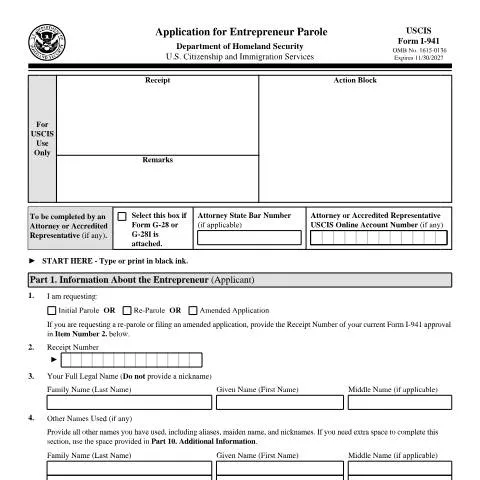
Navigating the USCIS Form I-941: A Deep Dive into the Application for Entrepreneur Parole
Imagine you've developed a groundbreaking business idea and are ready to bring it to fruition in the United States. However, before you can realize this ambition, you must navigate the intricate world of immigration paperwork. One critical document in this process is the USCIS Form I-941, the Application for Entrepreneur Parole. This article will guide you through the form, explaining its significance, the required steps to complete it effectively, and the potential impacts of your application.
Understanding the Stakes: Why Form I-941 Matters
The USCIS Form I-941 is designed for entrepreneurs seeking to establish a business presence in the U.S. under specific parole provisions. This form is crucial for individuals who can demonstrate the potential to create jobs and generate economic benefits. Without the successful completion of Form I-941, your entrepreneurial aspirations could remain just that—aspirations.
The Background of Entrepreneur Parole
Entrepreneur parole allows foreign nationals to enter the United States temporarily to build and grow their startups. This provision is essential for fostering innovation and attracting talent that contributes to the U.S. economy. The criteria for approval are stringent, making it imperative to understand the document thoroughly.
Key Sections of Form I-941: What To Expect
The form is divided into various sections, each requiring meticulous attention. A keen understanding of these sections can prevent costly mistakes.
Part 1: Information About the Entrepreneur (Applicant)
- Identifying Information: Provide your full legal name without nicknames. This information is critical for your application’s accuracy.
- Immigration Status: Be transparent about your current immigration status. Misrepresentation can lead to severe consequences.
- Criminal History: If you have any arrests, charges, or convictions, disclose these honestly. Failure to do so may jeopardize your application.
Part 2: Biographical Information
This section delves into your ethnicity, race, and physical attributes. Seemingly innocuous, these details are essential for record-keeping and compliance with federal regulations.
Completing the Form: Tips for Accuracy
Filling out Form I-941 requires both attention to detail and an understanding of administrative nuances. Here are some practical tips to consider:
Research Before You Start
Before completing the form, familiarize yourself with the requirements set by USCIS. This includes eligibility criteria and documentation needed to support your application. A well-informed applicant is more likely to submit a successful form.
Stay Organized
Gather all necessary documents before you begin filling out the form. Consider creating a checklist that includes:
- Identification documents
- Business plans
- Financial statements
The Submission Process: From Filing to Follow-Up
Once your form is complete, the next step is submission. Understanding the submission process can save you time and effort.
Filing Your Application
You can submit your Form I-941 either online through the USCIS website or via mail. Make sure to choose the option that best suits your circumstances.
What Happens After Submission?
After filing, you will receive a receipt notice from USCIS. This notice contains important information regarding the status of your application. Track this receipt number to stay updated on your application’s progress.
Understanding Processing Times and Timelines
Time can be a critical factor in any business venture. Knowing what to expect in terms of processing times can help you manage your expectations effectively.
Typical Processing Timeline
Generally, processing for Form I-941 can take several months. Factors influencing this timeline include:
- Application volume at USCIS
- Complexity of your application
What to Do During the Waiting Period
While waiting for a decision, consider the following actions:
- Networking with other entrepreneurs
- Further developing your business plan
Implications of Approval: What Next?
Obtaining entrepreneur parole has far-reaching implications for your business and personal life.
What Approval Means for You
If your application is approved, you can enter the U.S. to launch your startup. This includes rights such as:
- The ability to hire employees
- Access to business networks
Understanding Your Obligations
Approval comes with responsibilities. You must adhere to the terms of your parole, which may include:
- Regular reporting to USCIS
- Compliance with U.S. laws and regulations
Conclusion: The Road Ahead
Navigating Form I-941 and the associated processes can be daunting but is essential for entrepreneurs wishing to invest in the U.S. economy. By understanding the form's structure, following the guidelines meticulously, and staying informed, you increase your chances of a successful application. Your future business success in the United States starts with this critical step.
Understanding the USCIS Form I-941: Eligibility Requirements
When submitting USCIS Form I-941, it is crucial to fully understand the eligibility criteria that applicants must meet. This form is specifically designed for individuals seeking a waiver of inadmissibility under section 212(a)(9)(B)(v) of the Immigration and Nationality Act. This provision allows certain applicants to request a waiver if they can prove that their U.S. citizen or lawful permanent resident spouse or parent would suffer extreme hardship if the waiver is not granted.
To qualify, the applicant must demonstrate that the denial of admission would cause significant emotional or financial difficulty to their qualifying relative. Some key factors that USCIS considers include:
- The extent of the family ties in the U.S. and in the applicant's home country.
- The potential impact on the qualifying relative's mental health.
- The financial circumstances of both the applicant and the qualifying relative.
- Any existing health conditions that the qualifying relative may have.
It is essential to compile detailed evidence supporting your claims, as the burden of proof lies with the applicant. This evidence can include personal statements, psychological evaluations, medical documentation, and financial records. Adhering to these guidelines can significantly enhance the chances of a successful waiver request.
Filing Process for Form I-941: Essential Steps
The filing process for USCIS Form I-941 involves several important steps that must be followed diligently to ensure the application is processed without delays. Here’s a detailed breakdown of the steps involved:
- Gather Required Documents: Before filing, it’s essential to assemble all necessary documents that support your waiver request. This includes form I-941 itself, evidence of extreme hardship, and any additional forms or documents specified in the instructions.
- Complete Form I-941: Fill out the form accurately, paying close attention to detail. Ensure that all required fields are completed and that the information matches your supporting documentation.
- Pay the Filing Fee: As of the latest updates, the filing fee for Form I-941 must be submitted along with the application. Check the USCIS official website for the most current fee structure, as these fees can change periodically.
- Submit the Application: Once you have completed the form and compiled your documentation, mail the application to the address specified in the form instructions. Be sure to use a secure method of mailing and consider obtaining a tracking number to confirm that it has been received.
- Monitor Your Case Status: After submission, you can monitor your case status online on the USCIS website. You will receive a receipt notice with a unique case number, which you can use to track the progress of your application.
The entire process can take several months, so it’s advisable to prepare your application as early as possible. Additionally, be aware that USCIS may request additional evidence during the review process. Responding promptly to such requests is crucial for the timely processing of your application.
Common Challenges and How to Overcome Them
Applicants for USCIS Form I-941 may encounter various challenges during the application process. Understanding these challenges can better equip you to tackle them effectively. Here are some common issues and recommended strategies to overcome them:
- Insufficient Evidence: One of the most significant reasons for denial is inadequate proof of extreme hardship. To mitigate this risk, invest time in gathering comprehensive documentation. Engaging an immigration attorney can also provide valuable insight on effectively presenting your case.
- Misunderstandings of 'Extreme Hardship': Applicants sometimes misinterpret what constitutes extreme hardship. It’s essential to clearly articulate how your specific circumstances meet the threshold for extreme hardship. Providing anecdotal evidence and expert testimonials can strengthen your narrative.
- Delayed Application Processing: Applications may take longer than expected to process, leading to frustration. To alleviate this concern, promptly check your case status and be ready to respond to any RFEs (Requests for Evidence) without delay.
- Finding Legal Assistance: Navigating immigration law can be complex. If you encounter challenges, seek out resources from local legal aid organizations or bar associations that specialize in immigration issues. Many offer free consultations that can provide clarity and direction.
Preparing a thorough application and understanding the potential hurdles can make a significant difference in the outcome of your Form I-941 submission. Remember that persistence and attention to detail are key components in successfully obtaining a waiver of inadmissibility.