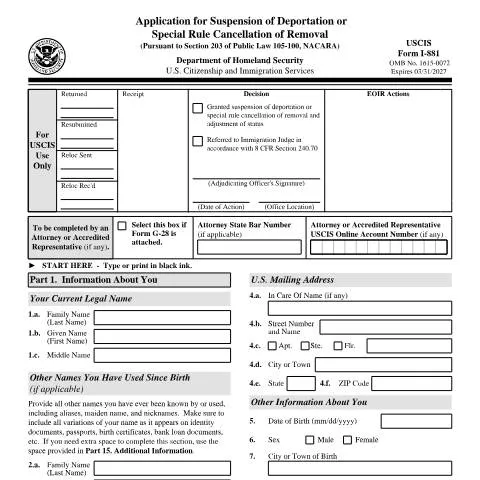
Understanding USCIS Form I-881: A Crucial Step in Immigration Relief
When navigating the complexities of U.S. immigration laws, Form I-881, officially known as the Application for Suspension of Deportation or Special Rule Cancellation of Removal, stands out as a pivotal document. For many individuals, it represents a significant opportunity to secure their future in the United States. The stakes are high, and the process can be daunting; thus, understanding every aspect of this form is essential.
Who Should Consider Filing Form I-881?
This form is primarily designed for individuals who are facing deportation or removal proceedings under the Nicaraguan Adjustment and Central American Relief Act (NACARA). Specifically, eligibility criteria include:
- Nationals of El Salvador or Guatemala who entered the U.S. before specific deadlines.
- Individuals who are children or spouses of those already applying for cancellation of removal.
- People who have been physically present in the U.S. for a certain duration and meet additional legal requirements.
It's crucial to evaluate your unique legal standing, as incorrect filings can lead to delays or unfavorable outcomes. Consulting with an accredited representative or attorney experienced in immigration law can provide invaluable guidance.
Breaking Down the Form: Section by Section
A systematic approach to completing Form I-881 can dramatically improve your chances for a favorable outcome. Each section of the form has specific requirements that must be met accurately.
Part 1: Your Information
This section requires personal data including:
- Full Name: Provide your complete legal name. Be meticulous; discrepancies may raise red flags.
- Other Names: List any aliases or names previously used, as this can help establish your identity.
- Date of Birth and Country of Birth: This information is critical for verifying your identity and eligibility.
Make sure that the information matches official documents to avoid complications.
Part 2: Application Type
In this part, you will indicate the basis for your application. You must check all applicable boxes based on your individual situation:
- Registered ABC Class Members: For individuals who registered under the American Baptist Churches settlement.
- Asylum Applications: Indicate if you have filed for asylum as specified in the regulations.
- Relation to Applicants: This includes spouses and children of individuals who have initiated the application process.
Ensure you carefully assess your eligibility before selecting the relevant options.
Part 3: Your Presence in the United States
Documenting your physical addresses for the past ten years is crucial. Inaccuracies or omissions in this section can lead to difficulties in processing your application. Consider the following:
- List every address where you have resided for more than 60 days.
- Include the dates you resided at each address, ensuring that they are precise.
| Address | Date From | Date To |
|---|---|---|
| 123 Main St, Apt 4B | 01/01/2010 | 12/31/2015 |
| 456 Elm St, Ste 2A | 01/01/2016 | Present |
The Timeline: Key Deadlines and What Follows
Understanding the timeline for submitting Form I-881 is crucial. Not only must you file the form within certain time limits, but you also need to know what happens afterward.
Filing Period
You should submit Form I-881 prior to your hearing. While there isn’t a fixed deadline universally applicable, filing as soon as you are eligible is advisable. The USCIS typically allows a window for submitting additional evidence or information after the initial filing.
Post-Submission: What Happens Next?
Once your application is submitted, it enters a queue for processing:
- Receipt Notice: You’ll receive a receipt notice confirming that your application is under review.
- Decision Notification: Expect communication regarding whether your application is granted or denied. If denied, you may have the option to appeal.
Tracking your application status online is possible through the USCIS website using your receipt number.
Documentation: Supporting Evidence and Preparation
Properly supporting your Form I-881 with the necessary documentation is vital for a successful application. The types of evidence you might need include:
Identity Proof
Government-issued IDs, such as passports or driver’s licenses, are typically required. Ensure that these are current and valid.
Proof of Residence
Utility bills, lease agreements, or any official correspondence showing your residency can substantiate your claims regarding presence in the U.S.
Legal Evidence
Documents that demonstrate your eligibility under NACARA, such as:
- Proof of registration under the ABC settlement.
- Evidence of familial relationships, such as marriage or birth certificates.
Ensure that all documents are translated into English if they are in another language, accompanied by certification of the translation.
Processing Insights: Navigating the USCIS Workflow
The USCIS employs a specific process for reviewing Form I-881, and understanding this workflow can help you prepare better. Here’s what you can expect:
Initial Review
Upon submission, the application will undergo an initial review to check for completeness and accuracy. USCIS may request additional information if needed.
Interview Process
In some cases, you might be required to attend an interview. Be prepared to answer questions regarding your background, residency, and the supporting documentation provided.
Decision and Appeal
The decision will be communicated via mail. If the application is denied, you’ll receive instructions on how to appeal the decision. It's critical to act promptly; appeals often have strict deadlines.
The Regulatory Framework Behind Form I-881
Understanding the legal backdrop that governs Form I-881 can provide insight into its importance. The form is rooted in the Nicaraguan Adjustment and Central American Relief Act (NACARA), enacted to address the needs of specific groups of immigrants from Central America facing precarious situations.
Historical Context
NACARA was established in the 1990s to offer relief to individuals from El Salvador, Guatemala, and other Central American countries who fled civil unrest. The provisions of this act have evolved, reflecting changing political and social climates.
Current Legal Standards
It’s essential to stay informed about current immigration laws, as changes can impact eligibility requirements and the overall process. Regularly checking the USCIS website and consulting legal experts can ensure that you are well-informed.
Understanding the Eligibility Criteria for Form I-881
When it comes to submitting Form I-881, Application for Suspension of Deportation or Special Rule Cancellation of Removal, it’s crucial to have a good grasp of the eligibility requirements. This form is specifically designed for individuals who are in removal proceedings or have been ordered removed from the United States. To qualify for relief under this provision, applicants must meet specific criteria outlined in the Immigration and Nationality Act (INA).
First and foremost, applicants must demonstrate continuous physical presence in the United States for at least ten years preceding their application. This is measured from the date of the application to the time of the filing. Additionally, during this ten-year period, the applicant must not have committed any crimes that would render them removable under the INA, such as certain felonies or crimes of moral turpitude.
Moreover, applicants are required to demonstrate that their removal would result in exceptional and extremely unusual hardship to their qualifying relative, who is a U.S. citizen or lawful permanent resident. This hardship should go beyond the usual difficulties faced by individuals facing deportation. Evidence to support this claim might include medical issues, financial difficulties, or other personal circumstances that would severely impact the qualifying relative's life.
Additionally, applicants should be aware of the importance of maintaining good moral character during the ten years prior to filing the application. This requirement means that applicants must have refrained from engaging in activities that could be seen as detrimental to their character, such as criminal activity or other forms of misconduct.
In summary, before applying for Form I-881, it is essential to ensure that you meet all eligibility criteria. Failure to demonstrate compliance with these requirements can lead to denial of your application and potential deportation. Thus, it may be advisable to consult an immigration attorney to assist in gathering pertinent evidence and navigating the complexities of your case.
Completing Form I-881: A Step-by-Step Guide
Completing Form I-881 is a multi-step process that requires careful attention to detail and thorough documentation. First, ensure that you are using the most recent version of the form, which can be found on the United States Citizenship and Immigration Services (USCIS) website. Once secured, follow these steps for a successful submission:
1. Personal Information: Begin by filling out your personal information accurately. This includes your name, address, date of birth, and any other identifying information. Pay special attention to the format, as inaccuracies can lead to delays or denials.
2. Provide Details of Your Immigration History: On the form, you will need to provide a detailed account of your immigration history, including the dates of entry into the U.S., any prior applications filed, and any deportation proceedings. It is advisable to have all necessary documents on hand, such as I-94 forms, previous applications, or any correspondence from USCIS.
3. Evidence of Hardship: One of the most critical components of your application will be the evidence of the hardship your qualifying relative would face if you were removed. This evidence can include medical records, financial documentation, witness statements, and any other relevant material that supports your claim.
4. Moral Character Documentation: You must demonstrate good moral character, which may necessitate providing letters of recommendation from community members, employers, or religious leaders who can vouch for your character.
5. Review and Sign: Before submitting, carefully review the entire application for accuracy. Ensure all required signatures are present, as failure to sign could result in immediate denial. It is also recommended that you make a copy of your completed application for your records before sending it in.
6. Submission: Submit your completed Form I-881 along with any supporting documents and the appropriate filing fee to the correct USCIS address as specified in the form instructions. Remember to use a reliable mailing method to ensure your application arrives safely and on time.
Preparing for USCIS Interviews after Filing Form I-881
After filing Form I-881, applicants should be prepared for a USCIS interview as part of the adjudication process. This interview is an essential step that allows USCIS to assess the credibility of the application and the applicant. Here are several key aspects to consider:
1. Scheduling and Notification: If USCIS decides to schedule an interview, they will send a notice indicating the date, time, and location. It’s important to respond promptly and confirm your attendance. If you need to reschedule, do so in accordance with the instructions provided in the notice.
2. Preparing Your Documents: Bring copies of all documents submitted with your initial application, as well as any additional evidence that may bolster your case. This includes financial records, medical documentation, and letters of support. Keeping everything organized in a folder can facilitate a smoother interview process.
3. Dress Appropriately: While there’s no formal dress code, it’s advisable to present yourself neatly and professionally. First impressions can matter in these settings, and appropriate attire can demonstrate your seriousness about the process.
4. Practice Common Interview Questions: Familiarize yourself with common questions that may arise during the interview, such as inquiries about your immigration history, family relationships, and the hardships your removal would impose on your qualifying relative. Practicing your responses can help reduce anxiety and promote clarity.
5. Be Honest and Direct: During the interview, it’s essential to answer questions truthfully and directly. Avoid providing vague responses; instead, give thorough answers that clearly convey your circumstances. Any inconsistencies or perceived dishonesty could negatively impact your case.
6. Legal Representation: While not required, you may choose to have an attorney present during your interview. Having legal representation can provide peace of mind and ensure that you have professional guidance throughout the process. If you opt to bring an attorney, inform USCIS of their presence before your interview begins.