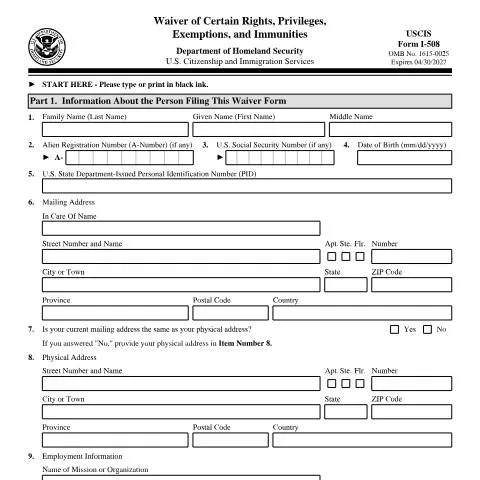
Understanding USCIS Form I-508: A Critical Waiver Document
For individuals seeking to navigate the complexities of the U.S. immigration system, understanding the significance of various forms is paramount. Among these, USCIS Form I-508 holds a crucial role, primarily for those in diplomatic or specific employment situations. This waiver form is essential for individuals who need to renounce certain rights and privileges to adjust their immigration status.
Who Needs to File Form I-508?
Form I-508 is primarily designed for nonimmigrant holders of certain visa categories, particularly those under the Immigration and Nationality Act (INA). Individuals working as government officials, treaty traders, or representatives of international organizations may find themselves needing to file this form.
Here are specific profiles of individuals who might be required to submit Form I-508:
- Diplomats: Those assigned to missions or organizations in the U.S.
- Employees of International Organizations: Workers under specific treaty obligations.
- Treaty Traders: Individuals involved in substantial trade between their home country and the U.S.
The Process of Submission: From Initiation to Decision
Filing Form I-508 requires careful attention to detail. The process can be broken down into several critical steps:
- Determine Eligibility: Ensure that your situation falls under the categories specified for the waiver.
- Gather Necessary Information: This includes personal information, visa details, and proof of employment or mission.
- Complete the Form: Clearly fill in all required fields, ensuring accuracy.
- Submit the Form: Follow the outlined submission guidelines, as incorrect submissions can lead to delays or denials.
- Await Decision: USCIS will review the waiver request and issue a decision.
Navigating Potential Challenges: Refusals and Corrections
Understanding the potential obstacles that may arise during the filing process for Form I-508 is essential. Here’s how to handle common issues:
- Refusal of Waiver: If your waiver is denied, you will typically receive a notice explaining the reasons for denial. You may have options to appeal or rectify issues based on that feedback.
- Missing Information: Incomplete forms may result in requests for additional documentation. Always double-check your submissions.
- Errors in Submission: If you realize that you’ve made a mistake after submitting, contact USCIS immediately to advise them of the error and seek guidance on the next steps.
The Rights and Duties of the Waiver Applicant
Filing Form I-508 is not merely a procedural step; it’s a declaration that can significantly impact your immigration status. Here’s what you need to know about the rights and responsibilities that accompany this application:
- Waiving Rights: By submitting this form, you acknowledge the waiver of certain rights and privileges that may have previously been granted to you.
- Obligations to Report: You must keep USCIS informed of any changes in your employment or personal circumstances that may affect your waiver status.
- Consequences of Non-compliance: Failure to adhere to the terms of the waiver can result in legal consequences, including deportation.
Special Considerations: Unique Situations and Urgencies
Certain scenarios may warrant additional considerations when filing Form I-508. Here are a few examples:
- For Minors: Waivers for minors may require parental consent and additional documentation to validate the minor's circumstances.
- Complex Cases: Individuals with prior immigration violations may need to seek legal advice before filing.
- Emergency Situations: If a situation necessitates urgent processing, it is advisable to communicate this during the submission process to explore expedited options.
The Submission Channels: Online vs. Paper Filings
Understanding the different channels for submitting Form I-508 is crucial for ensuring timely processing. Here’s a breakdown of the available options:
| Submission Method | Details | Processing Time |
|---|---|---|
| Online Submission | Streamlined process through the USCIS website for eligible applicants. Requires the creation of an online account. | Typically faster, depending on the workload. |
| Paper Filing | Physical submission of the form via mail. Must ensure correct address is used, as specified by USCIS guidelines. | May take longer due to manual processing times. |
| In-Person Submission | Possible in certain cases, but generally discouraged unless specifically advised by USCIS. | Varies widely based on location and office workload. |
Document Preparation: What to Include with Your Form
Completing Form I-508 necessitates the inclusion of various supporting documents. Accurate preparation can significantly impact the success of your application. Consider the following:
- Proof of Employment: This may include letters from your employer or mission detailing your status.
- Identification Documents: Include copies of your visa and any relevant identification numbers.
- Additional Supporting Evidence: Depending on your scenario, additional documents may be needed to substantiate your claims.
Properly organizing these documents and ensuring they align with the information on your form is vital for a smooth review process.
Conclusion: Navigating Your Next Steps with Confidence
Completing and submitting USCIS Form I-508 is a significant step for individuals seeking to adjust their immigration status while navigating complex regulatory landscapes. Staying informed and meticulous in your approach can make all the difference. Always consider seeking legal guidance where necessary to ensure that you understand every aspect of the waiver and its implications.
Understanding the Context and Purpose of Form I-508
Form I-508, officially known as the "Waiver of Rights and Privileges," is a crucial document for individuals who are seeking a waiver of the two-year foreign residency requirement associated with certain U.S. visas. This requirement often applies to J-1 visa holders who have received government funding or are involved in specialized programs. The purpose of this form is to formally request that the U.S. Citizenship and Immigration Services (USCIS) allow the applicant to remain in the United States and adjust their status without returning to their home country for the requisite two years.
Understanding the context surrounding this form is vital for applicants. The two-year home residency requirement is intended to promote cultural exchange and ensure that individuals return to their home countries to share their skills and knowledge. However, certain circumstances, such as health issues, family emergencies, or professional opportunities, may necessitate a waiver of this requirement. Form I-508 serves as the vehicle through which applicants can convey their situations and request consideration for a waiver.
Eligibility Criteria for Filing Form I-508
Not everyone can file Form I-508 to waive the two-year home residency requirement. To be eligible, applicants must meet specific criteria that USCIS has established. Generally, the following conditions apply:
- J-1 Visa Holders: The primary group eligible for Form I-508 are J-1 visa holders subject to the two-year requirement. This includes individuals who participated in programs funded by their home government or the U.S. government.
- Humanitarian Reasons: Applicants who can demonstrate that returning to their home country would result in extreme hardship—such as persecution, health issues, or other humanitarian concerns—may qualify for a waiver.
- Exceptional Circumstances: Individuals with unique professional opportunities or those who have family members in the U.S. (such as a spouse or child who is a U.S. citizen or lawful permanent resident) may have grounds for requesting the waiver.
It's also important to note that filing Form I-508 does not guarantee approval of the waiver. Each application is evaluated on a case-by-case basis. Thus, it's advisable for applicants to provide comprehensive documentation that supports their claims and addresses the reasons why they should be excused from the residency requirement.
Common Mistakes to Avoid When Completing Form I-508
Completing Form I-508 can be a meticulous process, and errors or omissions can lead to delays or denials. It's essential to approach this task with careful attention to detail. Here are some common mistakes applicants should avoid:
- Incomplete Documentation: One of the most frequent pitfalls is failing to include all required documents. Ensure that every piece of supporting evidence, such as letters from employers, medical records, or affidavits from family members, is provided.
- Incorrect Fees: USCIS may charge a fee for processing Form I-508. Applicants must ensure that they include the correct fee and check for any updates or changes in fee structure.
- Missing Signatures: It may seem trivial, but many applications are rejected due to missing signatures. Both the applicant and any representatives must sign the form where required.
- Ignoring Instructions: Each form submitted to USCIS comes with specific instructions. Ignoring these can lead to misinterpretation of requirements, which can derail the application process. Always read the form instructions carefully.
Avoiding these mistakes can significantly enhance the chances of a successful application. Applicants are encouraged to take their time in completing the form and consider consulting with an immigration attorney to ensure all bases are covered.