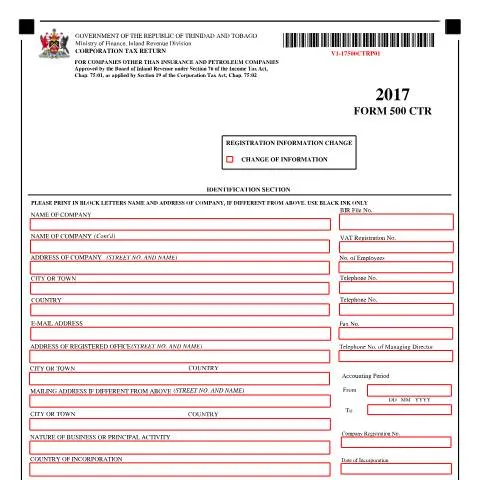
Navigating the [500-CTR] Corporation Form: A Comprehensive Guide
The [500-CTR] Corporation form is an essential document within the corporate tax landscape of Trinidad and Tobago. It serves as the primary vehicle through which companies disclose their financial activities to the Board of Inland Revenue (BIR). Understanding this form is crucial not only for compliance but also for optimizing tax obligations.
The Unique Identity of the [500-CTR] Form
At first glance, the [500-CTR] Corporation form may appear similar to other tax documents, yet it holds distinctive attributes that set it apart. Primarily, it is designed specifically for corporations other than insurance and petroleum companies. Unlike the Individual Income Tax Return (Form BIR 1) or the Value Added Tax (VAT) returns, which cater to individuals and businesses operating in a different capacity, the [500-CTR] caters to the unique needs of corporate entities.
Key Features That Differentiate the [500-CTR]
- Corporation Tax Focus: This form is explicitly tailored to calculate corporation tax liabilities based on the profits earned by the company during the accounting period.
- Complex Relief Applications: The form includes sections for various reliefs like the Venture Capital Tax Credit, which requires precise calculations and justifications.
- Compliance with Specific Legislation: It is governed by the Income Tax Act and the Corporation Tax Act, ensuring that companies adhere to the nuances of these laws.
Understanding the Role of the [500-CTR] Form in Corporate Taxation
Filling out the [500-CTR] is not merely a regulatory obligation; it plays a pivotal role in a company’s financial responsibilities. This document acts as a formal declaration of income and a basis for tax assessment by the BIR, thereby shaping the company's fiscal landscape.
How [500-CTR] Fits into the Broader Tax Framework
The [500-CTR] form is part of a larger system of taxation governed by the laws of Trinidad and Tobago. It is interlinked with other tax forms and obligations, creating a comprehensive structure for corporate accountability. Companies must also consider their VAT submissions and payroll tax returns, which collectively form the basis of their tax compliance.
The Timeline: Critical Dates for [500-CTR] Submission
Timing is crucial when it comes to submitting the [500-CTR] form. Companies must be vigilant about the deadlines associated with this form to avoid penalties. The fiscal year in Trinidad and Tobago runs from January 1 to December 31, and the returns must be submitted by April 30 of the following year.
Calendar of Key Events
| Event | Date | Action Required |
|---|---|---|
| End of Fiscal Year | December 31 | Company's financial year ends. |
| Due Date for [500-CTR] Submission | April 30 | Complete and submit the form to BIR. |
| Potential Late Submission Penalties | After April 30 | Late fees may apply; compliance becomes urgent. |
The Process of Completing the [500-CTR] Form
Completing the [500-CTR] form is a meticulous process that requires accurate financial data. Companies must gather comprehensive financial records, ensuring that the information provided is both precise and reflective of the company’s financial health.
Step-by-Step Breakdown of Completion
- Gather Financial Statements: Collect the necessary documents, including income statements and balance sheets.
- Calculate Gross Receipts: Summarize total sales and revenues as specified in Schedule A.
- Determine Chargeable Profits: Deduct allowable expenses from gross receipts to ascertain taxable income.
- Apply for Tax Reliefs: Complete sections related to any applicable tax reliefs, ensuring all documentation is in order.
- Affix Signatures: An authorized director must sign the form to validate the submission.
- Submit to BIR: Deliver the completed form either online via the e-Tax platform or in person at the BIR office.
Consequences of Non-Compliance with the [500-CTR]
Failing to submit the [500-CTR] form on time can lead to significant repercussions. These consequences can extend beyond financial penalties to affect the company's operational integrity.
Potential Impacts of Non-Submission
- Financial Penalties: Late submissions can incur fines, which can be a burden on corporate finances.
- Legal Repercussions: Non-compliance may lead to legal action from the BIR, including audits and investigations.
- Impact on Business Operations: Companies may face difficulties in securing loans or investment if they have a history of non-compliance.
After Submission: What Happens Next?
Once the [500-CTR] has been submitted, the spotlight shifts to the processing phase. Companies should remain vigilant and prepared for any follow-up actions that may be required by the BIR.
Post-Submission Activities
- Waiting for Acknowledgment: The BIR typically sends an acknowledgment of receipt; ensure this is monitored.
- Potential Queries from BIR: Be prepared to respond to any requests for clarification or additional information.
- Tax Assessment Notice: Expect an assessment notice, indicating any taxes due or refunds applicable based on the submitted form.
Leveraging the [500-CTR] for Strategic Financial Planning
Beyond compliance, the [500-CTR] form provides companies with insightful data that can be leveraged for strategic financial planning. By analyzing revenue and expense patterns revealed through this form, businesses can make informed decisions.
Utilizing Data from the [500-CTR]
- Identifying Trends: Analyze past submissions to identify trends in revenue growth or cost increases.
- Budgeting for Future Tax Liabilities: Understanding tax obligations can help in effectively budgeting for future expenses.
- Enhanced Financial Forecasting: Use the insights gained from the [500-CTR] to forecast future financial performance.
Conclusion: The Importance of Mastering the [500-CTR] Process
Mastering the [500-CTR] form is an essential skill for corporate entities in Trinidad and Tobago. By thoroughly understanding its implications, timelines, and requirements, companies can navigate the complexities of corporate taxation more efficiently. This not only ensures compliance but also opens avenues for financial optimization and strategic growth.
Understanding the Types of Corporations in Trinidad and Tobago
In Trinidad and Tobago, the corporate landscape is diverse, which allows entrepreneurs to choose from several types of corporations based on their business goals and structure. The primary forms of corporations include:
- Private Limited Companies: These are the most common type of corporations, characterized by limited liability for their shareholders. They can have a maximum of 50 shareholders and cannot publicly trade their shares. Private limited companies are governed by the Companies Act and require a minimum of two directors who must be individuals. The Articles of Incorporation must be lodged with the Registrar General.
- Public Limited Companies: Unlike private limited companies, public limited companies can offer shares to the general public and are listed on the Trinidad and Tobago Stock Exchange. They also have stringent regulatory requirements to ensure transparency and accountability. Public limited companies must have at least three directors and comply with additional reporting obligations, including annual audits and financial disclosures.
- Unlimited Companies: These entities have no limit to the liability of their members. While this structure may appeal to certain types of business ventures, it comes with significant financial risk, as members are personally liable for the debts of the company.
- Sole Proprietorships: Though not a corporation per se, many small business owners in Trinidad and Tobago opt to operate as sole proprietorships. This form offers ease of setup and full control over business operations but does not provide liability protection. Owners are personally liable for any debts incurred by the business.
- Non-Profit Organizations: Organizations that operate for purposes other than profit may register as non-profit companies. These entities must adhere to specific regulations, particularly regarding how they manage their finances and distribute assets.
Choosing the right type of corporation is crucial for compliance with local laws and for aligning with business objectives. Each type has distinct advantages and limitations that entrepreneurs should consider carefully.
Key Compliance Requirements for Corporations in Trinidad and Tobago
Corporations operating in Trinidad and Tobago must adhere to several compliance requirements to maintain their legal status and avoid penalties. Below are essential obligations that all corporations must fulfil:
- Annual Returns: Every company, regardless of its type, is required to file an annual return with the Registrar General within 30 days of its anniversary date. This return must include information about the company’s directors, shareholders, and registered office address. Failure to file can result in penalties or even striking off the company from the register.
- Tax Compliance: Corporations must register for a Business Identification Number (BIR Number) and comply with the tax laws, including filing annual tax returns by 30 April following the fiscal year-end. This includes the submission of financial statements, compliance with Value Added Tax (VAT) regulations, and, if applicable, Corporate Income Tax obligations.
- Employment Obligations: Corporations with employees must adhere to the National Insurance Scheme regulations, which include registering employees for National Insurance and making regular contributions. Additionally, they must comply with employment laws, ensuring that contracts of employment are issued and that workers' rights are upheld.
- Registered Office Requirement: Corporations must maintain a registered office in Trinidad and Tobago where official documents and communication can be served. This office must be accessible during normal business hours and be able to receive correspondence from the Registrar General and other government agencies.
Staying on top of these compliance requirements is vital for maintaining the good standing of a corporation and ensuring that it operates legally within Trinidad and Tobago.
Steps for Dissolving a Corporation in Trinidad and Tobago
Dissolving a corporation can be a complex procedure, and it is essential to follow the correct legal steps to ensure compliance. The process can vary depending on whether the dissolution is voluntary or involuntary. Below are the steps to dissolve a corporation in Trinidad and Tobago:
- Board Resolution: For voluntary dissolution, the board of directors must first pass a resolution to dissolve the corporation. This decision should be documented in the minutes of the meeting.
- Notify Creditors: It is essential to notify all creditors and stakeholders of the intent to dissolve the corporation. This step ensures that all outstanding debts are settled before the final dissolution.
- File for Dissolution: After settling debts, the corporation must file a 'Notice of Intent to Dissolve' with the Registrar General. This form must include details about the corporation and the reasons for dissolution.
- Final Tax Returns: Submit any outstanding tax returns and settle all tax obligations with the Board of Inland Revenue (BIR). Failing to do so may lead to complications in the dissolution process.
- Obtain Clearance Certificates: Corporations must acquire tax clearance certificates from the BIR confirming that all tax liabilities have been settled. This is a crucial document for the dissolution process.
- Submit Final Documents: Finally, submit a dissolution application along with all required documents to the Registrar General. Upon approval, the corporation will be officially dissolved, and a certificate of dissolution will be issued.
By following these steps, corporations can ensure a smooth and compliant dissolution process, minimizing legal complications in the future.