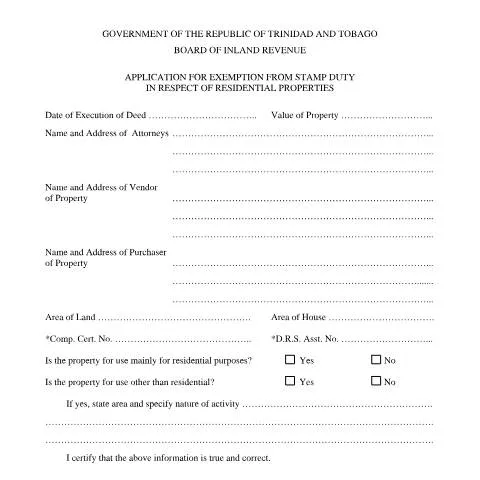
Navigating the Exemption from Stamp Duty Form: A Critical Step for Home Buyers
For anyone entering the property market in Trinidad and Tobago, understanding the Application for Exemption from Stamp Duty in Respect of Residential Properties is paramount. This form plays a crucial role in facilitating financial relief for eligible buyers, enabling them to avoid unnecessary taxation during property transactions.
Understanding the Context: The Importance of Stamp Duty Exemption
Stamp duty is a tax levied on legal documents, typically involved in the transfer of property ownership. In Trinidad and Tobago, the government recognizes the significance of encouraging residential property ownership. Consequently, the exemption from this tax becomes a pivotal mechanism, especially for first-time buyers and those meeting specific eligibility criteria.
The Rationale Behind the Exemption
- Promoting Home Ownership: The exemption incentivizes individuals and families to invest in residential properties, fostering a culture of ownership and stability.
- Economic Growth: By reducing the financial burden on new homeowners, the government aims to stimulate the real estate market, indirectly boosting the economy.
- Targeting Vulnerable Groups: Specific demographics, including lower-income households, may benefit more, allowing them to secure housing without the added cost of stamp duty.
Who Should File the Exemption Application?
This form is primarily for buyers of residential properties. However, eligibility can depend on various factors:
- First-Time Buyers: Individuals purchasing their first home typically find this exemption applicable.
- Low-Income Families: Specific income thresholds may qualify certain families for the exemption.
- Properties for Residential Use: The property must primarily be used for residential purposes to qualify.
Potential applicants should carefully assess their circumstances against these criteria to ascertain their eligibility.
The Application Process: Step-by-Step Guidance
Completing the Exemption from Stamp Duty Application requires attention to detail. Here’s how to navigate the process effectively:
Preparation Before Application Filing
- Gather Required Information: Ensure all necessary information, such as the name and address of the vendor, purchaser, and attorneys, is correctly compiled.
- Determine Property Usage: Clearly identify if the property is for residential use. This determination is crucial for eligibility.
- Complete the Application Form: Accurately fill in the form, paying close attention to the areas requiring certification.
Where and How to Submit the Application
Once the application is completed, it must be submitted to the Board of Inland Revenue (BIR). Here are the steps to follow:
- Visit the BIR Office: Applications can be submitted physically at a designated BIR office.
- Online Submission: Increasingly, the BIR is facilitating online applications through the e-Tax portal.
- Keep Copies: Always retain copies of the submitted application for your records.
Common Challenges and How to Address Them
While applying for the exemption, applicants may encounter several challenges:
Addressing Missing Documents
In cases where some documentation is missing, it’s essential to:
- Provide Explanations: Clearly state the reasons for any omissions directly on the application form.
- Gather Supporting Evidence: If applicable, attach supporting documents that justify the absence of certain information.
Handling Application Denials
Should the application for the exemption be denied, applicants have the right to:
- Request Clarification: Seek further details from the BIR regarding the grounds for denial.
- Reapply with Additional Information: If new information becomes available that supports the application, reapplication is advised.
Understanding the Timeline: Key Dates and Next Steps
Timeliness is critical when filing for the stamp duty exemption. Here’s what you need to know:
Application Timeline
| Stage | Timeline |
|---|---|
| Application Submission | Immediately upon signing the property deed |
| Processing Time | Approximately 2-4 weeks, depending on BIR workload |
| Notification of Approval | Via mail or email, following processing |
After approval, the exemption amount will be stamped on the application form, allowing the purchaser to proceed without paying the stamp duty.
Eligibility Criteria: A Closer Look
Understanding the nuances of eligibility can be the difference between a successful application and a costly oversight. Below are the key factors to consider:
Property Usage Criteria
- Residential Focus: The property must be primarily residential, not mixed-use or commercial.
- Size Limitations: There may be size restrictions on the property (such as the area of land and house), which could affect eligibility.
Income and Demographic Considerations
- Income Thresholds: Individuals and families below a certain income level may automatically qualify.
- Age and Status: Senior citizens and persons with disabilities may have additional considerations.
The Impact of Stamp Duty Exemption on Home Buyers
The exemption from stamp duty can represent substantial financial relief. Here are several ways it concretely affects home buyers:
Financial Benefits
- Cost Savings: Bypassing stamp duty can save buyers thousands of dollars, making home purchases more feasible.
- Increased Buying Power: The funds saved from exemptions can be reallocated towards renovations or other essential purchases.
Long-Term Implications for Property Owners
Beyond immediate financial benefits, this exemption may contribute to the long-term stability of property ownership:
- Equity Growth: With reduced initial costs, buyers can build equity more rapidly.
- Encouragement of Investment: Homeowners feeling financially secure may invest in their properties, enhancing value over time.
Final Thoughts: Maximizing Your Application Experience
As you embark on the journey of home ownership in Trinidad and Tobago, being well-informed about the Exemption from Stamp Duty Application is crucial. This understanding not only helps you navigate the form itself but also empowers you to make informed decisions throughout the home-buying process. Whether you are a first-time buyer or an experienced investor, leveraging this exemption can pave the way for a successful property acquisition.
Understanding the Criteria for Stamp Duty Exemption
In Trinidad and Tobago, the eligibility for stamp duty exemption on residential properties is contingent upon several specific criteria outlined by the Ministry of Finance and the Board of Inland Revenue (BIR). Understanding these criteria is essential for potential homeowners and investors seeking to maximize their financial benefits. These exemptions are primarily available for first-time homebuyers, which can significantly reduce the initial financial burden associated with property acquisition.
One of the primary conditions is that the residential property must serve as the buyer's principal residence. This means that the property should not merely be an investment or a second home; it must be where the buyer intends to live. Additionally, the property should not exceed a specified value, which can be subject to change based on government policy and economic conditions. Buyers must also ensure that they are aware of what constitutes a residential property under local laws, as commercial properties or land not designated for residential use do not qualify.
Moreover, there are income thresholds that potential homeowners must meet to qualify for an exemption. This measure is designed to assist lower-income individuals and families in securing affordable housing. The Ministry of Finance periodically reviews these thresholds to align them with the economic realities facing the citizens. Therefore, it is essential for applicants to stay informed about any changes in the regulations or income guidelines to ensure they are eligible for the exemption.
The Application Process for Stamp Duty Exemption
The process to apply for stamp duty exemption on residential properties involves several key steps that need to be meticulously followed to ensure compliance with the legal requirements set forth by the authorities. Initially, applicants must gather all necessary documentation to support their claim, including identification, proof of income, and documentation of the property's status as a principal residence.
Once all documentation is compiled, the applicant must complete the relevant forms, such as the 'Application for Stamp Duty Exemption' (often referenced as TD 006). This form requires detailed information about the property and the applicant's financial situation. An incomplete application can lead to delays or outright denial, so it's crucial to pay attention to detail.
After submission, the application needs to be processed by the Board of Inland Revenue. The BIR will review the application, verify the submitted information, and assess eligibility based on the current laws and criteria. This process can take several weeks, depending on the volume of applications and the complexity of individual cases.
In some instances, additional information may be required, leading to requests for further documentation or clarification. Therefore, applicants should be prepared to respond promptly to any inquiries from the BIR to avoid unnecessary hold-ups. Once the application is approved, the exemption will be applied, and the buyer will receive confirmation of their eligibility for stamp duty exemption, which can then be presented during the property transaction.
Implications of Non-Compliance with Stamp Duty Regulations
Failure to comply with the regulations surrounding stamp duty exemption can have significant repercussions for both buyers and sellers of residential properties in Trinidad and Tobago. Non-compliance could result in hefty penalties, including the obligation to pay the full stamp duty amount that would have been exempted. This financial burden can be particularly challenging for first-time homebuyers, many of whom are already navigating the complexities of purchasing a property.
Furthermore, if the authorities determine that an individual has falsely claimed an exemption or misrepresented their circumstances, it may lead to legal repercussions, including fines or, in severe cases, criminal charges. Therefore, it is critical for applicants to provide accurate and truthful information throughout the application process.
Moreover, buyers who fail to obtain the necessary exemption may find that their financial plans are severely impacted, affecting their ability to afford the property or leading to complications during the closing process. Delays in the transfer of property ownership can also occur if the stamp duty obligations are not adequately met, complicating the transaction for all parties involved.
To avoid these pitfalls, potential homeowners are encouraged to engage with legal professionals or real estate experts who are well-versed in local property laws. Seeking professional advice can help navigate the complexities of the stamp duty exemption process, ensuring that all legal obligations are met, and reducing the risk of costly errors.