Navigating Home Ownership: The Crucial Exemption from Stamp Duty
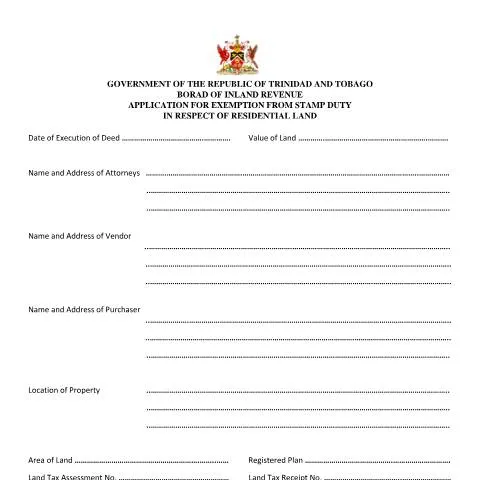
In the journey towards owning a home in Trinidad and Tobago, navigating the financial responsibilities can be daunting. One significant aspect that prospective home buyers need to understand is the Application for Exemption from Stamp Duty in Respect of Residential Land. This form is pivotal for individuals seeking to alleviate some of the financial burdens associated with acquiring residential property.
Understanding the Regulatory Landscape
The foundation of this application lies within the legal framework established by the Constitution of the Republic of Trinidad and Tobago and various Acts of Parliament. The stamp duty exemption is a powerful tool provided by the government to encourage home ownership, particularly for first-time buyers. The Board of Inland Revenue (BIR) administers this exemption, ensuring that eligible applicants are relieved from paying the usual stamp duty on residential property transactions.
The Historical Context
The provision for stamp duty exemptions has evolved over the years, reflecting the government’s commitment to making home ownership more accessible. Initially introduced in response to the housing crisis, the exemption aims to stimulate the real estate market and promote the development of residential areas. Understanding this context helps applicants appreciate the importance of their submission and the potential economic impact it has on the community.
Who Should Submit the Application?
The application is primarily targeted at individuals purchasing residential properties for personal use. However, several specific profiles may qualify for this exemption:
- First-time Home Buyers: Individuals who have never owned property before are often prioritized.
- Low to Middle-Income Families: Applicants demonstrating financial need may receive favorable consideration.
- Trustees or Agents: Those acting on behalf of purchasers can also submit applications, provided they have the necessary authorizations.
Special Conditions and Exceptions
While the application is designed to support various demographics, it is essential to note specific conditions that may affect eligibility:
- Properties exceeding a certain value may not qualify for the exemption.
- If the property is intended for rental or commercial use, different criteria may apply.
A Step-by-Step Guide to Completing the Application
Completing the Application for Exemption from Stamp Duty requires careful attention to detail. Here’s a structured approach to ensure the successful submission of your application:
- Gather Necessary Documentation: Ensure that you have all required documents ready for submission. This includes:
- Deed of purchase
- Proof of identity (e.g., national ID or passport)
- Land Tax Assessment No. and Receipt No.
- Complete the Application Form: Fill out the form accurately. Notable sections include:
- Date of Execution of Deed: Clearly state the date on which the sale deed was executed.
- Name of Attorneys: List the legal professionals involved in the transaction.
- Details of the Vendor and Purchaser: Provide comprehensive contact information.
- Specify Usage: Indicate whether the property will be used for residential purposes. Be honest, as this can impact eligibility.
- Sign the Application: Make sure the form is signed by the purchaser, agent, or trustee to validate the application.
The Submission Process: Where and How to File
Once the application is complete, the next step is submission. Understanding where to file this application is crucial:
- Submit the completed application form at the nearest Board of Inland Revenue (BIR) office.
- Ensure to keep a copy of the submission for personal records, including any receipts or confirmation of submission.
Digital Submission Options
With the increasing integration of technology in government services, applicants can now explore digital submission options through the ttconnect online platform. Utilizing your Central ttconnect ID can streamline the application process and provide an efficient way to track your submission status.
What Happens After Submission?
Upon submitting your application, the BIR will process it and provide a response regarding your eligibility for the stamp duty exemption. Typically, applicants can expect to receive notification via post or email.
Potential Outcomes
Your application may lead to several outcomes:
- Approved: If granted, you will receive an official notice indicating the exemption.
- Denied: In the case of denial, you will receive a notification detailing the reasons. It is advisable to review these reasons carefully and consider reapplying, especially if there was a misunderstanding regarding your eligibility.
- Request for Additional Information: The BIR may contact you if further documentation or clarification is required.
Handling Refusals and Appeals
Receiving a denial can be disheartening, but it is vital to remain informed and proactive. If your application is declined, consider the following steps:
- Review the Denial Letter: Pay close attention to the reasons for the denial. Common issues include missing documents or discrepancies in the submitted information.
- Prepare an Appeal: If you believe your application was wrongfully denied, you can prepare an appeal. This should include a detailed explanation and any additional documentation that supports your case.
- Submit the Appeal: Direct your appeal to the BIR, ensuring you adhere to any specified timelines.
Consequences of Non-Compliance
Neglecting to submit the appropriate application for exemption can lead to significant financial implications:
- Stamp Duty Liability: Without an exemption, you will be required to pay the full stamp duty, which can be a considerable financial burden.
- Potential Legal Issues: Failing to follow the proper procedures can lead to complications in property ownership and transfers.
- Future Eligibility: A history of non-compliance may affect your eligibility for future exemptions or government programs designed to support home buyers.
Conclusion: Empowering Home Buyers in Trinidad and Tobago
Understanding the Application for Exemption from Stamp Duty in Respect of Residential Land is essential for home buyers in Trinidad and Tobago. This application not only helps to reduce financial burdens but also plays a vital role in promoting home ownership across the nation. By remaining informed and diligent about the process, applicants can ensure that they take full advantage of the benefits provided by the government.
Understanding the Stamp Duty Exemption Criteria
In Trinidad and Tobago, the application for exemption from stamp duty concerning residential land requires a thorough understanding of the criteria established by the Ministry of Finance (MoF). This exemption is typically intended for first-time home buyers, certain categories of vulnerable populations, and those purchasing residential land with the intention of constructing their primary residence.
To qualify, applicants must meet specific conditions. First-time buyers must provide proof of being a first-time home buyer, which is often verified through declarations or supporting documentation from financial institutions. Furthermore, the property value is generally subject to a cap, where qualifying exemptions apply only to properties valued under a prescribed amount. Applicants must also demonstrate that the residential land will be used solely for residential purposes and not for commercial gain.
It is crucial for applicants to prepare comprehensive documentation outlining their eligibility. This includes identity verification, proof of income, and evidence of financial capability to ensure compliance with the assessment criteria. In cases where applicants belong to vulnerable populations—such as individuals with disabilities or senior citizens—additional documentation may be required to substantiate their status and need for support.
The Application Process: Step-by-Step Guide
Embarking on the application process for exemption from stamp duty involves several essential steps. First, prospective applicants should gather all necessary documents, including the completed 'Application for Exemption from Stamp Duty' form, which can be obtained through the Ministry of Finance's official portal.
Once the required documents are assembled, applicants must submit their application to the appropriate agency. Typically, this involves submitting it to the IRD (Inland Revenue Division) for processing. It is imperative to ensure that the form is filled out accurately and all necessary supporting documents are attached, as any missing documentation may lead to delays or denial of the exemption.
Upon submission, the application will undergo a review process. During this time, the IRD may request additional information or clarification on specific points. It is advisable for applicants to remain responsive and provide any requested information promptly to facilitate timely processing. Following the review, the applicant will receive a notification of the decision regarding their exemption status.
In situations where an exemption application is denied, applicants have the right to contest the decision. This involves a formal appeal process, which requires the submission of an appeal letter that outlines the grounds for contesting the initial decision. The appeal will be reviewed by a designated committee, and applicants will be notified of the outcome in due course.
Implications of Stamp Duty Exemption for Residential Land Purchases
Obtaining an exemption from stamp duty has significant implications for individuals purchasing residential land in Trinidad and Tobago. Primarily, it reduces the overall financial burden associated with acquiring property, making home ownership more accessible for many citizens. This exemption is particularly beneficial for low to middle-income individuals, who may be struggling to gather sufficient funds for both the purchase price and associated costs.
The financial relief provided by a stamp duty exemption may also encourage investment in residential properties, stimulating growth in the housing market. When more individuals are able to afford homes, it contributes to the overall economic stability of communities. Furthermore, it fosters a sense of ownership and investment in local areas, as individuals are more likely to take pride in their properties and contribute positively to their communities.
In addition, exemptions may have a ripple effect on the construction industry, as demand for residential properties increases. Contractors, builders, and related service providers may see a boost in their businesses due to heightened activity in the residential market. This can lead to job creation and further economic benefits within the region.
Applicants must also be aware that while the exemption alleviates initial costs, it is essential to consider other recurring costs associated with property ownership, such as property taxes, maintenance, and insurance. Understanding these financial implications ensures that individuals are not only prepared for the upfront costs of purchasing residential land but also for ongoing financial commitments.