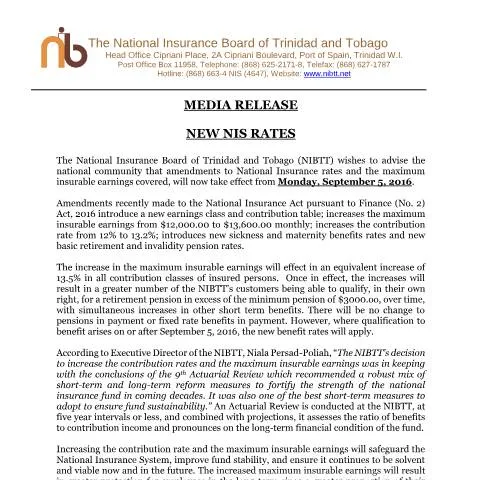
Unpacking the Media Release: A Critical Update on National Insurance Rates
The National Insurance Board of Trinidad and Tobago (NIBTT) has officially announced new updates to its National Insurance rates, effective from September 5, 2016. This release comes as a part of the amendments made to the National Insurance Act pursuant to the Finance (No. 2) Act, 2016. For individuals and employers alike, understanding this release is crucial as it directly impacts contributions and benefits under the National Insurance System.
The Context Behind the Changes
The 9th Actuarial Review, a recommendatory study conducted periodically by the NIBTT, laid the groundwork for the adjustments we see in this media release. This review aims to evaluate the financial health of the National Insurance Fund and dictates necessary reforms to ensure sustainability. With pressures on the fund growing due to demographic changes and increased life expectancy, the recommendations from this review included a mix of short-term and long-term measures to strengthen the fund.
- Increased contribution rates: The contribution rate will rise from 12% to 13.2%.
- Higher maximum insurable earnings: The new cap has increased from $12,000.00 to $13,600.00 monthly.
- Expanded benefit provisions: New rates for sickness, maternity benefits, and pension rates have been introduced.
Who Needs to Pay Attention to the Media Release?
The implications of this media release extend beyond just the individual employees. Employers, financial planners, and anyone receiving benefits from NIBTT should pay close attention. Here’s a detailed profile of stakeholders affected:
Employees and Insured Persons
For individuals contributing to the National Insurance System, the increased maximum insurable earnings means that more of their income is covered, providing greater financial protection. New qualification criteria for pensions and other benefits will also come into play.
Employers
Employers must adjust their payroll systems to accommodate the increased rate of contributions. Understanding these changes is essential to remain compliant with statutory obligations. Failure to comply can result in penalties.
Future Pensioners
Individuals approaching retirement should take notice of the new policies. The changes will allow more individuals to qualify for pensions that exceed the minimum threshold of $3,000.00, enhancing their financial stability in retirement.
Breaking Down the Contribution Rates and Benefits
The media release outlines significant changes to both contribution rates and potential benefits. It is imperative to dissect these amendments to understand their implications clearly.
| Feature | Old Rate | New Rate | Impact |
|---|---|---|---|
| Contribution Rate | 12% | 13.2% | Increased contributions lead to enhanced fund sustainability. |
| Maximum Insurable Earnings | $12,000.00 | $13,600.00 | More of employee’s income is covered, improving long-term benefits. |
| Retirement Pension Minimum | $3,000.00 | New rates applicable for benefits qualified after changes. | Potential for higher pension amounts for qualifying individuals. |
Navigating the Application Process for New Benefits
If you are affected by these changes, it is important to understand the procedures for applying for the new benefits. The application process may vary depending on whether you are an employee or an employer.
For Employees
Employees who wish to understand their eligibility for new benefits should follow these steps:
- Review your earnings to ascertain how they align with the new maximum insurable earnings.
- Check your eligibility for new benefits such as sickness and maternity leave, as the rates have changed.
- Complete the necessary forms available at the NIBTT official site or through designated branches.
- Submit the application along with any supporting documentation to the nearest NIBTT office.
For Employers
Employers must also engage with the revised contribution rates:
- Update payroll systems to reflect the new contribution rate of 13.2%.
- Communicate the changes to your employees to ensure transparency.
- Ensure timely payment of contributions to avoid penalties.
Considerations for Special Cases and Exceptions
Within the framework of the new rates, there are specific cases and exceptions that may affect stakeholders differently.
Self-Employed Individuals
Self-employed individuals need to assess how the new contribution scheme impacts their liability. They are encouraged to calculate their contribution based on their earnings and consider the higher maximum insurable earnings.
Part-time Workers and Students
Those working part-time or in temporary roles may need to understand how these new rates affect their eligibility for benefits. For instance, students working summer jobs may find themselves in a position to qualify for additional benefits that were previously unavailable.
Long-Term Financial Implications of the New Rates
The increase in both contribution rates and maximum insurable earnings has significant long-term implications for the National Insurance Fund. As highlighted by NIBTT's Executive Director, Niala Persad-Poliah, these changes are vital for ensuring fund sustainability.
By increasing contributions, the NIBTT aims to improve the ratio of benefits to contribution income, safeguarding the organization's financial health for future beneficiaries. This proactive approach addresses potential funding shortfalls that could affect long-term retirees and other benefit recipients. Stronger financial health ensures that the NIBTT can maintain its service levels and continue providing essential benefits to its contributors in years to come.
Communicating the Changes: NIBTT's Efforts
Effective communication of these changes is essential for ensuring that the public is well-informed. The NIBTT has undertaken several initiatives:
- Issuing detailed media releases.
- Hosting community outreach programmes to explain the changes and gather feedback.
- Updating their website regularly with FAQs and resources to assist stakeholders.
Furthermore, the NIBTT encourages individuals and employers to reach out with any questions or concerns regarding the new rates and processes. This open dialogue is crucial for fostering trust and understanding within the community.
Final Thoughts on the NIBTT Media Release
The media release regarding the new National Insurance rates is more than a simple announcement; it serves as a pivotal moment for the National Insurance Board of Trinidad and Tobago and all its contributors. By increasing rates and maximum insurable earnings, the NIBTT is positioning itself to provide enhanced benefits to its community while also ensuring long-term fund viability.
As stakeholders navigate these changes, it is increasingly vital to stay informed and proactive in understanding how new policies affect their contributions and entitlements. The NIBTT's ongoing efforts to communicate effectively and transparently will no doubt help in achieving a smooth transition for all involved.
Understanding the Media Release Process in Trinidad and Tobago
The media release process in Trinidad and Tobago is an integral part of government communication, allowing the public to be informed about new policies, fiscal changes, and administrative updates. It is primarily facilitated through the Ministry of Finance and other relevant governmental agencies. Media releases are crafted with precision to ensure clarity and accessibility, often distributed to local media outlets, published on official websites, and shared through social media platforms.
Entities seeking to issue a media release must adhere to specific guidelines set forth by the Ministry of Finance and the Ministry of Legal Affairs. This ensures that the information disseminated is not only accurate but also compliant with applicable laws and regulations. Before a release is made public, it undergoes a rigorous approval process which may involve legal reviews and final clearance from senior officials.
It is crucial for stakeholders, including businesses, non-governmental organizations, and the general public, to monitor these releases closely, as they can significantly affect operational costs, tax obligations, and compliance requirements. Subscribing to government news alerts or regularly checking official government websites can provide timely updates on new rates and policies.
Moreover, understanding the historical context surrounding various media releases can provide insights into current trends and fiscal policies. For example, the phased increase in Value Added Tax (VAT) rates over the past few years reflects the government's strategy to stabilize the economy amidst fluctuating oil prices, which play a critical role in Trinidad and Tobago's revenue streams.
Impact of New Rates on Various Sectors
Changes to fiscal rates, such as those affecting income tax, corporate tax, and VAT, can have widespread implications for different sectors within Trinidad and Tobago. For instance, the recent adjustments to the VAT rate can significantly impact businesses operating in the retail sector. Companies must recalibrate their pricing strategies and account for the additional tax burden when pricing goods and services. It is essential for business owners to factor in these changes when preparing their tax returns to avoid potential penalties for non-compliance.
In the tourism sector, the adjustment of fees and taxes can influence foreign investment and tourist spending. Increased rates may discourage foreign visitors if they perceive the destination as more expensive. Therefore, industry stakeholders must engage with the government to advocate for balanced rates that promote growth while ensuring adequate revenue generation for public services.
In contrast, certain sectors may benefit from new rates or tax incentives introduced as part of governmental initiatives to stimulate economic growth. For example, the introduction of tax breaks for businesses investing in green technology or renewable energy can encourage innovation and sustainability, leading to long-term benefits for both the economy and the environment.
Understanding these nuances is crucial for stakeholders, especially those involved in financial planning and budget allocation. Tailored advice from tax consultants and financial advisors can aid businesses in adapting to new fiscal landscapes, thus ensuring compliance while optimizing their financial strategies.
Navigating the Challenges of Rate Changes
Rate changes in Trinidad and Tobago often come with challenges, particularly for small and medium-sized enterprises (SMEs) that may struggle to adapt quickly to new financial obligations. The introduction of new administrative processes can be daunting, especially for businesses already operating on tight margins. SMEs must stay informed about upcoming changes to fiscal policies and seek guidance to navigate these complexities effectively.
Additionally, the digital transformation of tax administration through platforms like e-Tax and ttconnect allows businesses to manage their tax obligations more efficiently. However, the transition to online systems may pose challenges for those unfamiliar with digital processes. Training programs and workshops offered by the Internal Revenue Division (IRD) and other agencies can provide necessary support, empowering business owners and their staff to utilize these platforms effectively.
Furthermore, there is often a gap in understanding how new rates will impact wages, employee benefits, and overall business operations. Employers must ensure transparent communication with their workforce regarding potential changes in salaries or benefits due to new tax structures. This transparency is vital for maintaining employee morale and trust, especially in uncertain economic times.
Ultimately, fostering a culture of adaptability and continuous learning within organizations can help in overcoming the challenges associated with rate changes. Engaging with industry associations and participating in forums can provide valuable insights and networking opportunities, allowing businesses to share best practices and strategies for managing the implications of new fiscal policies.