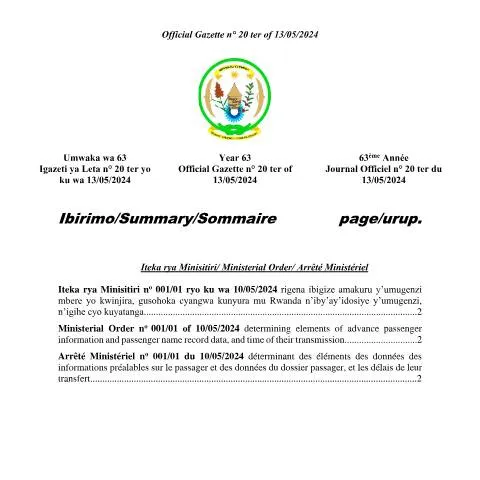
Navigating the Ministerial Order No. 001/01 of May 2024
The Ministerial Order No. 001/01 of May 10, 2024, establishes critical guidelines for the management of Advance Passenger Information (API) and Passenger Name Record (PNR) data in Rwanda. Understanding the specifics of this document is essential for stakeholders involved in both international travel and the administration of related data. This order aims to streamline data sharing, enhance security protocols, and ensure compliance with international standards.
The Essence of the Ministerial Order
The core purpose of Ministerial Order No. 001/01 is to stipulate the elements required for advance passenger information and passenger name record data, as well as the timelines for their transmission to Rwandan authorities. This order aligns with international best practices for data sharing in the aviation sector.
As a critical document, it serves as a foundation for how passenger data is collected, processed, and shared, ensuring that Rwanda adheres to global standards for aviation security and cross-border cooperation.
Identifying Stakeholders: Who is Impacted?
Various stakeholders are affected by this order, including:
- Airline Operators: Required to submit passenger data to authorities.
- Travel Agencies: Facilitate data collection and submission on behalf of travelers.
- Government Agencies: Responsible for processing and safeguarding passenger information.
- Travelers: Must provide accurate information to comply with regulations.
Each group has unique obligations under the order, and understanding these roles is key to compliance.
Airline Operators: Primary Data Collectors
Airline operators are mandated to collect and transmit advance passenger information before flights enter Rwandan airspace. Specific data points include passenger names, nationalities, and travel document details. Failure to comply can result in sanctions.
Travelers: Essential Compliance Elements
Travelers must be aware that the accuracy of the information provided is crucial. Misleading or incorrect data can lead to boarding denials or fines. Thus, it is advisable to double-check all entries on travel documents prior to submission.
Decoding the Form: Key Sections and Common Pitfalls
The Ministerial Order outlines distinct sections that detail what information must be provided. Each section has specific requirements, and understanding these can help avoid common mistakes.
Core Data Elements
Under Article 3, the core data elements that must be included in the API include:
- Passenger's full name
- Date of birth
- Nationality
- Travel document type and number
- Flight details
Providing these details accurately is essential. Each piece of information plays a critical role in identity verification and security protocols.
Additional Data Requirements
Article 4 highlights additional data that may be required, particularly if traveling with minors or pets. Airlines must ensure that any additional documentation (such as custody orders or medical certificates) is also transmitted to the authorities.
Timelines and Deadlines: When to Submit?
Timeliness is crucial when it comes to submitting API and PNR data. The order specifies that all data must be transmitted to Rwandan authorities at least 24 hours before the scheduled arrival of the flight. This requirement allows for adequate processing time and enhances border security.
What Happens After Submission?
Upon submission, the data undergoes verification by the relevant authorities. If discrepancies arise, the airline will be notified. It is critical for carriers to maintain communication lines open with the relevant government agencies to address any issues promptly.
Channels for Submission: Digital vs. In-Person
Data can be submitted through various channels, with digital submission via the Irembo platform being the most efficient and recommended method. This platform allows for real-time data entry and verification.
Benefits of Digital Submission
- Efficiency: Reduces processing time.
- Accessibility: Available to users anytime, minimizing delays.
- Tracking: Allows for tracking the status of submissions.
In-Person Submission Alternatives
While digital submission is encouraged, travelers can also choose to submit documents in person at designated government offices. This method may be slower and comes with potential wait times but is an option for those who prefer traditional methods.
Consequences of Non-Compliance: Understanding Sanctions
Failure to adhere to the requirements set forth in Ministerial Order No. 001/01 can result in significant penalties. Article 9 categorizes these penalties as follows:
- Fines: Monetary penalties imposed on airlines for non-compliance.
- Operational Restrictions: Airlines may face limitations on their flight schedules.
- Legal Action: Serious breaches may result in legal ramifications for responsible parties.
Understanding these consequences emphasizes the importance of compliance and the ramifications of negligence.
What to Do in Case of Errors or Issues
In the event of issues such as submission errors or missing documents, immediate action is necessary. The affected parties should:
- Contact the relevant authorities for guidance.
- Recorrect any inaccuracies as soon as possible.
- Keep records of all communications for future reference.
Proactive communication and swift action can mitigate negative outcomes.
Final Thoughts: The Broader Implications of Compliance
The implementation of Ministerial Order No. 001/01 serves not only to enhance the security of Rwanda's borders but also to improve the overall travel experience. By understanding and complying with these regulations, stakeholders can contribute to a safer and more efficient travel environment.
For those involved in international travel, familiarity with this order will not only ensure compliance but also bolster the country's reputation as a secure travel destination. As Rwanda continues to modernize and digitize its administrative processes, staying informed on legislative changes is crucial.
Understanding Ministerial Order No. 00101: Implications for Local Governance
The Ministerial Order No. 00101, issued in May 2024, emphasizes the importance of effective local governance in Rwanda. This order seeks to clarify and enhance the roles and responsibilities of local authorities in executing public service delivery efficiently.
One key aspect of the order is its directive for local councils to strengthen participatory governance. This involves engaging citizens in decision-making processes, which is crucial for fostering transparency and accountability. Local councils are encouraged to employ various communication platforms, including public forums and digital channels, to solicit feedback and promote community involvement.
Additionally, the order mandates training programs for local government officials aimed at improving their capacity to implement policies effectively. This training encompasses areas such as conflict resolution, community engagement strategies, and financial management. By equipping local authorities with the necessary skills and knowledge, the government aims to enhance service delivery and facilitate sustainable development at the district level.
Moreover, the Ministerial Order No. 00101 outlines specific reporting requirements for local councils, which include regular updates on service delivery outcomes. These reports are to be submitted to the Ministry of Local Government (MINALOC) to ensure that the ministry can monitor progress and provide support where necessary. This creates a feedback loop that is essential for iterating and improving local governance practices continuously.
Ministerial Order No. 00101 and Its Impact on Civil Registration Processes
Another vital aspect of Ministerial Order No. 00101 relates to the enhancement of civil registration processes. The order mandates the integration of digital systems in the registration of vital events, including births, deaths, marriages, and divorces, aligning with Rwanda's vision for a digital government. This move aims to streamline civil registration, making it more efficient while ensuring that records are easily accessible to citizens and administrative bodies alike.
Local authorities are required to work closely with the Rwanda Information Society Authority (RISA) to implement these digital solutions. This collaboration will facilitate the creation of a centralized database, allowing for real-time updates and reducing the incidence of duplicate registrations. Citizens can also expect increased convenience, as the digitized system will allow them to access their records online, improving the overall user experience.
Furthermore, the order places significant emphasis on the protection of personal data collected through these digital registration systems. Local governments are mandated to adopt stringent data security measures to safeguard citizens' information, including compliance with the data protection provisions outlined in Law No. 22/2018. This focus on data privacy is crucial in fostering public trust in the civil registration system.
It is also worth noting that the implementation of these changes will be accompanied by public awareness campaigns to educate citizens about new processes and the importance of timely registration. By ensuring that the population is well-informed, the government aims to increase registration rates, which are vital for effective planning and resource allocation at all levels of governance.
The Future of Ministerial Orders in Rwanda: A Shift Towards E-Governance
Ministerial Order No. 00101 represents only a part of the broader shift towards e-governance in Rwanda, a nation that has taken significant strides in leveraging technology to enhance public administration. The order sets a precedent for future directives aimed at improving service delivery through digital solutions, which aligns with the country's development agenda.
The adoption of e-governance principles will likely lead to more ministerial orders focused on various sectors, such as education, health, and taxation. For instance, future orders may introduce regulations that require educational institutions to digitize student records or mandate health facilities to adopt electronic health information systems. These initiatives would not only streamline processes but also improve data accuracy and accessibility, ultimately contributing to better policy-making.
Moreover, as Rwanda continues to embrace technology, there will be a need for continuous training and capacity-building initiatives for public servants. This necessity underlines the importance of ongoing professional development in technology use and digital governance practices, ensuring that local officials can effectively navigate and implement new systems.
Additionally, the shift towards e-governance may prompt the government to explore partnerships with technology firms and international organizations. Such collaborations could provide the necessary resources and expertise to develop innovative solutions tailored to the unique needs of Rwanda's public service sector. The emphasis on public-private partnerships could also pave the way for more sustainable and scalable initiatives, further enhancing the efficiency of local governance.
In summary, Ministerial Order No. 00101 is a critical step towards improving local governance and civil registration processes in Rwanda. Its implications for participatory governance, digital integration, and future e-governance initiatives highlight the government's commitment to enhancing public service delivery and fostering sustainable development through innovation.