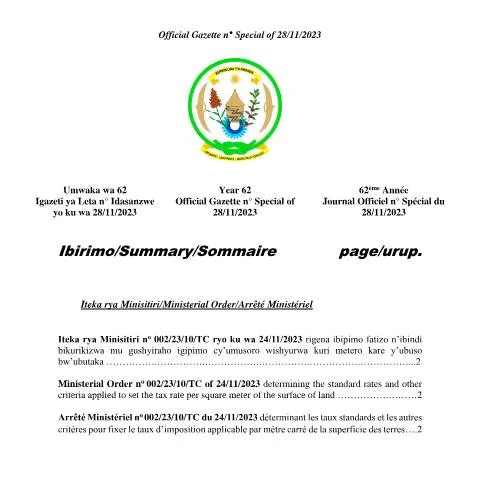
The Ministerial Order of 24.11.2023 About Land Rates: An In-Depth Exploration
The recent Ministerial Order of 24.11.2023 concerning land rates presents a significant milestone in Rwanda's administrative efforts to streamline land management and taxation. This document plays a critical role in how land rates are assessed, impacting landowners, potential buyers, and the government alike.
A Historical Context: The Evolution of Land Management in Rwanda
Understanding the Ministerial Order of 24.11.2023 requires some knowledge of the historical and legal framework surrounding land governance in Rwanda. Land management has undergone substantial reforms since the post-genocide era, aimed at ensuring equitable access and sustainable use.
The legal landscape is underpinned by the Law No. 22/2018 relating to various administrative procedures, which seeks to standardize practices across the country. The Ministerial orders are not mere bureaucratic documents; they encapsulate Rwanda's commitment to modernizing its land administration. This particular order delineates rates based on factors such as location, land use, and developmental potential, thus reflecting the government’s strategic vision.
Distinguishing Features: What Sets This Order Apart?
While various forms relate to land management, the Ministerial Order of 24.11.2023 is distinct in its focus on land rates. Unlike general land registration forms which might address ownership or use rights, this order specifically targets the assessment and application of land rates for taxation purposes.
The land rates established by this order are relevant for:
- Property owners wishing to understand their financial obligations to local authorities.
- Investors assessing the viability of land-based ventures.
- Local governments tasked with revenue collection and urban planning.
This distinction is critical, as it informs stakeholders about their responsibilities while ensuring compliance with local governance structures.
Special Considerations: Addressing Unique Situations
As with any regulatory framework, the Ministerial Order of 24.11.2023 accommodates exceptional cases which may involve foreigners, minors, or complex land hold agreements. Understanding these scenarios is crucial for those whose circumstances may diverge from the standard processes.
Foreign Entities and Land Rates
Foreign investors, in particular, should take note of the specific regulations surrounding their land purchases. They may be subject to different rates or additional fees, depending on the nature of their investment and engagement with local authorities.
Minors and Land Ownership
In instances where a minor is involved, guardianship regulations come into play. The legal representative must authorize any transactions or tax obligations linked to the land owned by a minor, which can further complicate the determination of applicable rates.
Urgent Situations and Appeals
For landowners facing urgent issues—such as the impending sale of property or rapid development plans—there is a provision for expedited assessments. Furthermore, there are clear channels for appeals if stakeholders believe that the land rates applied are unjust or incorrectly calculated.
The Workflow: Integrating This Order into Broader Administrative Processes
The Ministerial Order of 24.11.2023 is not an isolated document; it fits within a broader framework of land management and taxation. This order is integral to various administrative workflows, such as:
- Initial land registration and acquisition
- Annual tax assessments for landowners
- Urban planning initiatives by local governments
For individuals engaged in land transactions, familiarity with this order enhances their ability to navigate the complexities of land ownership and compliance.
Timeline and Implementation: Key Dates to Be Aware Of
The implementation of the Ministerial Order of 24.11.2023 is structured around specific timelines that all stakeholders must adhere to. While precise dates may vary, general phases can be outlined as follows:
| Phase | Description | Key Dates |
|---|---|---|
| Announcement | Release of the order and public outreach to inform stakeholders | November 2023 |
| Implementation | Active application of new land rates and compliance checks | Starting January 2024 |
| Review Period | Evaluation of the order's effectiveness and feedback collection | July 2024 |
Stakeholders are encouraged to stay informed throughout these phases as they will directly impact land transactions and obligations.
Channels of Submission: Navigating the Deposit Process
The method of submitting relevant documentation pertaining to the Ministerial Order of 24.11.2023 can vary, with options available both online and in-person. The choice of channel may affect processing times, so understanding these differences is essential.
Online Submission through Irembo
Using the Irembo platform allows for a streamlined process where individuals can:
- Submit documentation digitally
- Receive immediate confirmation of submission
- Access a variety of related services in one platform
In-Person Submissions
For those who prefer traditional methods, local administrative offices are equipped to handle submissions. However, this may involve longer wait times and additional paperwork.
Ultimately, the choice of submission channel should consider personal convenience and the urgency of the request.
The Role of This Ministerial Order in Future Land Governance
The Ministerial Order of 24.11.2023 signifies a forward-thinking approach to land governance in Rwanda, setting a precedent for future regulations. Its establishment of transparent rates not only promotes fairness in taxation but also supports sustainable land development.
As Rwanda continues to grow economically and socially, such orders will be pivotal in ensuring that land management aligns with national goals. Stakeholders should view this order not merely as a regulatory obligation, but as a guiding framework that aids in personal and community development.
Ultimately, the implications of the Ministerial Order of 24.11.2023 extend beyond mere compliance; they resonate with the broader aspirations of the Rwandan people towards sustainable and equitable land use.
Understanding the Ministerial Order on Land Rates: Key Implications for Property Owners
The Ministerial Order dated November 24, 2023, regarding land rates in Rwanda has introduced significant changes that property owners and prospective buyers must understand. This order reflects the government's ongoing efforts to optimize land use and ensure fair taxation while promoting efficient land management practices. One key implication of this order is the adjustment of land rates based on the specific zones in which properties are located. This zonal differentiation means that landowners in urban areas may face different rates compared to those in rural settings, necessitating a thorough understanding of one’s local land classification.
Property owners should also be aware of the timeline established by this order for compliance and payment of the revised rates. As the Rwandan fiscal year runs from July to June, the adjustments may impact financial planning for individuals and businesses. Specific deadlines for the new rates implementation and payment will be crucial for taxpayers, particularly those involved in real estate development or investment. Keeping track of these timelines will ensure compliance and avoid potential penalties.
Appeals and Dispute Resolution Mechanisms for Land Rate Decisions
Another important aspect of the Ministerial Order is the provision for appeals and dispute resolution related to the new land rates. Landowners who feel that their assigned rates are excessive or not reflective of the true value of their properties have the right to appeal decisions made by local authorities. This process is critical, as it empowers citizens to contest valuations that they believe are unjust or inaccurate.
The appeal process typically involves submitting a formal request to the relevant local governance authority, detailing the grounds for the appeal. The Ministry of Local Government (MINALOC) oversees these processes to ensure they align with the principles enshrined in the Law No. 22/2018 relating to Civil, Commercial, Labour, and Administrative Procedure. Understanding the necessary documentation and timelines for appeals is essential for a successful dispute process. Additionally, there may be options for mediation to resolve conflicts amicably before pursuing formal appeals, which can save time and resources for both parties involved.
Impact on Development Projects and Urban Planning
The Ministerial Order on land rates is poised to have a substantial impact on urban planning and development projects across Rwanda. As the government aims to foster sustainable growth, the revised rates are aligned with broader strategies to encourage investment in urban areas while managing resources effectively. For developers, understanding these changes is crucial, as increased land rates may affect project feasibility and overall investment returns.
Moreover, the establishment of differentiated land rates may incentivize development in underutilized or strategically important areas. By promoting investment in less developed regions, the government hopes to balance urban growth and alleviate pressure on congested urban centers. Stakeholders in the construction and real estate sectors should proactively assess how these changes will influence their projects, including budget estimations and timelines. Engaging with local authorities and utilizing services offered through platforms like Irembo can facilitate smoother interactions in the planning and approval processes, ensuring compliance with the newly defined rates.