Navigating the IR344 Amendment Process: A Comprehensive Guide
In the fast-paced world of employment management in New Zealand, ensuring precise payroll records is not just best practice; it's mandated by law. The IR344 Employment Information Amendments form plays a pivotal role in this process. As an employer, you may find yourself needing to amend payroll records for various reasons—whether it's correcting an error or adjusting employee details. Understanding how to effectively navigate this form can save you time, prevent potential penalties, and ensure compliance with the Inland Revenue Department (IRD).
Understanding the Context: Why Corrections Matter
Accuracy in payroll records directly impacts not only employee trust but also compliance with tax obligations. If discrepancies arise in employee payments or tax withholdings, it can lead to underpayments or overpayments, which the IRD closely monitors. The IR344 form is essential for correcting issues related to employee wages, tax codes, and other payroll details. Notably, employers must file amendments within specific time frames to avoid fines or complications with audits.
The Ripple Effect of Errors
- Employee Trust: Frequent errors may lead to disgruntled employees, affecting morale and productivity.
- Financial Consequences: Underpayment might result in penalties and interest from the IRD, while overpayment can complicate financial statements.
- Legal Obligations: Employers must meet legal obligations regarding employee payments; inaccuracies can lead to claims of unfair treatment or wage theft.
Who Should File the IR344 Form?
While the IR344 form is applicable to any employer needing to amend payroll information, certain scenarios trigger the requirement for this document:
Common Situations Requiring an IR344 Submission
- Correction of Employee Wages: If an employee's wages were miscalculated, an amendment should be submitted.
- Tax Code Adjustments: Changes in an employee's tax code due to personal circumstances (like a change in student loan status) need to be reflected.
- Changes in Employment Status: Changes to employment details, such as a new employee or an employee leaving the company, need proper documentation.
Steps to Complete the IR344 Form
Filling out the IR344 form requires careful attention to detail. Employers must ensure all information is accurate to prevent the need for further amendments.
Key Sections of the IR344
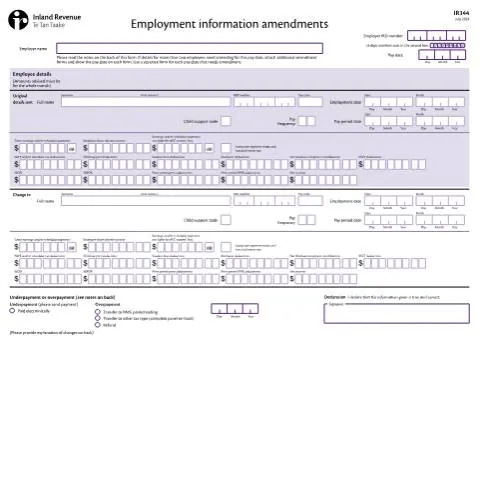
| Section | Description |
|---|---|
| Contact Information | Your IRD number and the pay date that needs amending. |
| Employee Details | Names and IRD numbers of affected employees. |
| Amended Amounts | Details of original and new wages, taxes, and deductions. |
| Declaration | Confirmation that the information provided is accurate. |
Filling Out Each Section
Each section of the IR344 requires specific information:
- Contact Information: Include your employer IRD number and the relevant pay date clearly.
- Employee Details: List the original details sent for each employee, noting any changes in surname, IRD number, or tax code.
- Amended Amounts: Detail gross earnings and any deductions, ensuring these figures correlate accurately with your payroll records.
- Declaration: Sign and date the form, confirming all provided information is correct.
Submitting the IR344: Timing and Delivery
After completing the IR344 form, knowing how and when to submit it is crucial. Typically, the amendment should be sent in as soon as discrepancies are identified to avoid penalties and ensure timely corrections.
Best Practices for Submission
- Electronic Submission: Whenever possible, submit forms electronically through the IRD's online services for faster processing.
- Deadlines: The IRD allows a four-year period from the original submission date of the Employment Information - IR348 form to make amendments. After this period, only certain deductions can be adjusted.
What Happens After Submission?
Once you've submitted the IR344, you may wonder about the follow-up process. Understanding the timeline and what to expect can alleviate concerns about your submission's status.
Post-Submission Steps
- Confirmation from IRD: You should receive confirmation from the IRD acknowledging receipt of your amendment.
- Review Process: The IRD will review your submitted information against their records to ensure accuracy.
- Adjustments Reflected: If everything is in order, the IRD will update their records, and you'll be informed of any necessary changes to deductions or payments.
Handling Errors and Issues with the IR344
Even with due diligence, mistakes can happen. Knowing how to handle potential issues with your IR344 submission is crucial for maintaining compliance.
Common Issues and Resolutions
- Incorrect Information Submitted: If an error is discovered post-submission, you may need to submit a new IR344 for those corrections.
- Missing Documentation: Occasionally, the IRD may request additional information. Always keep detailed records of payroll for reference.
- Rejection of the Form: If the IRD rejects your form, they will provide reasons which you should promptly address by submitting the correct information.
The Importance of Record-Keeping
Maintaining accurate payroll records is not just beneficial; it is a legal requirement. Good record-keeping practices can ease the amendment process and facilitate smoother interactions with the IRD.
Effective Record-Keeping Practices
- Maintain Detailed Logs: Keep a comprehensive log of employee details, wage calculations, and any correspondence with the IRD.
- Regular Audits: Periodically audit your payroll processes to catch errors before they necessitate amendments.
- Use Digital Tools: Implement payroll software that helps simplify wage calculations and record-keeping, reducing the likelihood of errors.
Closing Thoughts on Managing Payroll Information
The IR344 Employment Information Amendments form is a vital tool for employers in New Zealand. By understanding its purpose, the process of completion, and the significance of careful record-keeping, employers can navigate the complexities of payroll management with confidence. As the landscape of employment regulations evolves, staying informed and prepared can significantly mitigate risks associated with payroll discrepancies.
Understanding Employment Information Amendments: Key Terms and Definitions
Before diving into the specifics of amending employment information, it’s crucial to understand some key terms and definitions that are central to the discussion. First, the term 'employment information' encompasses a wide range of data related to an employee's role within a business. This includes job titles, responsibilities, remuneration details, and the terms of employment. Amendments to this information can occur for various reasons, such as changes in job responsibilities, salary adjustments, or even updates resulting from employee promotions.
In New Zealand, the provisions for amending employment information are framed under the Employment Relations Act 2000. Employers are required to accurately maintain and update employee records to comply with this legislation. Should an amendment be necessary, employers must ensure that such changes are documented and communicated effectively to the affected employee. It is also worth noting the significance of the term 'good faith' in New Zealand employment relations; any amendments should be made considering this principle, ensuring transparency and fairness in the process.
Process for Amending Employment Information: Step-by-Step Guide
Amending employment information in New Zealand is a systematic process that should be approached methodically to ensure compliance and clarity. Here’s a step-by-step guide to navigate through this process:
- Assess the Need for Amendment: Determine the reason for the amendment. This could be due to various factors, including a promotion, restructuring, or changes in job roles due to evolving business needs.
- Consult with Relevant Parties: Before implementing any changes, it is advisable to consult with HR representatives or legal advisors to ensure the planned amendments align with the employment contract and any applicable laws.
- Draft the Amendment: Prepare a formal document outlining the proposed changes. This document should include all relevant details such as the current information, the proposed changes, and the effective date of these changes.
- Communicate with the Employee: Transparency is key. Present the amendment draft to the concerned employee, explaining the changes and the rationale behind them. This step is critical for maintaining trust and upholding the principle of good faith.
- Obtain Employee Agreement: Request the employee’s acknowledgment of the amendments, which may be done through their signature on the amendment document. This serves as proof of agreement and helps mitigate potential disputes.
- Update Employment Records: Once the employee has agreed to the amendments, update all relevant employment records to reflect these changes. This includes the employee’s file, payroll records, and any internal systems that track employee information.
- Monitor and Evaluate: After implementing the changes, it’s important to monitor the situation to ensure the amendments are functioning as intended and do not lead to any unforeseen issues.
This structured approach not only facilitates a smooth amendment process but also reinforces the relationship between employers and employees, helping to foster a positive workplace culture.
Common Challenges in Employment Information Amendments and How to Overcome Them
While the process of amending employment information may seem straightforward, various challenges can arise. Understanding these challenges and having strategies to address them is vital for employers in New Zealand. Here are some common issues and suggestions for overcoming them:
- Communication Breakdowns: One of the most significant challenges is effectively communicating the changes to the employee. To mitigate this risk, employers should utilize multiple channels of communication (e.g., face-to-face meetings, emails, and written documents) to ensure the message is understood.
- Resistance from Employees: Employees may resist changes, particularly if they perceive the amendments as a negative alteration of their role or salary. Addressing their concerns openly and providing a clear rationale can help ease their discomfort and encourage acceptance.
- Lack of Documentation: Failing to document changes can lead to disputes and misunderstandings in the future. Employers should maintain meticulous records of all communications and agreements related to amendments to safeguard against potential legal challenges.
- Compliance Issues: Amendments must comply with various legislative requirements, including those set forth by the Employment Relations Act and other relevant regulations. Employers should stay informed about these laws and consult legal experts when necessary to ensure compliance.
By proactively addressing these challenges, employers can create a more seamless amendment process that fosters a collaborative atmosphere and minimizes potential conflicts.