Navigating the IR346K Form: A Comprehensive Guide for Employers
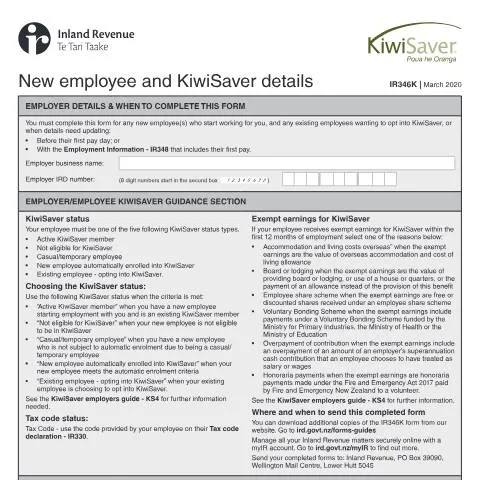
In the dynamic landscape of New Zealand’s employment sector, understanding your obligations as an employer regarding KiwiSaver is crucial. The IR346K form, known as the “New employee and KiwiSaver details,” plays a pivotal role in this process. It ensures that new employees are properly registered for KiwiSaver, enabling them to secure their financial future. However, the nuances involved in completing this form can be complex. This guide aims to simplify the process by breaking down the form's details, its significance, and the steps that employers must undertake to fulfill their responsibilities.
The Importance of Timeliness in Completing the IR346K
Completing the IR346K form is not merely a formality; it is a legal requirement that must be fulfilled before the new employee's first payday. Failure to comply with this timeline could lead to penalties or complications in the employee’s registration with KiwiSaver. Here’s a closer look at why timing matters:
- First Paycheck Deadline: You must ensure the form is completed and submitted before your new hire receives their first paycheck. This is critical to ensure that contributions to KiwiSaver begin on time.
- Bonus Benefits: Timely registration allows employees to benefit from employer contributions, government incentives, and the potential for compounding growth over time.
- Compliance with Legal Obligations: As an employer, you have legal obligations under the KiwiSaver Act, which mandates the automatic enrollment of eligible employees. Delays can hinder compliance.
Understanding the Employee Categories for KiwiSaver
When filling out the IR346K form, it's essential to correctly identify the employee’s KiwiSaver status. This categorization affects not only the completion of the form but also the employee's rights and obligations moving forward. Here are the five categories outlined in the form:
- Active KiwiSaver Member: An employee who is already a member of KiwiSaver is categorized as such, allowing you to continue their contributions.
- Not Eligible for KiwiSaver: If an employee does not meet the criteria for KiwiSaver membership, they fall into this category, which means no deductions will apply.
- Casual/Temporary Employee: Employees in this segment are not automatically enrolled in KiwiSaver, which may affect their future savings plans.
- New Employee Automatically Enrolled: If the new hire meets the auto-enrolment criteria, they will be enrolled in KiwiSaver automatically, and deductions will commence.
- Existing Employee Opting into KiwiSaver: Current employees wishing to opt into the scheme can do so via this form.
Decoding the IR346K Form: A Step-by-Step Breakdown
The IR346K form consists of several sections that employers need to navigate carefully. Below, we dissect each critical part of the form to help employers avoid common pitfalls.
Section 1: Employer Details
In this section, you will need to provide your employer business name and the IRD number. Here are key points to remember:
- IRD Number: Ensure that you enter your 8-digit IRD number correctly, as any error may delay processing.
- Accuracy is Key: Verify the business name matches the registered name with IRD to avoid discrepancies.
Section 2: Employee Details
This section is critical for establishing the identity of the employee in question. Fill out the following details precisely:
- Full Name: Enter the employee's first name(s) and surname as registered on their identification.
- Date of Birth: Ensure the format is followed accurately: DD/MM/YYYY.
- IRD Number: The employee must provide their own IRD number for tax purposes.
- Email Address: Collecting an email address is beneficial for future communication.
- Physical Address: Ensure this is a current residential address for correspondence.
Section 3: KiwiSaver Status
Employers must select the correct KiwiSaver status for the employee. Misclassification can lead to complications:
- Active KiwiSaver Member: Confirm with employees that they are currently enrolled in KiwiSaver.
- Not Eligible: Assess eligibility criteria carefully to avoid wrongful deductions.
- Casual/Temporary Employee: Be aware that casual employees typically have different rules regarding contributions.
- New Employee Automatically Enrolled: Ensure eligibility aligns with the auto-enrolment requirements under the KiwiSaver Act.
- Existing Employee Opting In: Encourage employees to explore their options if they are already members.
Section 4: Tax Code and Exempt Earnings
The tax code section requires you to input the code provided by the employee. Additionally, if an employee has exempt earnings, these need to be identified:
- Tax Code: Use the IR330 form provided by the employee to determine their tax code.
- Exempt Earnings: If applicable, select from the reasons listed on the form, such as accommodation costs overseas or payments under a Voluntary Bonding Scheme.
Section 5: Finalizing the Submission
Once all sections are complete, it’s time to submit the form. Employers have a couple of options for submission:
- Secure Online Submission: If you have a myIR account, you can submit the form electronically, which is often faster and more secure.
- Post Submission: You can mail the completed form to Inland Revenue at the specified address. Double-check that all details are correctly filled to prevent delays.
Consequences of Incorrect or Late Submission
The implications of failing to submit the IR346K form correctly or on time can be significant:
- Financial Penalties: Non-compliance with KiwiSaver regulations may lead to financial penalties for the employer.
- Employee Discontent: Employees may feel disenfranchised if their KiwiSaver contributions are not made in a timely manner, impacting their trust in the employer.
- Disruption in Contributions: Erroneous data can disrupt automatic deductions and lead to complications in the employee’s savings growth.
Addressing Errors and Missing Information
In the event of an error or missing information on the IR346K form, prompt action is essential:
- Contacting Inland Revenue: If you identify an error after submission, contact Inland Revenue immediately to rectify the mistake.
- Providing Correct Information: You may need to fill out a new form or provide updated details based on the original submission.
- Employee Communication: Keep the employee informed of any changes and how they may affect their KiwiSaver contributions.
Conclusion on the Vital Role of IR346K in KiwiSaver Management
The IR346K form is a critical element of the employment framework in New Zealand, especially regarding compliance with KiwiSaver regulations. Employers must take care to understand the intricacies of this form, ensure timely submission, and remain vigilant about maintaining accurate records. By doing so, they not only fulfill their legal obligations but also contribute to the financial well-being of their employees, fostering a culture of trust and responsibility.
Understanding KiwiSaver Contributions as a New Employee
When starting a new job in New Zealand, understanding your KiwiSaver contributions is essential. KiwiSaver operates on a system where your contributions, your employer's contributions, and the government’s contributions collectively enhance your retirement savings. As a new employee, you will typically need to choose your contribution rate, which can be set at 3%, 4%, 6%, 8%, or 10% of your gross salary.
If you do not specify a rate, your employer will automatically enroll you at the default rate of 3%. It's important to note that you can change your contribution rate, but such changes can only occur every three months. The contribution rate you select will impact the amount deducted from your pay, which in turn affects your take-home salary.
Furthermore, employers are legally required to contribute at least 3% of your gross salary to your KiwiSaver fund. This employer contribution is in addition to the amount you save from your pay, significantly increasing your total savings over time. Be aware that contributions to your KiwiSaver account are taken from your gross earnings before tax (PAYE), which means you will see a reduction in your taxable income.
Additionally, the government also contributes to your KiwiSaver through the Member Tax Credit (MTC), where for every dollar you contribute, the government will match 50 cents, up to a maximum of $521.43 per year. To qualify for this credit, you must contribute a minimum of $1,042.86 to your KiwiSaver between 1 July and 30 June of the following year.
Navigating KiwiSaver Withdrawal Options
As a new employee, you might also be curious about when and how you can access your KiwiSaver funds. Generally, KiwiSaver is intended for retirement savings, but there are specific circumstances under which you can withdraw your funds early. Understanding these options is crucial for making informed financial decisions as a new employee.
First Home Purchase: One of the primary reasons for early withdrawal is to assist with purchasing your first home. After three years of contributions, you can withdraw your KiwiSaver balance (excluding the government contributions) to put towards the purchase of your first home. This can significantly aid in securing a deposit.
Financial Hardship: If you find yourself in financial distress, you may qualify for a hardship withdrawal. Acceptable reasons include significant medical expenses, mortgage payments, or the inability to meet living costs. You must provide evidence of your situation, and the decision to approve early withdrawal is at the discretion of your KiwiSaver provider.
Serious Illness: If you are diagnosed with a serious illness that affects your ability to work, you may be eligible to withdraw your funds. Medical confirmation will be required to support your application, and again, it is subject to approval by your provider.
Permanent Emigration: If you decide to emigrate permanently to another country, you have the option to withdraw your KiwiSaver funds. It’s essential to understand the implications of this on your long-term savings and consult with a financial advisor before taking this step.
Each of these withdrawal options involves specific documentation and processes, so it's advisable to contact your KiwiSaver provider for detailed guidance based on your circumstances.
KiwiSaver Providers: Choosing the Right Fund
Selecting the right KiwiSaver provider is a critical step for new employees, as it can significantly impact your investment's growth over the long term. New Zealand has a wide variety of KiwiSaver schemes, each with different investment strategies, fees, and performance histories. Understanding these aspects will empower you to make an informed choice that aligns with your financial goals.
Types of Funds: KiwiSaver funds are generally categorized into three types: conservative, balanced, and growth. Conservative funds typically invest in lower-risk assets, focusing on capital preservation but offering lower returns. Balanced funds provide a mix of growth and stability, while growth funds are more aggressive, investing in higher-risk assets that have the potential for greater returns over the long term. As a new employee, consider your risk tolerance and investment timeline when choosing between these options.
Fees and Returns: Each provider will charge different fees, often comprising management fees and other operational costs. It’s important to review these fees, as they can eat into your returns over time. Additionally, look at the historical performance of the fund. While past performance is not a guarantee of future results, it can provide insights into how well the fund has been managed.
Provider Reputation: Research the reputation of potential KiwiSaver providers. Reviews, ratings, and consumer feedback can help you gauge the reliability and quality of service offered by different funds. A provider with a strong customer service record can be invaluable, especially when you need assistance or have questions regarding your account.
Flexibility and Features: Some providers offer additional features, such as the ability to choose specific investments or access to financial advice. Consider what features are important to you. Some individuals may prefer a hands-on approach, while others may be more comfortable with a set-and-forget strategy.
It's worthwhile to spend time comparing your options before committing to a provider. Many resources are available online, including comparison tools, which can help simplify this process.
In conclusion, as you settle into your new job in New Zealand, understanding your KiwiSaver contributions, withdrawal options, and choosing the right provider are crucial elements of your financial planning. Engaging with these aspects early on will help ensure that you are on track for a secure financial future.